✨ New Arrivals Just Dropped!Explore
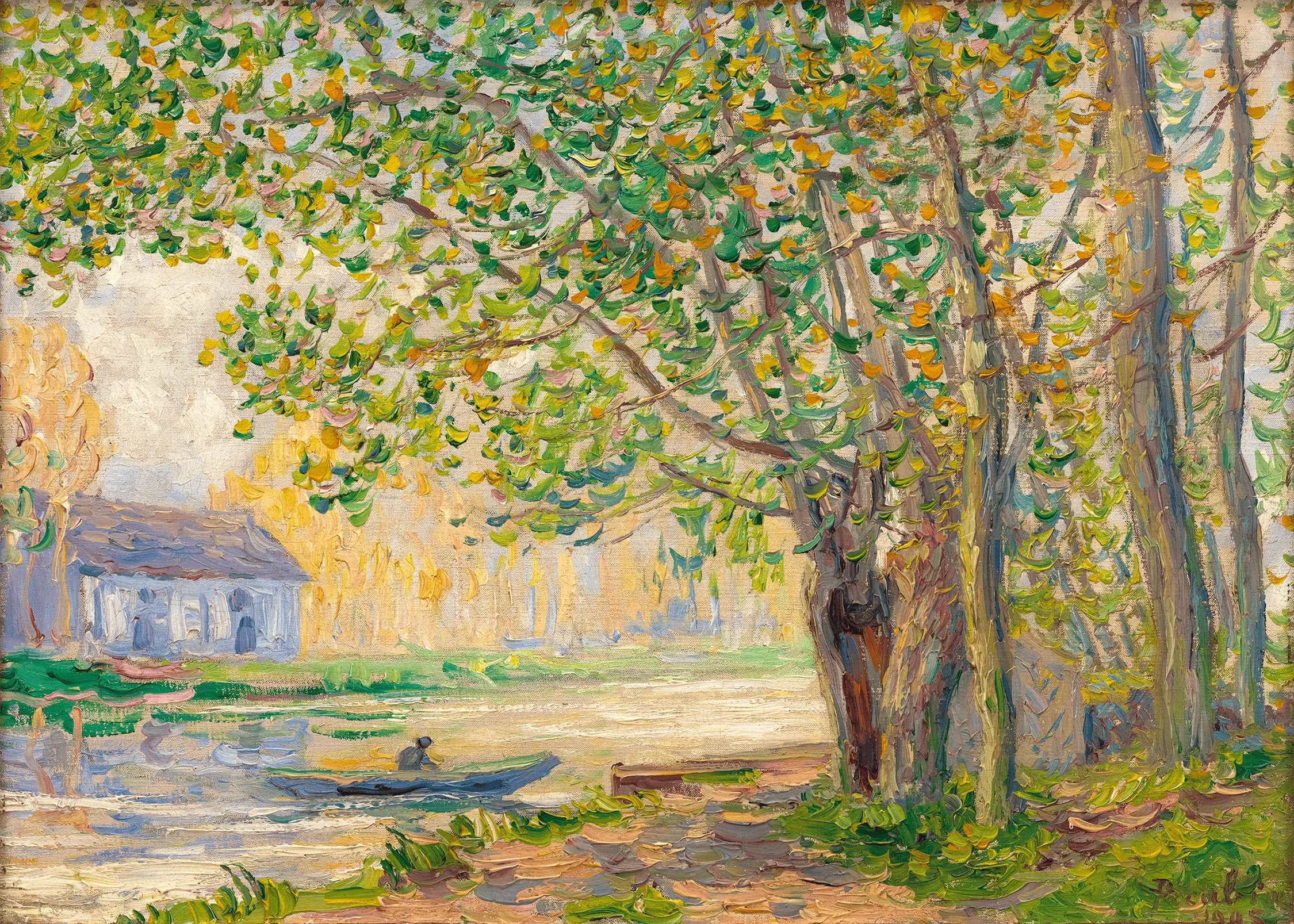
The Effect of Sun on the Banks of the Loing by Francis Picabia
Francis Picabia
1878-1953 | French
Effet de soleil (avril); Sur les bords du Loing
(The Effect of Sun on the Banks of the Loing, April)
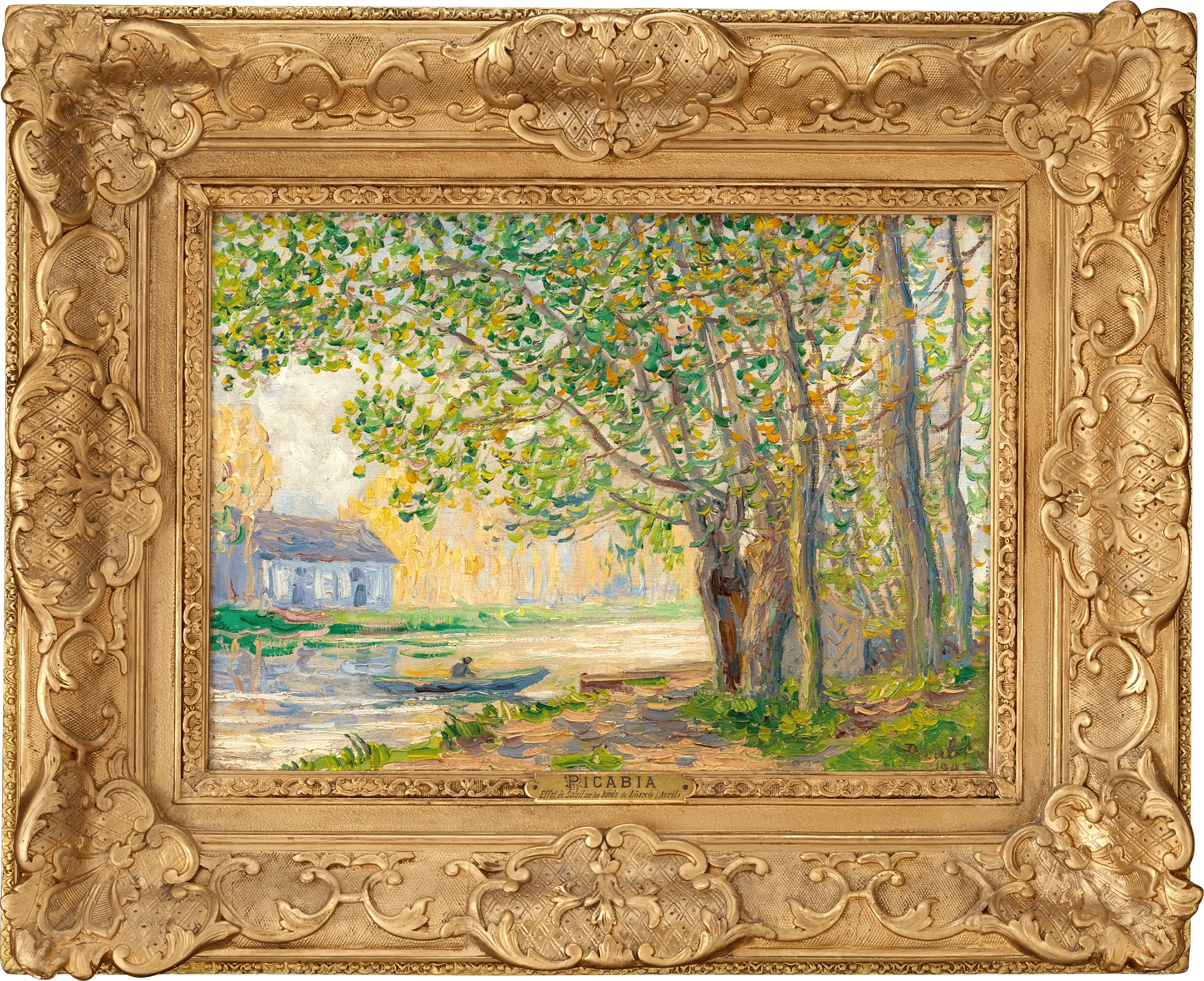
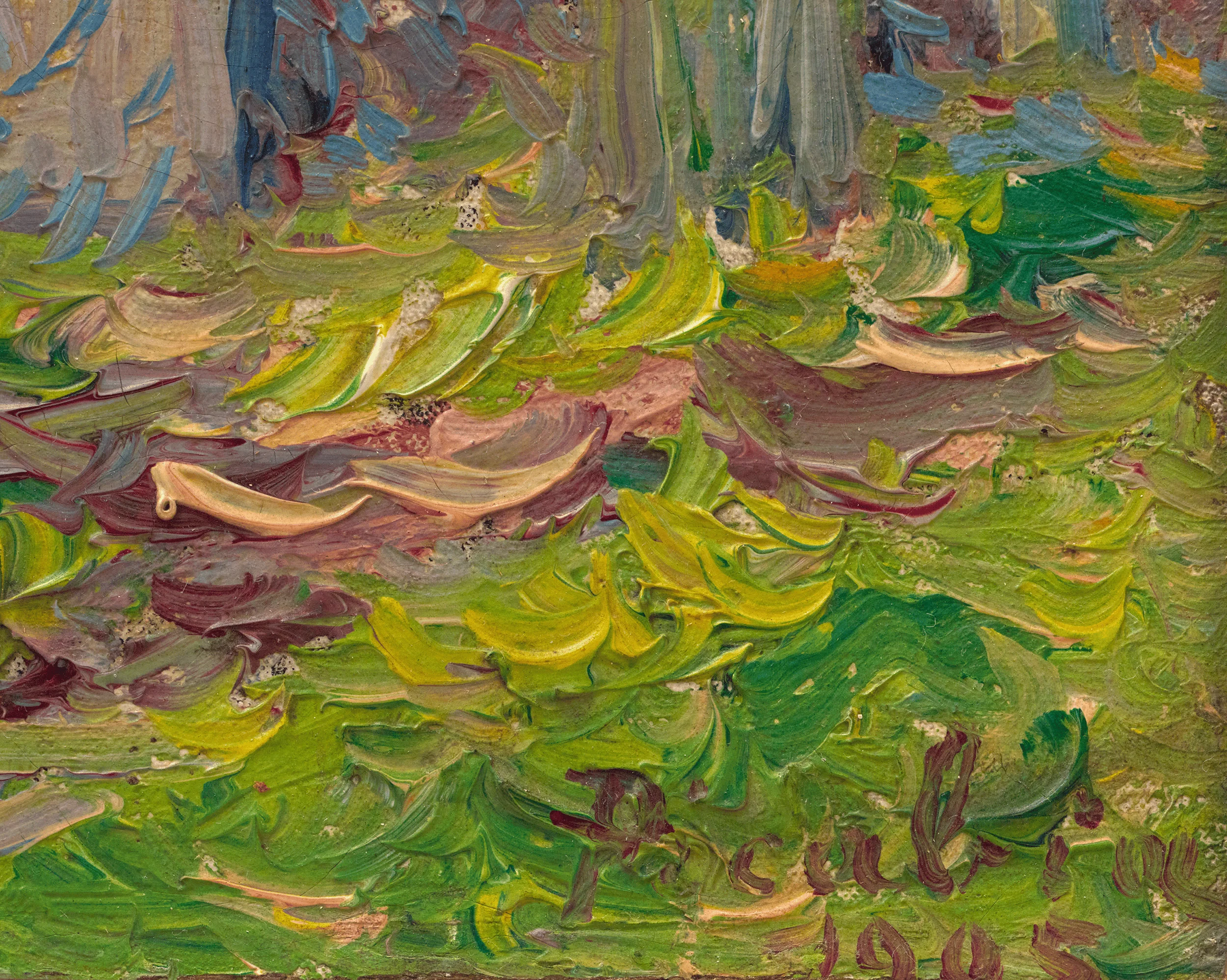
Signed and dated "Picabia 1905" (lower right); signed, titled and dated (en verso)
Oil on canvas
An artist of remarkable range and originality, Francis Picabia spent his career moving boldly across styles, media and ideas. Though best remembered as one of the founders of Dada, Picabia’s artistic language was never confined to a single movement. Over the course of his life, he embraced abstraction, photorealism, Classicism and Impressionism, revealing an extraordinary capacity for reinvention. This vibrant oil on canvas stands as a brilliant example of his Impressionist period, when he explored color, light and atmosphere with exceptional confidence.
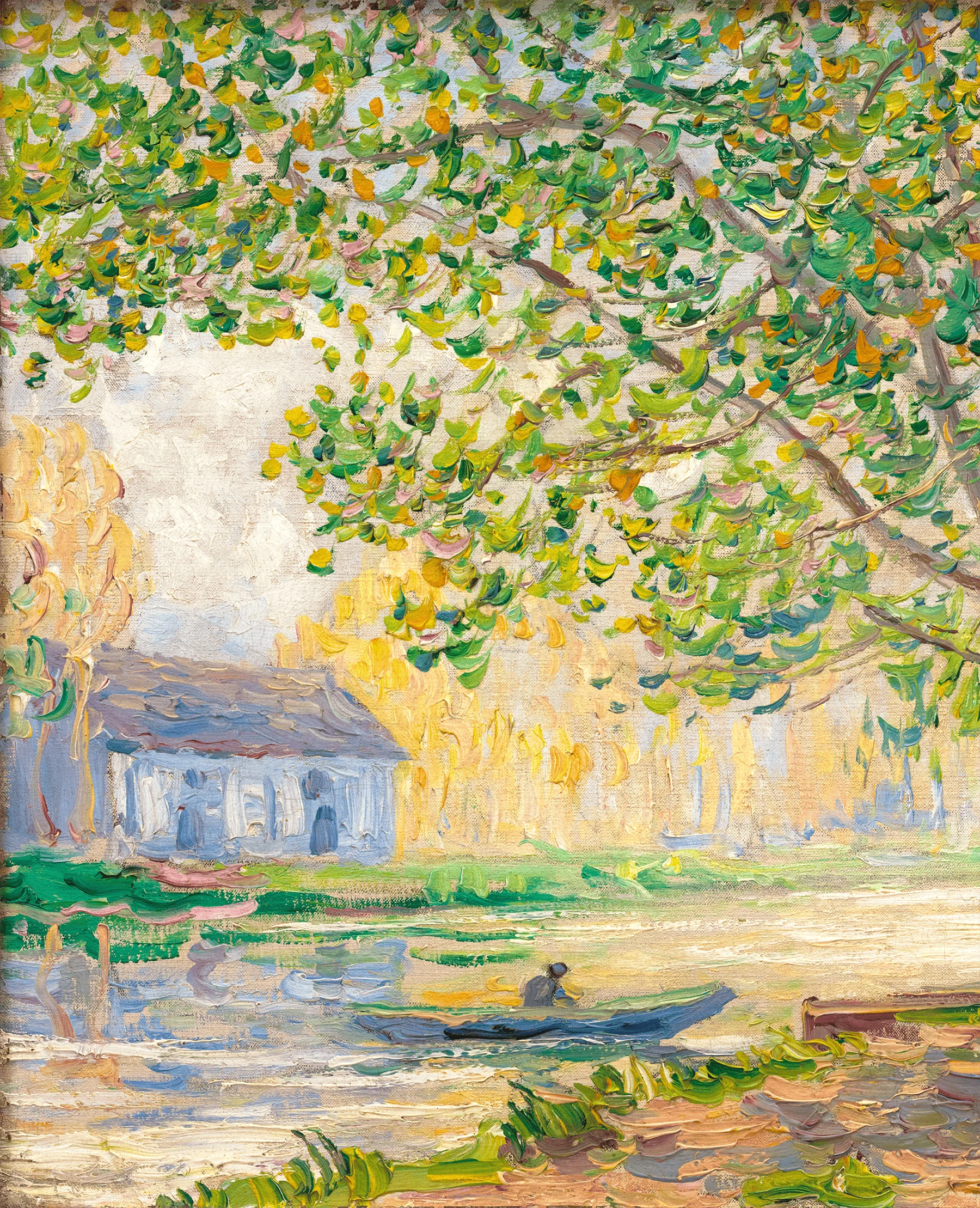
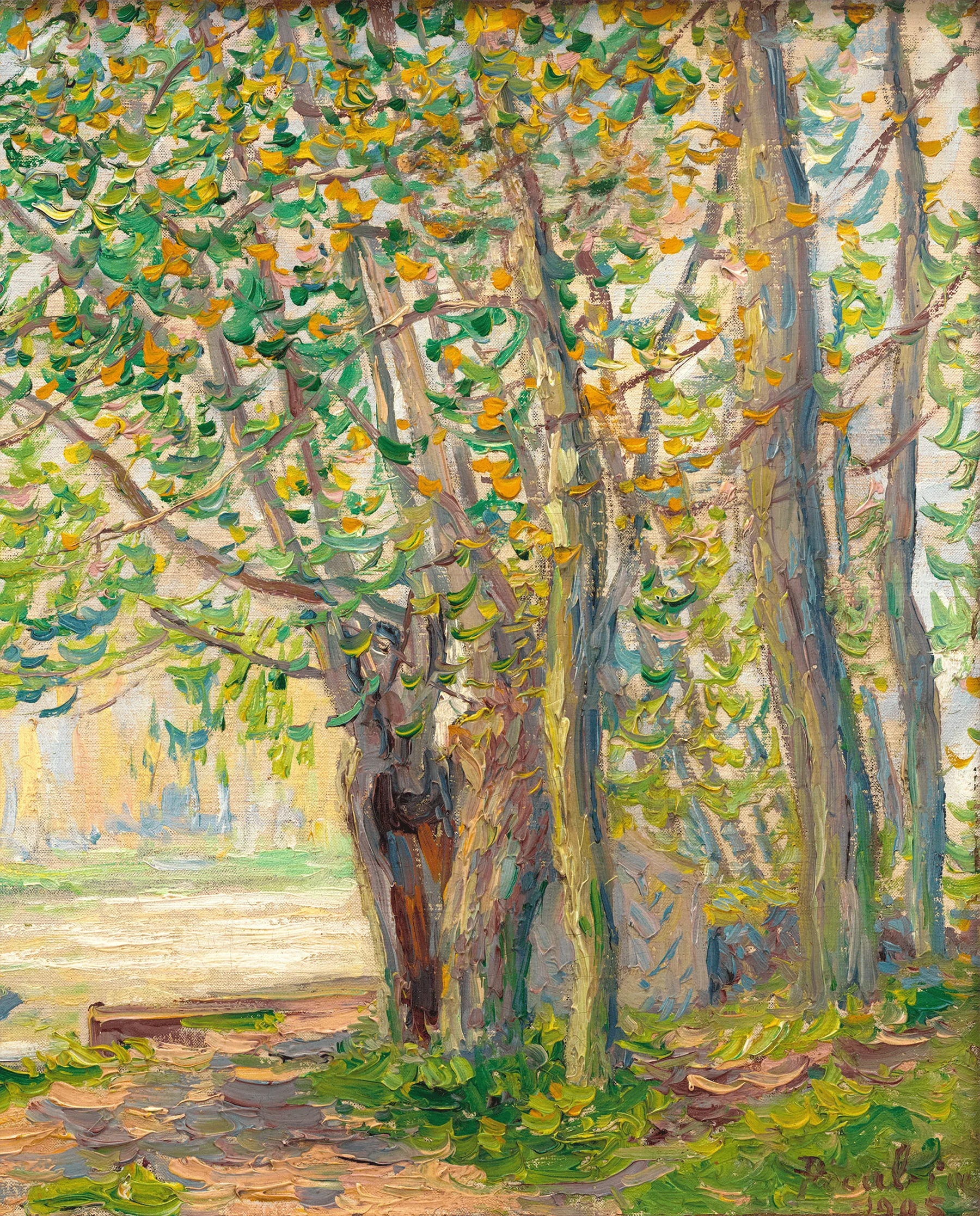
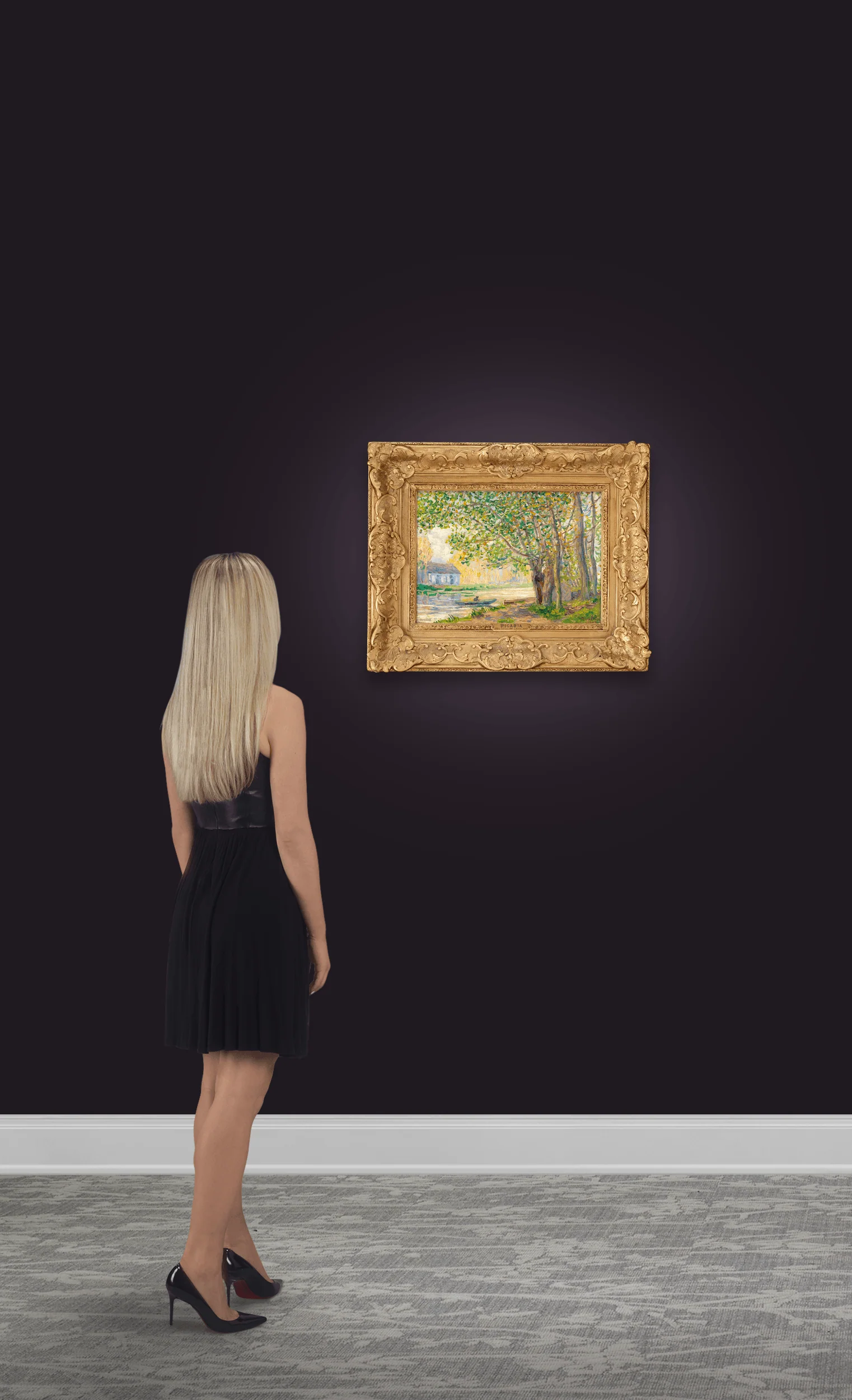
Painted in 1905, Effet de soleil (avril); Sur les bords du Loing belongs to a formative period in Picabia’s career. After meeting the two sons of the legendary Impressionist Camille Pissarro in 1902, Picabia began painting landscape scenes en plein air, turning his attention to the shifting effects of light and nature. In this composition, dappled sunlight filters through a canopy of green and gold leaves, casting flickering reflections across the riverbank. Broad, expressive strokes define the trees, water and distant architecture, giving the scene a vivid sense of warmth and atmospheric movement. A small figure in a boat adds quiet human presence to the radiant riverside landscape.
By 1905, Picabia had achieved significant recognition for his Impressionist works, exhibiting them in Parisian salons to considerable acclaim. Critics praised him as a promising French landscape painter, and the French government purchased one of his works. Yet Picabia’s restless creativity soon led him beyond Impressionism. By 1908, elements of Fauvism and Cubism began to appear in his paintings, signaling the beginning of the stylistic evolution that would become one of the defining features of his career.
Picabia’s openness to transformation ultimately placed him at the center of European modernism. Alongside Marcel Duchamp and Guillaume Apollinaire, he helped shape Dada, one of the most influential movements of the early 20th century. He also worked in poetry, graphic art, set design and film, extending his ideas across a remarkable range of creative forms. In 2016, the Museum of Modern Art in New York honored this expansive legacy with the retrospective, Francis Picabia: Our Heads Are Round so Our Thoughts Can Change Direction. As exhibition curator Ann Umland wrote, “The world of art is a richer, more complicated, more unpredictable place because of him.” His works are held in important public collections worldwide, including the Museum of Modern Art, the Solomon R. Guggenheim Museum, the Philadelphia Museum of Art, the Art Institute of Chicago, Tate London and the Musée National d'Art Moderne in Paris.
Dated 1905
Canvas: 13" high x 17 3/4" wide (33 x 45.1 cm)
Frame: 22" high x 27" wide x 3 1/4" deep (55.9 x 68.6 x 8.3 cm)
Provenance:
Charles Heumann, Paris (possibly)
Private collection, France (acquired in the 1910s)
Private collection, France (by descent from the above)
Private collection
Private collection
M.S. Rau, New Orleans
Exhibited:
Paris, Galerie Haussmann, Exposition F. Picabia, 1907, no. 6, n. p. (illustrated)
Literature:
William A. Camfield, Beverley Calté, Candace Clements and Arnauld Pierre & Pierre Calté, Francis Picabia, Catalogue Raisonné, 1898-1914, vol. I, New Haven & London, 2014, no. 168, pp. 50, 202, 211, 216, 222, 264, 284, 414 (illustrated, p. 216)
1878-1953 | French
Effet de soleil (avril); Sur les bords du Loing
(The Effect of Sun on the Banks of the Loing, April)
Signed and dated "Picabia 1905" (lower right); signed, titled and dated (en verso)
Oil on canvas
An artist of remarkable range and originality, Francis Picabia spent his career moving boldly across styles, media and ideas. Though best remembered as one of the founders of Dada, Picabia’s artistic language was never confined to a single movement. Over the course of his life, he embraced abstraction, photorealism, Classicism and Impressionism, revealing an extraordinary capacity for reinvention. This vibrant oil on canvas stands as a brilliant example of his Impressionist period, when he explored color, light and atmosphere with exceptional confidence.
Painted in 1905, Effet de soleil (avril); Sur les bords du Loing belongs to a formative period in Picabia’s career. After meeting the two sons of the legendary Impressionist Camille Pissarro in 1902, Picabia began painting landscape scenes en plein air, turning his attention to the shifting effects of light and nature. In this composition, dappled sunlight filters through a canopy of green and gold leaves, casting flickering reflections across the riverbank. Broad, expressive strokes define the trees, water and distant architecture, giving the scene a vivid sense of warmth and atmospheric movement. A small figure in a boat adds quiet human presence to the radiant riverside landscape.
By 1905, Picabia had achieved significant recognition for his Impressionist works, exhibiting them in Parisian salons to considerable acclaim. Critics praised him as a promising French landscape painter, and the French government purchased one of his works. Yet Picabia’s restless creativity soon led him beyond Impressionism. By 1908, elements of Fauvism and Cubism began to appear in his paintings, signaling the beginning of the stylistic evolution that would become one of the defining features of his career.
Picabia’s openness to transformation ultimately placed him at the center of European modernism. Alongside Marcel Duchamp and Guillaume Apollinaire, he helped shape Dada, one of the most influential movements of the early 20th century. He also worked in poetry, graphic art, set design and film, extending his ideas across a remarkable range of creative forms. In 2016, the Museum of Modern Art in New York honored this expansive legacy with the retrospective, Francis Picabia: Our Heads Are Round so Our Thoughts Can Change Direction. As exhibition curator Ann Umland wrote, “The world of art is a richer, more complicated, more unpredictable place because of him.” His works are held in important public collections worldwide, including the Museum of Modern Art, the Solomon R. Guggenheim Museum, the Philadelphia Museum of Art, the Art Institute of Chicago, Tate London and the Musée National d'Art Moderne in Paris.
Dated 1905
Canvas: 13" high x 17 3/4" wide (33 x 45.1 cm)
Frame: 22" high x 27" wide x 3 1/4" deep (55.9 x 68.6 x 8.3 cm)
Provenance:
Charles Heumann, Paris (possibly)
Private collection, France (acquired in the 1910s)
Private collection, France (by descent from the above)
Private collection
Private collection
M.S. Rau, New Orleans
Exhibited:
Paris, Galerie Haussmann, Exposition F. Picabia, 1907, no. 6, n. p. (illustrated)
Literature:
William A. Camfield, Beverley Calté, Candace Clements and Arnauld Pierre & Pierre Calté, Francis Picabia, Catalogue Raisonné, 1898-1914, vol. I, New Haven & London, 2014, no. 168, pp. 50, 202, 211, 216, 222, 264, 284, 414 (illustrated, p. 216)
$268,500.00
The Effect of Sun on the Banks of the Loing by Francis Picabia—
$268,500.00
More Images
The Effect of Sun on the Banks of the Loing by Francis Picabia
Francis Picabia
1878-1953 | French
Effet de soleil (avril); Sur les bords du Loing
(The Effect of Sun on the Banks of the Loing, April)
Signed and dated "Picabia 1905" (lower right); signed, titled and dated (en verso)
Oil on canvas
An artist of remarkable range and originality, Francis Picabia spent his career moving boldly across styles, media and ideas. Though best remembered as one of the founders of Dada, Picabia’s artistic language was never confined to a single movement. Over the course of his life, he embraced abstraction, photorealism, Classicism and Impressionism, revealing an extraordinary capacity for reinvention. This vibrant oil on canvas stands as a brilliant example of his Impressionist period, when he explored color, light and atmosphere with exceptional confidence.
Painted in 1905, Effet de soleil (avril); Sur les bords du Loing belongs to a formative period in Picabia’s career. After meeting the two sons of the legendary Impressionist Camille Pissarro in 1902, Picabia began painting landscape scenes en plein air, turning his attention to the shifting effects of light and nature. In this composition, dappled sunlight filters through a canopy of green and gold leaves, casting flickering reflections across the riverbank. Broad, expressive strokes define the trees, water and distant architecture, giving the scene a vivid sense of warmth and atmospheric movement. A small figure in a boat adds quiet human presence to the radiant riverside landscape.
By 1905, Picabia had achieved significant recognition for his Impressionist works, exhibiting them in Parisian salons to considerable acclaim. Critics praised him as a promising French landscape painter, and the French government purchased one of his works. Yet Picabia’s restless creativity soon led him beyond Impressionism. By 1908, elements of Fauvism and Cubism began to appear in his paintings, signaling the beginning of the stylistic evolution that would become one of the defining features of his career.
Picabia’s openness to transformation ultimately placed him at the center of European modernism. Alongside Marcel Duchamp and Guillaume Apollinaire, he helped shape Dada, one of the most influential movements of the early 20th century. He also worked in poetry, graphic art, set design and film, extending his ideas across a remarkable range of creative forms. In 2016, the Museum of Modern Art in New York honored this expansive legacy with the retrospective, Francis Picabia: Our Heads Are Round so Our Thoughts Can Change Direction. As exhibition curator Ann Umland wrote, “The world of art is a richer, more complicated, more unpredictable place because of him.” His works are held in important public collections worldwide, including the Museum of Modern Art, the Solomon R. Guggenheim Museum, the Philadelphia Museum of Art, the Art Institute of Chicago, Tate London and the Musée National d'Art Moderne in Paris.
Dated 1905
Canvas: 13" high x 17 3/4" wide (33 x 45.1 cm)
Frame: 22" high x 27" wide x 3 1/4" deep (55.9 x 68.6 x 8.3 cm)
Provenance:
Charles Heumann, Paris (possibly)
Private collection, France (acquired in the 1910s)
Private collection, France (by descent from the above)
Private collection
Private collection
M.S. Rau, New Orleans
Exhibited:
Paris, Galerie Haussmann, Exposition F. Picabia, 1907, no. 6, n. p. (illustrated)
Literature:
William A. Camfield, Beverley Calté, Candace Clements and Arnauld Pierre & Pierre Calté, Francis Picabia, Catalogue Raisonné, 1898-1914, vol. I, New Haven & London, 2014, no. 168, pp. 50, 202, 211, 216, 222, 264, 284, 414 (illustrated, p. 216)
1878-1953 | French
Effet de soleil (avril); Sur les bords du Loing
(The Effect of Sun on the Banks of the Loing, April)
Signed and dated "Picabia 1905" (lower right); signed, titled and dated (en verso)
Oil on canvas
An artist of remarkable range and originality, Francis Picabia spent his career moving boldly across styles, media and ideas. Though best remembered as one of the founders of Dada, Picabia’s artistic language was never confined to a single movement. Over the course of his life, he embraced abstraction, photorealism, Classicism and Impressionism, revealing an extraordinary capacity for reinvention. This vibrant oil on canvas stands as a brilliant example of his Impressionist period, when he explored color, light and atmosphere with exceptional confidence.
Painted in 1905, Effet de soleil (avril); Sur les bords du Loing belongs to a formative period in Picabia’s career. After meeting the two sons of the legendary Impressionist Camille Pissarro in 1902, Picabia began painting landscape scenes en plein air, turning his attention to the shifting effects of light and nature. In this composition, dappled sunlight filters through a canopy of green and gold leaves, casting flickering reflections across the riverbank. Broad, expressive strokes define the trees, water and distant architecture, giving the scene a vivid sense of warmth and atmospheric movement. A small figure in a boat adds quiet human presence to the radiant riverside landscape.
By 1905, Picabia had achieved significant recognition for his Impressionist works, exhibiting them in Parisian salons to considerable acclaim. Critics praised him as a promising French landscape painter, and the French government purchased one of his works. Yet Picabia’s restless creativity soon led him beyond Impressionism. By 1908, elements of Fauvism and Cubism began to appear in his paintings, signaling the beginning of the stylistic evolution that would become one of the defining features of his career.
Picabia’s openness to transformation ultimately placed him at the center of European modernism. Alongside Marcel Duchamp and Guillaume Apollinaire, he helped shape Dada, one of the most influential movements of the early 20th century. He also worked in poetry, graphic art, set design and film, extending his ideas across a remarkable range of creative forms. In 2016, the Museum of Modern Art in New York honored this expansive legacy with the retrospective, Francis Picabia: Our Heads Are Round so Our Thoughts Can Change Direction. As exhibition curator Ann Umland wrote, “The world of art is a richer, more complicated, more unpredictable place because of him.” His works are held in important public collections worldwide, including the Museum of Modern Art, the Solomon R. Guggenheim Museum, the Philadelphia Museum of Art, the Art Institute of Chicago, Tate London and the Musée National d'Art Moderne in Paris.
Dated 1905
Canvas: 13" high x 17 3/4" wide (33 x 45.1 cm)
Frame: 22" high x 27" wide x 3 1/4" deep (55.9 x 68.6 x 8.3 cm)
Provenance:
Charles Heumann, Paris (possibly)
Private collection, France (acquired in the 1910s)
Private collection, France (by descent from the above)
Private collection
Private collection
M.S. Rau, New Orleans
Exhibited:
Paris, Galerie Haussmann, Exposition F. Picabia, 1907, no. 6, n. p. (illustrated)
Literature:
William A. Camfield, Beverley Calté, Candace Clements and Arnauld Pierre & Pierre Calté, Francis Picabia, Catalogue Raisonné, 1898-1914, vol. I, New Haven & London, 2014, no. 168, pp. 50, 202, 211, 216, 222, 264, 284, 414 (illustrated, p. 216)
Product Information
Product Information
Shipping & Returns
Shipping & Returns
Description
Francis Picabia
1878-1953 | French
Effet de soleil (avril); Sur les bords du Loing
(The Effect of Sun on the Banks of the Loing, April)
Signed and dated "Picabia 1905" (lower right); signed, titled and dated (en verso)
Oil on canvas
An artist of remarkable range and originality, Francis Picabia spent his career moving boldly across styles, media and ideas. Though best remembered as one of the founders of Dada, Picabia’s artistic language was never confined to a single movement. Over the course of his life, he embraced abstraction, photorealism, Classicism and Impressionism, revealing an extraordinary capacity for reinvention. This vibrant oil on canvas stands as a brilliant example of his Impressionist period, when he explored color, light and atmosphere with exceptional confidence.
Painted in 1905, Effet de soleil (avril); Sur les bords du Loing belongs to a formative period in Picabia’s career. After meeting the two sons of the legendary Impressionist Camille Pissarro in 1902, Picabia began painting landscape scenes en plein air, turning his attention to the shifting effects of light and nature. In this composition, dappled sunlight filters through a canopy of green and gold leaves, casting flickering reflections across the riverbank. Broad, expressive strokes define the trees, water and distant architecture, giving the scene a vivid sense of warmth and atmospheric movement. A small figure in a boat adds quiet human presence to the radiant riverside landscape.
By 1905, Picabia had achieved significant recognition for his Impressionist works, exhibiting them in Parisian salons to considerable acclaim. Critics praised him as a promising French landscape painter, and the French government purchased one of his works. Yet Picabia’s restless creativity soon led him beyond Impressionism. By 1908, elements of Fauvism and Cubism began to appear in his paintings, signaling the beginning of the stylistic evolution that would become one of the defining features of his career.
Picabia’s openness to transformation ultimately placed him at the center of European modernism. Alongside Marcel Duchamp and Guillaume Apollinaire, he helped shape Dada, one of the most influential movements of the early 20th century. He also worked in poetry, graphic art, set design and film, extending his ideas across a remarkable range of creative forms. In 2016, the Museum of Modern Art in New York honored this expansive legacy with the retrospective, Francis Picabia: Our Heads Are Round so Our Thoughts Can Change Direction. As exhibition curator Ann Umland wrote, “The world of art is a richer, more complicated, more unpredictable place because of him.” His works are held in important public collections worldwide, including the Museum of Modern Art, the Solomon R. Guggenheim Museum, the Philadelphia Museum of Art, the Art Institute of Chicago, Tate London and the Musée National d'Art Moderne in Paris.
Dated 1905
Canvas: 13" high x 17 3/4" wide (33 x 45.1 cm)
Frame: 22" high x 27" wide x 3 1/4" deep (55.9 x 68.6 x 8.3 cm)
Provenance:
Charles Heumann, Paris (possibly)
Private collection, France (acquired in the 1910s)
Private collection, France (by descent from the above)
Private collection
Private collection
M.S. Rau, New Orleans
Exhibited:
Paris, Galerie Haussmann, Exposition F. Picabia, 1907, no. 6, n. p. (illustrated)
Literature:
William A. Camfield, Beverley Calté, Candace Clements and Arnauld Pierre & Pierre Calté, Francis Picabia, Catalogue Raisonné, 1898-1914, vol. I, New Haven & London, 2014, no. 168, pp. 50, 202, 211, 216, 222, 264, 284, 414 (illustrated, p. 216)
1878-1953 | French
Effet de soleil (avril); Sur les bords du Loing
(The Effect of Sun on the Banks of the Loing, April)
Signed and dated "Picabia 1905" (lower right); signed, titled and dated (en verso)
Oil on canvas
An artist of remarkable range and originality, Francis Picabia spent his career moving boldly across styles, media and ideas. Though best remembered as one of the founders of Dada, Picabia’s artistic language was never confined to a single movement. Over the course of his life, he embraced abstraction, photorealism, Classicism and Impressionism, revealing an extraordinary capacity for reinvention. This vibrant oil on canvas stands as a brilliant example of his Impressionist period, when he explored color, light and atmosphere with exceptional confidence.
Painted in 1905, Effet de soleil (avril); Sur les bords du Loing belongs to a formative period in Picabia’s career. After meeting the two sons of the legendary Impressionist Camille Pissarro in 1902, Picabia began painting landscape scenes en plein air, turning his attention to the shifting effects of light and nature. In this composition, dappled sunlight filters through a canopy of green and gold leaves, casting flickering reflections across the riverbank. Broad, expressive strokes define the trees, water and distant architecture, giving the scene a vivid sense of warmth and atmospheric movement. A small figure in a boat adds quiet human presence to the radiant riverside landscape.
By 1905, Picabia had achieved significant recognition for his Impressionist works, exhibiting them in Parisian salons to considerable acclaim. Critics praised him as a promising French landscape painter, and the French government purchased one of his works. Yet Picabia’s restless creativity soon led him beyond Impressionism. By 1908, elements of Fauvism and Cubism began to appear in his paintings, signaling the beginning of the stylistic evolution that would become one of the defining features of his career.
Picabia’s openness to transformation ultimately placed him at the center of European modernism. Alongside Marcel Duchamp and Guillaume Apollinaire, he helped shape Dada, one of the most influential movements of the early 20th century. He also worked in poetry, graphic art, set design and film, extending his ideas across a remarkable range of creative forms. In 2016, the Museum of Modern Art in New York honored this expansive legacy with the retrospective, Francis Picabia: Our Heads Are Round so Our Thoughts Can Change Direction. As exhibition curator Ann Umland wrote, “The world of art is a richer, more complicated, more unpredictable place because of him.” His works are held in important public collections worldwide, including the Museum of Modern Art, the Solomon R. Guggenheim Museum, the Philadelphia Museum of Art, the Art Institute of Chicago, Tate London and the Musée National d'Art Moderne in Paris.
Dated 1905
Canvas: 13" high x 17 3/4" wide (33 x 45.1 cm)
Frame: 22" high x 27" wide x 3 1/4" deep (55.9 x 68.6 x 8.3 cm)
Provenance:
Charles Heumann, Paris (possibly)
Private collection, France (acquired in the 1910s)
Private collection, France (by descent from the above)
Private collection
Private collection
M.S. Rau, New Orleans
Exhibited:
Paris, Galerie Haussmann, Exposition F. Picabia, 1907, no. 6, n. p. (illustrated)
Literature:
William A. Camfield, Beverley Calté, Candace Clements and Arnauld Pierre & Pierre Calté, Francis Picabia, Catalogue Raisonné, 1898-1914, vol. I, New Haven & London, 2014, no. 168, pp. 50, 202, 211, 216, 222, 264, 284, 414 (illustrated, p. 216)