✨ New Arrivals Just Dropped!Explore
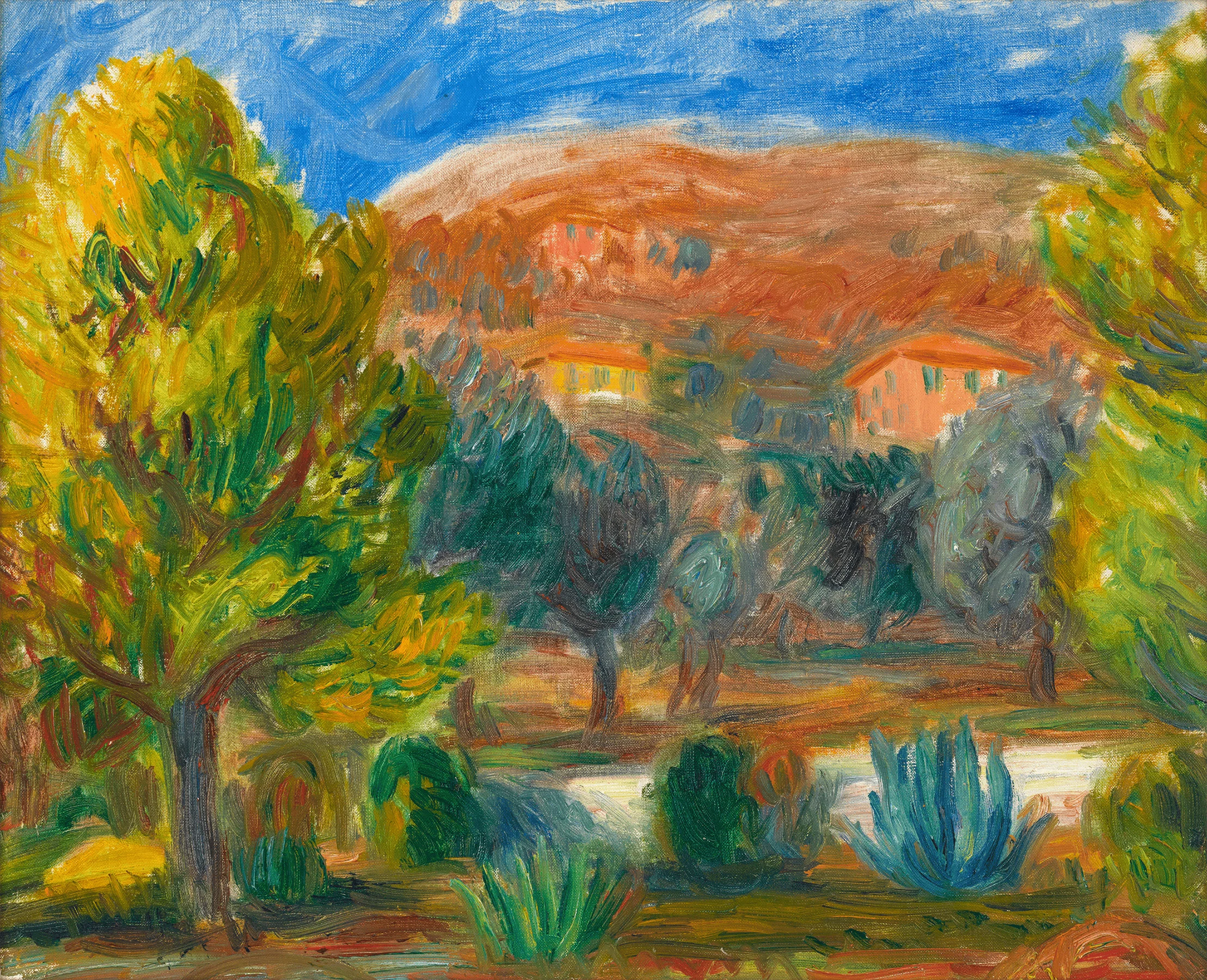
Southern France by William James Glackens
William James Glackens
1870-1938 | American
Southern France
Stamped by artist's estate “W.G. by E.G.” (en verso)
Oil on canvas board
William James Glackens was one of the most important figures in American modern art, celebrated for his brilliant color, painterly brushwork and joyful interpretation of modern life. His luminous palette and admiration for French Impressionism, especially the art of Pierre-Auguste Renoir, earned him the nickname “The American Renoir.” Painted in southern France circa 1925, this vibrant landscape belongs to the celebrated body of French paintings that many critics considered among the finest works of his career.
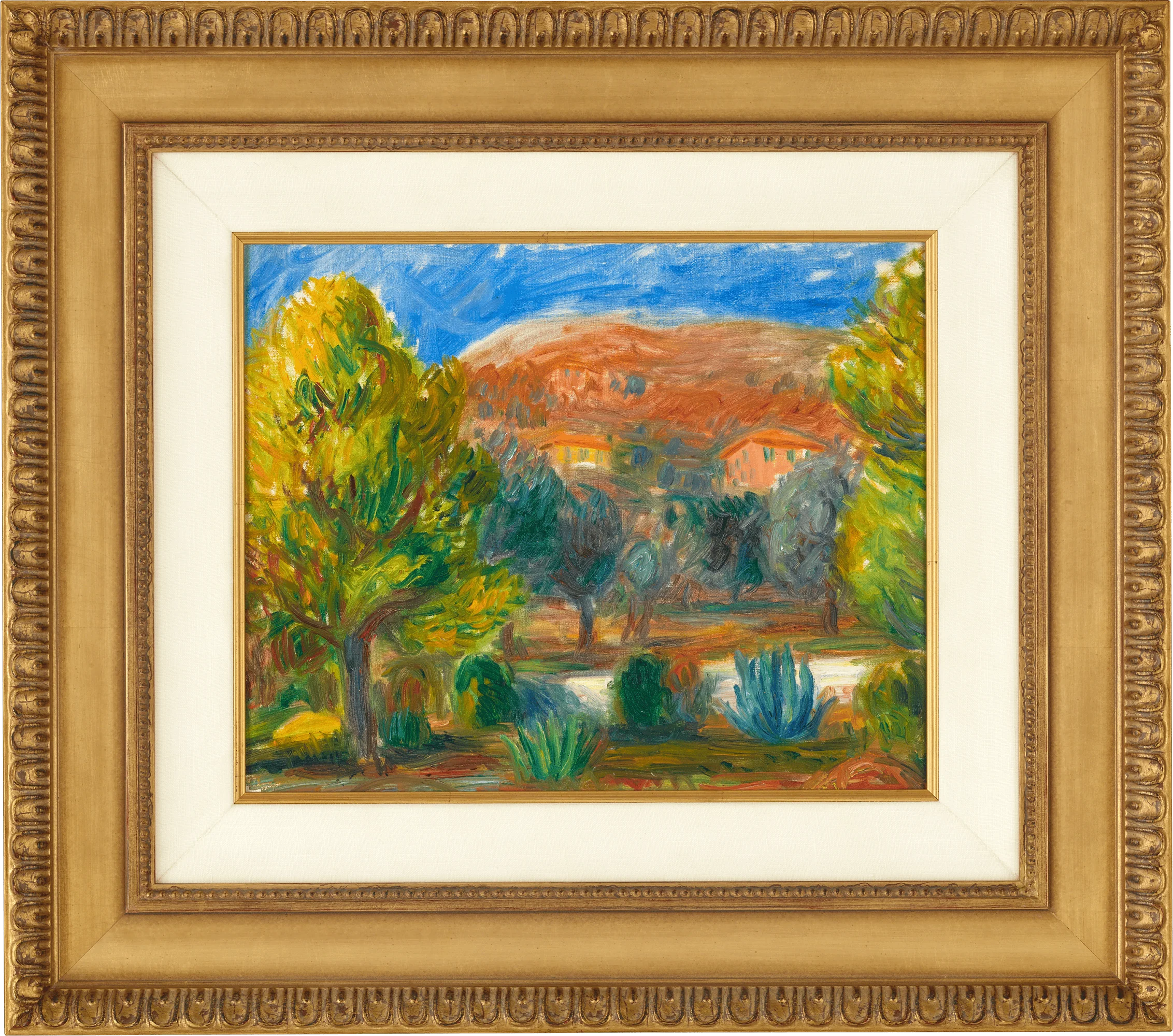
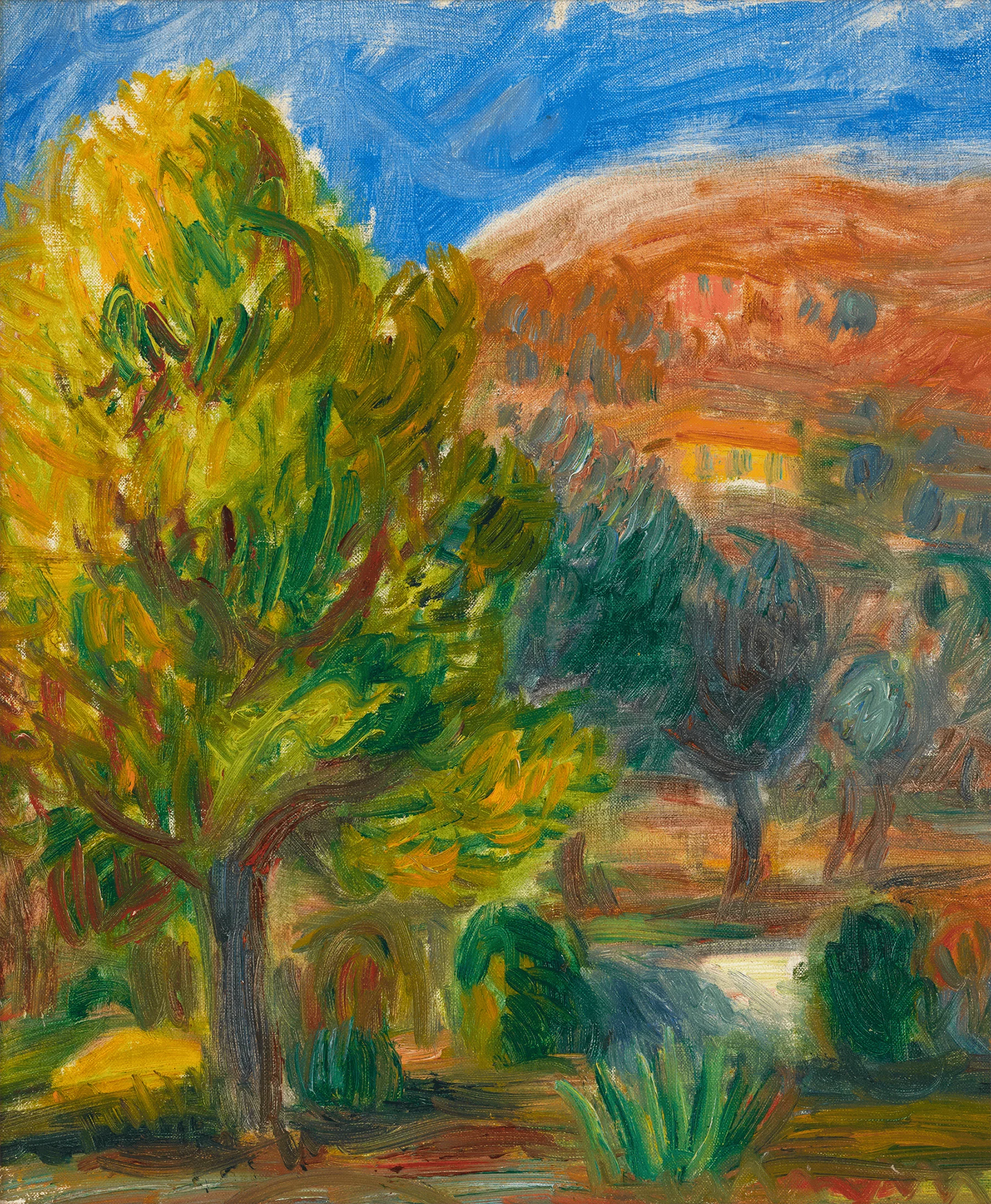
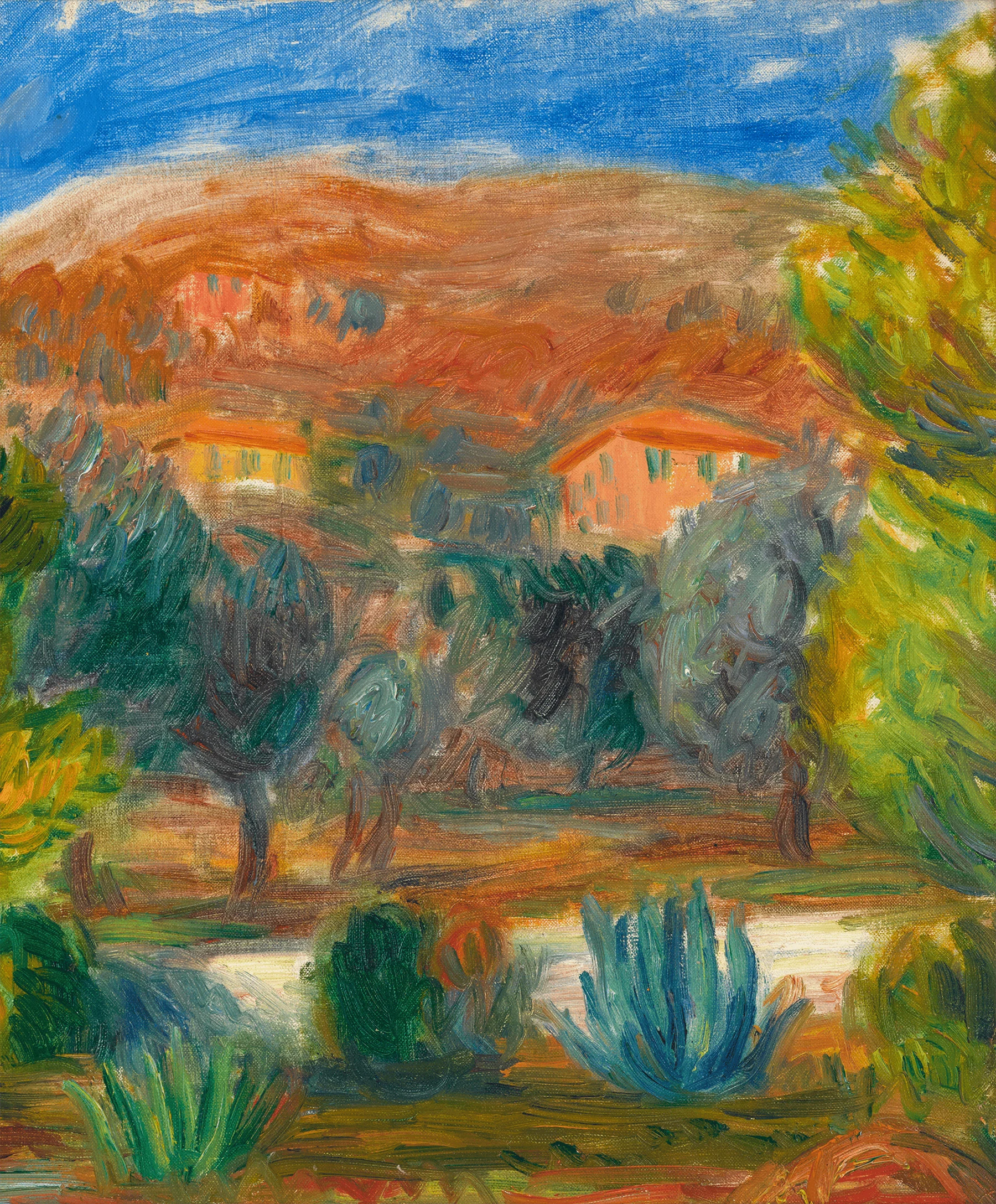
Alive with expressive brushstrokes, the composition captures a sunlit hillside dotted with terracotta-roofed homes and lush Mediterranean greenery. Radiant, golden hues evoke the warmth and distinctive light of southern France, while Glackens’ energetic handling of paint fills the scene with movement and atmosphere. Between 1925 and 1931, Glackens spent much of his time in France, producing the luminous landscapes that became some of his most admired mature works. Following a 1931 exhibition of the series, one critic called them “the best work that he has ever shown,” applauding Glackens’ fresh interpretation of the region’s terraced hillsides, olive trees, villa walls and sunlit rooftops.
Born in Philadelphia in 1870, Glackens began his career as an artist-illustrator for local newspapers while studying at the Pennsylvania Academy of the Fine Arts. There, he met George Luks, John Sloan and Everett Shinn, artists who would later gather around Robert Henri and help shape the Ashcan School. In 1907, Glackens was one of the organizers of the landmark exhibition of The Eight, a bold protest against the conservative policies of the National Academy of Design.
Although associated with The Eight, Glackens’ bright, impressionistic style set him apart from many of his contemporaries. He first traveled to Europe in 1895 with Robert Henri, where he encountered the work of Renoir, Monet and other French masters who would profoundly influence his artistic vision. Today, Glackens’ paintings are held in major public collections, including the Metropolitan Museum of Art, the Art Institute of Chicago, the Phillips Collection and the Smithsonian American Art Museum.
Circa 1925
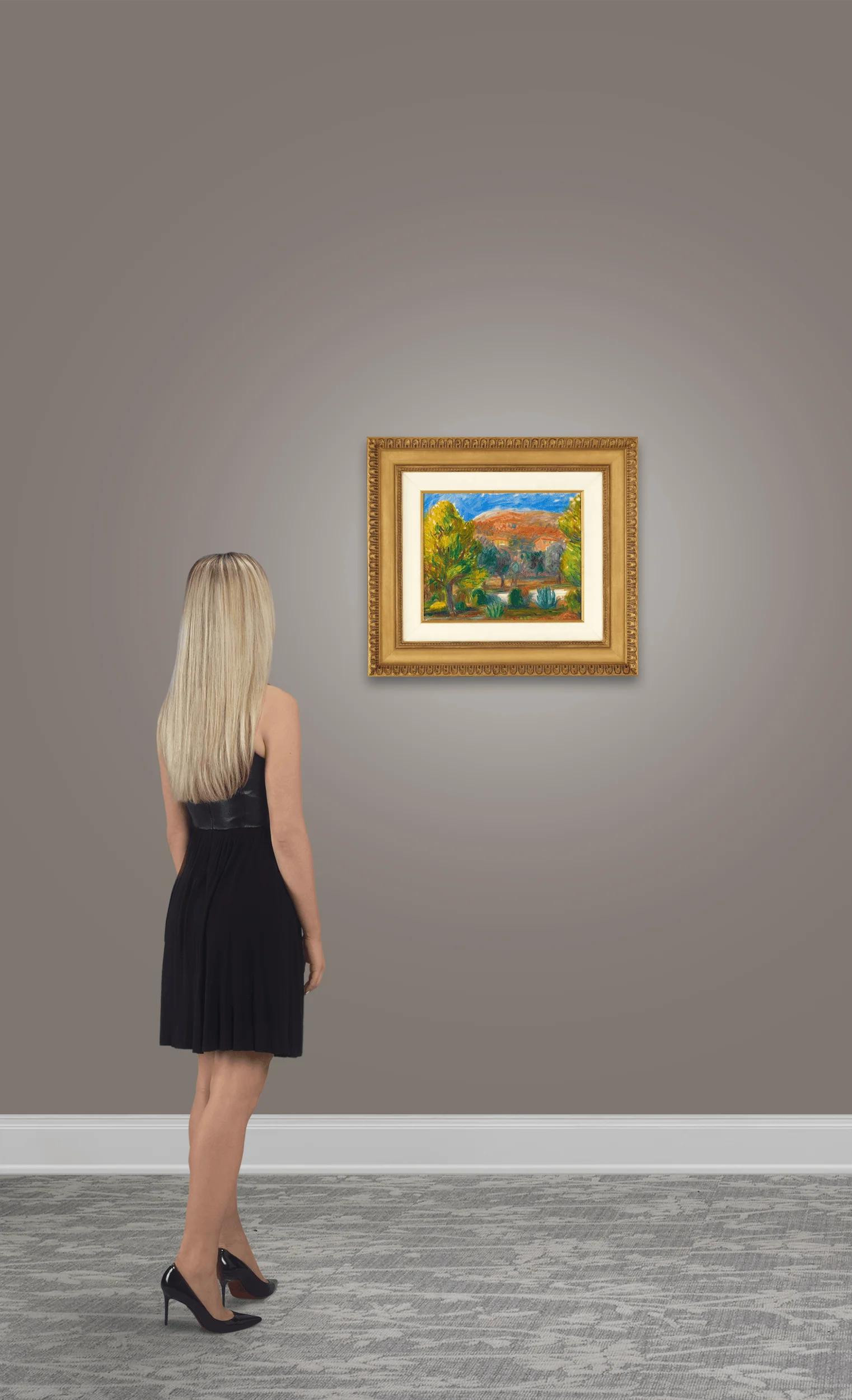
Canvas: 12 1/4" high x 15 1/4" wide (31.1 x 38.7 cm)
Frame: 22 3/4" high x 25 3/4" wide x 2" deep (57.8 x 65.4 x 5.1 cm)
Provenance:
Estate of the artist
Private collection of Ira Glackens, the artist’s son, West Virginia and Washington, DC
Private collection, Florida
M.S. Rau, New Orleans
1870-1938 | American
Southern France
Stamped by artist's estate “W.G. by E.G.” (en verso)
Oil on canvas board
William James Glackens was one of the most important figures in American modern art, celebrated for his brilliant color, painterly brushwork and joyful interpretation of modern life. His luminous palette and admiration for French Impressionism, especially the art of Pierre-Auguste Renoir, earned him the nickname “The American Renoir.” Painted in southern France circa 1925, this vibrant landscape belongs to the celebrated body of French paintings that many critics considered among the finest works of his career.
Alive with expressive brushstrokes, the composition captures a sunlit hillside dotted with terracotta-roofed homes and lush Mediterranean greenery. Radiant, golden hues evoke the warmth and distinctive light of southern France, while Glackens’ energetic handling of paint fills the scene with movement and atmosphere. Between 1925 and 1931, Glackens spent much of his time in France, producing the luminous landscapes that became some of his most admired mature works. Following a 1931 exhibition of the series, one critic called them “the best work that he has ever shown,” applauding Glackens’ fresh interpretation of the region’s terraced hillsides, olive trees, villa walls and sunlit rooftops.
Born in Philadelphia in 1870, Glackens began his career as an artist-illustrator for local newspapers while studying at the Pennsylvania Academy of the Fine Arts. There, he met George Luks, John Sloan and Everett Shinn, artists who would later gather around Robert Henri and help shape the Ashcan School. In 1907, Glackens was one of the organizers of the landmark exhibition of The Eight, a bold protest against the conservative policies of the National Academy of Design.
Although associated with The Eight, Glackens’ bright, impressionistic style set him apart from many of his contemporaries. He first traveled to Europe in 1895 with Robert Henri, where he encountered the work of Renoir, Monet and other French masters who would profoundly influence his artistic vision. Today, Glackens’ paintings are held in major public collections, including the Metropolitan Museum of Art, the Art Institute of Chicago, the Phillips Collection and the Smithsonian American Art Museum.
Circa 1925
Canvas: 12 1/4" high x 15 1/4" wide (31.1 x 38.7 cm)
Frame: 22 3/4" high x 25 3/4" wide x 2" deep (57.8 x 65.4 x 5.1 cm)
Provenance:
Estate of the artist
Private collection of Ira Glackens, the artist’s son, West Virginia and Washington, DC
Private collection, Florida
M.S. Rau, New Orleans
$26,075.00
Original: $74,500.00
-65%Southern France by William James Glackens—
$74,500.00
$26,075.00More Images
Southern France by William James Glackens
William James Glackens
1870-1938 | American
Southern France
Stamped by artist's estate “W.G. by E.G.” (en verso)
Oil on canvas board
William James Glackens was one of the most important figures in American modern art, celebrated for his brilliant color, painterly brushwork and joyful interpretation of modern life. His luminous palette and admiration for French Impressionism, especially the art of Pierre-Auguste Renoir, earned him the nickname “The American Renoir.” Painted in southern France circa 1925, this vibrant landscape belongs to the celebrated body of French paintings that many critics considered among the finest works of his career.
Alive with expressive brushstrokes, the composition captures a sunlit hillside dotted with terracotta-roofed homes and lush Mediterranean greenery. Radiant, golden hues evoke the warmth and distinctive light of southern France, while Glackens’ energetic handling of paint fills the scene with movement and atmosphere. Between 1925 and 1931, Glackens spent much of his time in France, producing the luminous landscapes that became some of his most admired mature works. Following a 1931 exhibition of the series, one critic called them “the best work that he has ever shown,” applauding Glackens’ fresh interpretation of the region’s terraced hillsides, olive trees, villa walls and sunlit rooftops.
Born in Philadelphia in 1870, Glackens began his career as an artist-illustrator for local newspapers while studying at the Pennsylvania Academy of the Fine Arts. There, he met George Luks, John Sloan and Everett Shinn, artists who would later gather around Robert Henri and help shape the Ashcan School. In 1907, Glackens was one of the organizers of the landmark exhibition of The Eight, a bold protest against the conservative policies of the National Academy of Design.
Although associated with The Eight, Glackens’ bright, impressionistic style set him apart from many of his contemporaries. He first traveled to Europe in 1895 with Robert Henri, where he encountered the work of Renoir, Monet and other French masters who would profoundly influence his artistic vision. Today, Glackens’ paintings are held in major public collections, including the Metropolitan Museum of Art, the Art Institute of Chicago, the Phillips Collection and the Smithsonian American Art Museum.
Circa 1925
Canvas: 12 1/4" high x 15 1/4" wide (31.1 x 38.7 cm)
Frame: 22 3/4" high x 25 3/4" wide x 2" deep (57.8 x 65.4 x 5.1 cm)
Provenance:
Estate of the artist
Private collection of Ira Glackens, the artist’s son, West Virginia and Washington, DC
Private collection, Florida
M.S. Rau, New Orleans
1870-1938 | American
Southern France
Stamped by artist's estate “W.G. by E.G.” (en verso)
Oil on canvas board
William James Glackens was one of the most important figures in American modern art, celebrated for his brilliant color, painterly brushwork and joyful interpretation of modern life. His luminous palette and admiration for French Impressionism, especially the art of Pierre-Auguste Renoir, earned him the nickname “The American Renoir.” Painted in southern France circa 1925, this vibrant landscape belongs to the celebrated body of French paintings that many critics considered among the finest works of his career.
Alive with expressive brushstrokes, the composition captures a sunlit hillside dotted with terracotta-roofed homes and lush Mediterranean greenery. Radiant, golden hues evoke the warmth and distinctive light of southern France, while Glackens’ energetic handling of paint fills the scene with movement and atmosphere. Between 1925 and 1931, Glackens spent much of his time in France, producing the luminous landscapes that became some of his most admired mature works. Following a 1931 exhibition of the series, one critic called them “the best work that he has ever shown,” applauding Glackens’ fresh interpretation of the region’s terraced hillsides, olive trees, villa walls and sunlit rooftops.
Born in Philadelphia in 1870, Glackens began his career as an artist-illustrator for local newspapers while studying at the Pennsylvania Academy of the Fine Arts. There, he met George Luks, John Sloan and Everett Shinn, artists who would later gather around Robert Henri and help shape the Ashcan School. In 1907, Glackens was one of the organizers of the landmark exhibition of The Eight, a bold protest against the conservative policies of the National Academy of Design.
Although associated with The Eight, Glackens’ bright, impressionistic style set him apart from many of his contemporaries. He first traveled to Europe in 1895 with Robert Henri, where he encountered the work of Renoir, Monet and other French masters who would profoundly influence his artistic vision. Today, Glackens’ paintings are held in major public collections, including the Metropolitan Museum of Art, the Art Institute of Chicago, the Phillips Collection and the Smithsonian American Art Museum.
Circa 1925
Canvas: 12 1/4" high x 15 1/4" wide (31.1 x 38.7 cm)
Frame: 22 3/4" high x 25 3/4" wide x 2" deep (57.8 x 65.4 x 5.1 cm)
Provenance:
Estate of the artist
Private collection of Ira Glackens, the artist’s son, West Virginia and Washington, DC
Private collection, Florida
M.S. Rau, New Orleans
Product Information
Product Information
Shipping & Returns
Shipping & Returns
Description
William James Glackens
1870-1938 | American
Southern France
Stamped by artist's estate “W.G. by E.G.” (en verso)
Oil on canvas board
William James Glackens was one of the most important figures in American modern art, celebrated for his brilliant color, painterly brushwork and joyful interpretation of modern life. His luminous palette and admiration for French Impressionism, especially the art of Pierre-Auguste Renoir, earned him the nickname “The American Renoir.” Painted in southern France circa 1925, this vibrant landscape belongs to the celebrated body of French paintings that many critics considered among the finest works of his career.
Alive with expressive brushstrokes, the composition captures a sunlit hillside dotted with terracotta-roofed homes and lush Mediterranean greenery. Radiant, golden hues evoke the warmth and distinctive light of southern France, while Glackens’ energetic handling of paint fills the scene with movement and atmosphere. Between 1925 and 1931, Glackens spent much of his time in France, producing the luminous landscapes that became some of his most admired mature works. Following a 1931 exhibition of the series, one critic called them “the best work that he has ever shown,” applauding Glackens’ fresh interpretation of the region’s terraced hillsides, olive trees, villa walls and sunlit rooftops.
Born in Philadelphia in 1870, Glackens began his career as an artist-illustrator for local newspapers while studying at the Pennsylvania Academy of the Fine Arts. There, he met George Luks, John Sloan and Everett Shinn, artists who would later gather around Robert Henri and help shape the Ashcan School. In 1907, Glackens was one of the organizers of the landmark exhibition of The Eight, a bold protest against the conservative policies of the National Academy of Design.
Although associated with The Eight, Glackens’ bright, impressionistic style set him apart from many of his contemporaries. He first traveled to Europe in 1895 with Robert Henri, where he encountered the work of Renoir, Monet and other French masters who would profoundly influence his artistic vision. Today, Glackens’ paintings are held in major public collections, including the Metropolitan Museum of Art, the Art Institute of Chicago, the Phillips Collection and the Smithsonian American Art Museum.
Circa 1925
Canvas: 12 1/4" high x 15 1/4" wide (31.1 x 38.7 cm)
Frame: 22 3/4" high x 25 3/4" wide x 2" deep (57.8 x 65.4 x 5.1 cm)
Provenance:
Estate of the artist
Private collection of Ira Glackens, the artist’s son, West Virginia and Washington, DC
Private collection, Florida
M.S. Rau, New Orleans
1870-1938 | American
Southern France
Stamped by artist's estate “W.G. by E.G.” (en verso)
Oil on canvas board
William James Glackens was one of the most important figures in American modern art, celebrated for his brilliant color, painterly brushwork and joyful interpretation of modern life. His luminous palette and admiration for French Impressionism, especially the art of Pierre-Auguste Renoir, earned him the nickname “The American Renoir.” Painted in southern France circa 1925, this vibrant landscape belongs to the celebrated body of French paintings that many critics considered among the finest works of his career.
Alive with expressive brushstrokes, the composition captures a sunlit hillside dotted with terracotta-roofed homes and lush Mediterranean greenery. Radiant, golden hues evoke the warmth and distinctive light of southern France, while Glackens’ energetic handling of paint fills the scene with movement and atmosphere. Between 1925 and 1931, Glackens spent much of his time in France, producing the luminous landscapes that became some of his most admired mature works. Following a 1931 exhibition of the series, one critic called them “the best work that he has ever shown,” applauding Glackens’ fresh interpretation of the region’s terraced hillsides, olive trees, villa walls and sunlit rooftops.
Born in Philadelphia in 1870, Glackens began his career as an artist-illustrator for local newspapers while studying at the Pennsylvania Academy of the Fine Arts. There, he met George Luks, John Sloan and Everett Shinn, artists who would later gather around Robert Henri and help shape the Ashcan School. In 1907, Glackens was one of the organizers of the landmark exhibition of The Eight, a bold protest against the conservative policies of the National Academy of Design.
Although associated with The Eight, Glackens’ bright, impressionistic style set him apart from many of his contemporaries. He first traveled to Europe in 1895 with Robert Henri, where he encountered the work of Renoir, Monet and other French masters who would profoundly influence his artistic vision. Today, Glackens’ paintings are held in major public collections, including the Metropolitan Museum of Art, the Art Institute of Chicago, the Phillips Collection and the Smithsonian American Art Museum.
Circa 1925
Canvas: 12 1/4" high x 15 1/4" wide (31.1 x 38.7 cm)
Frame: 22 3/4" high x 25 3/4" wide x 2" deep (57.8 x 65.4 x 5.1 cm)
Provenance:
Estate of the artist
Private collection of Ira Glackens, the artist’s son, West Virginia and Washington, DC
Private collection, Florida
M.S. Rau, New Orleans