✨ New Arrivals Just Dropped!Explore

Paul Storr Silver Tea Urn
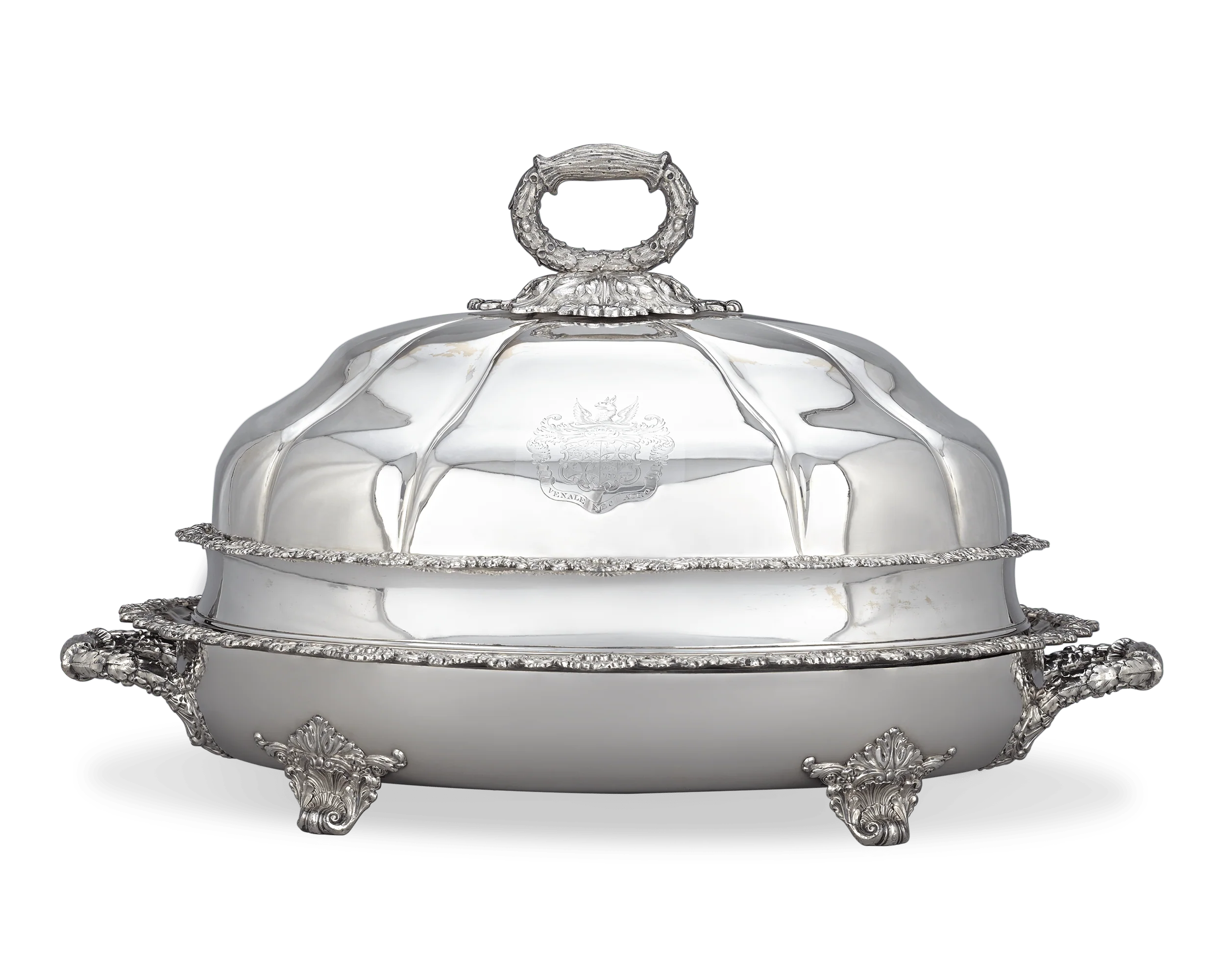
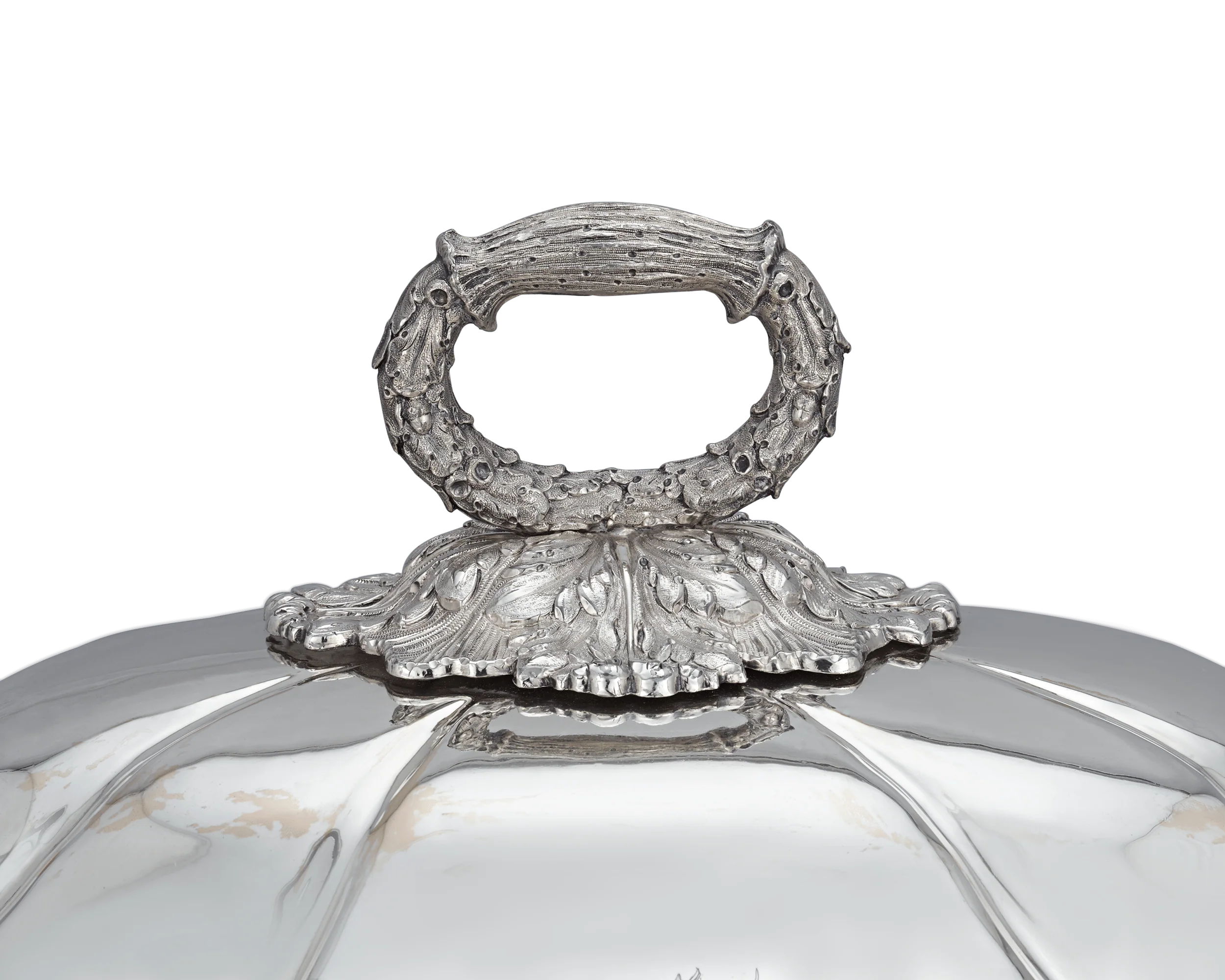
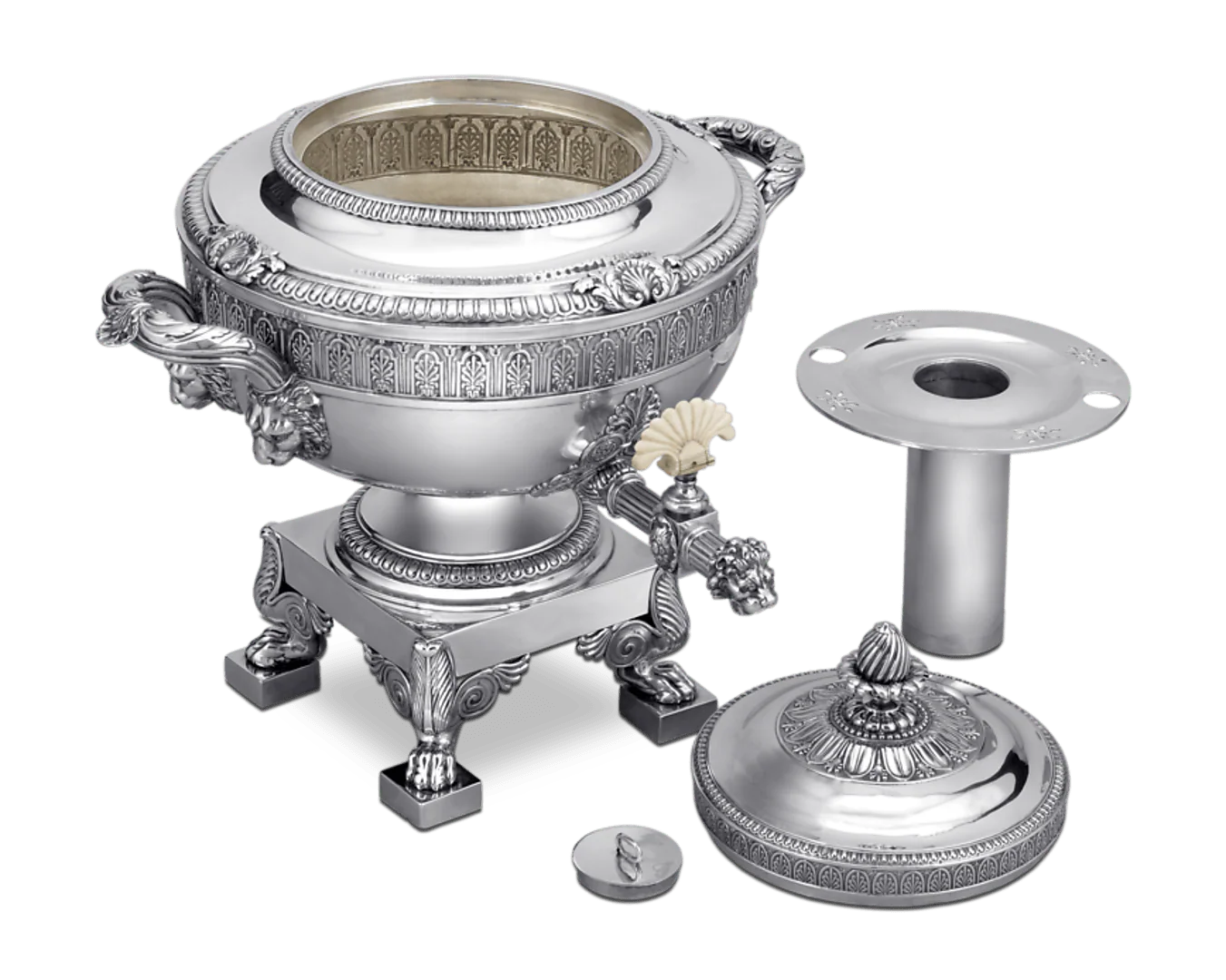
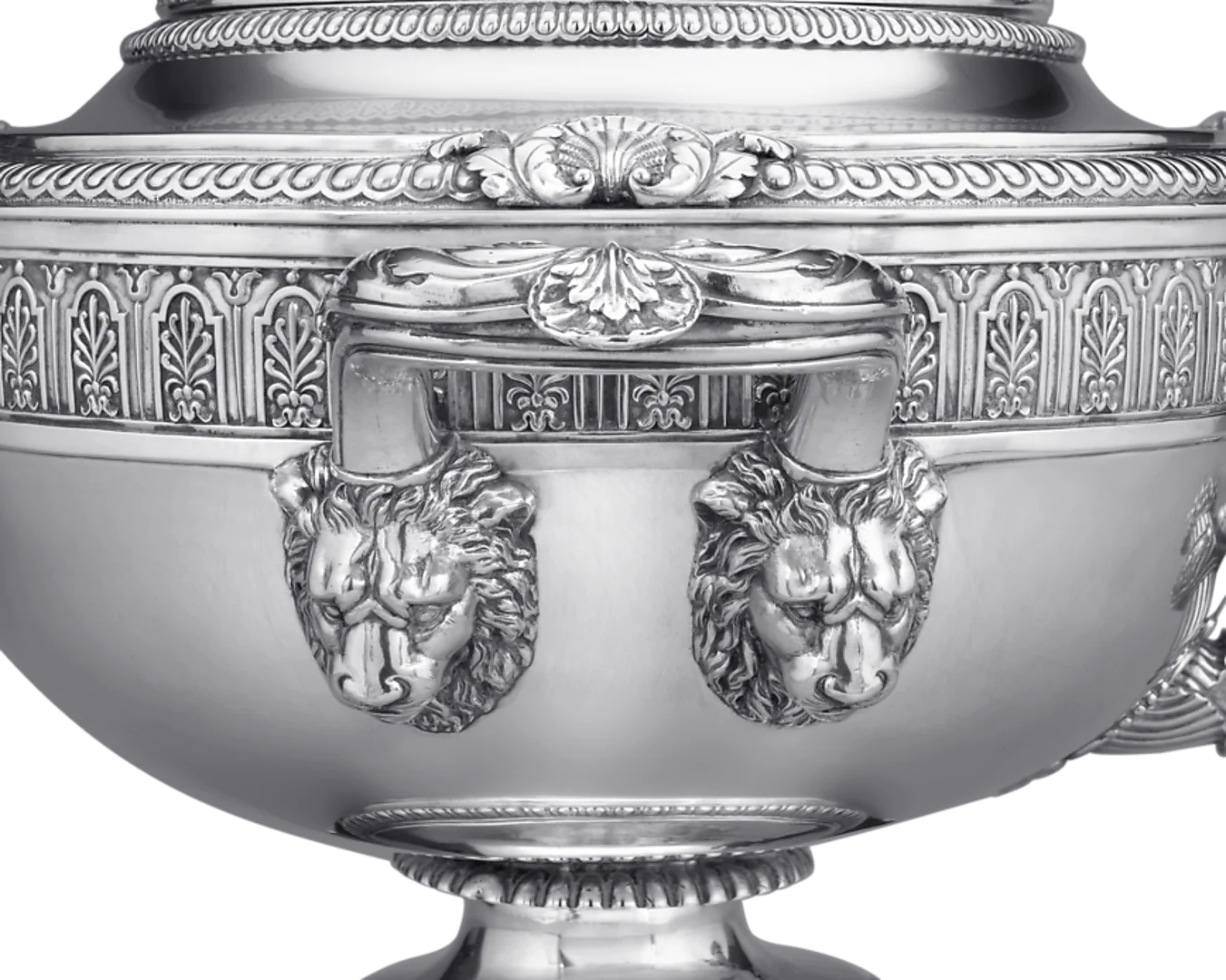
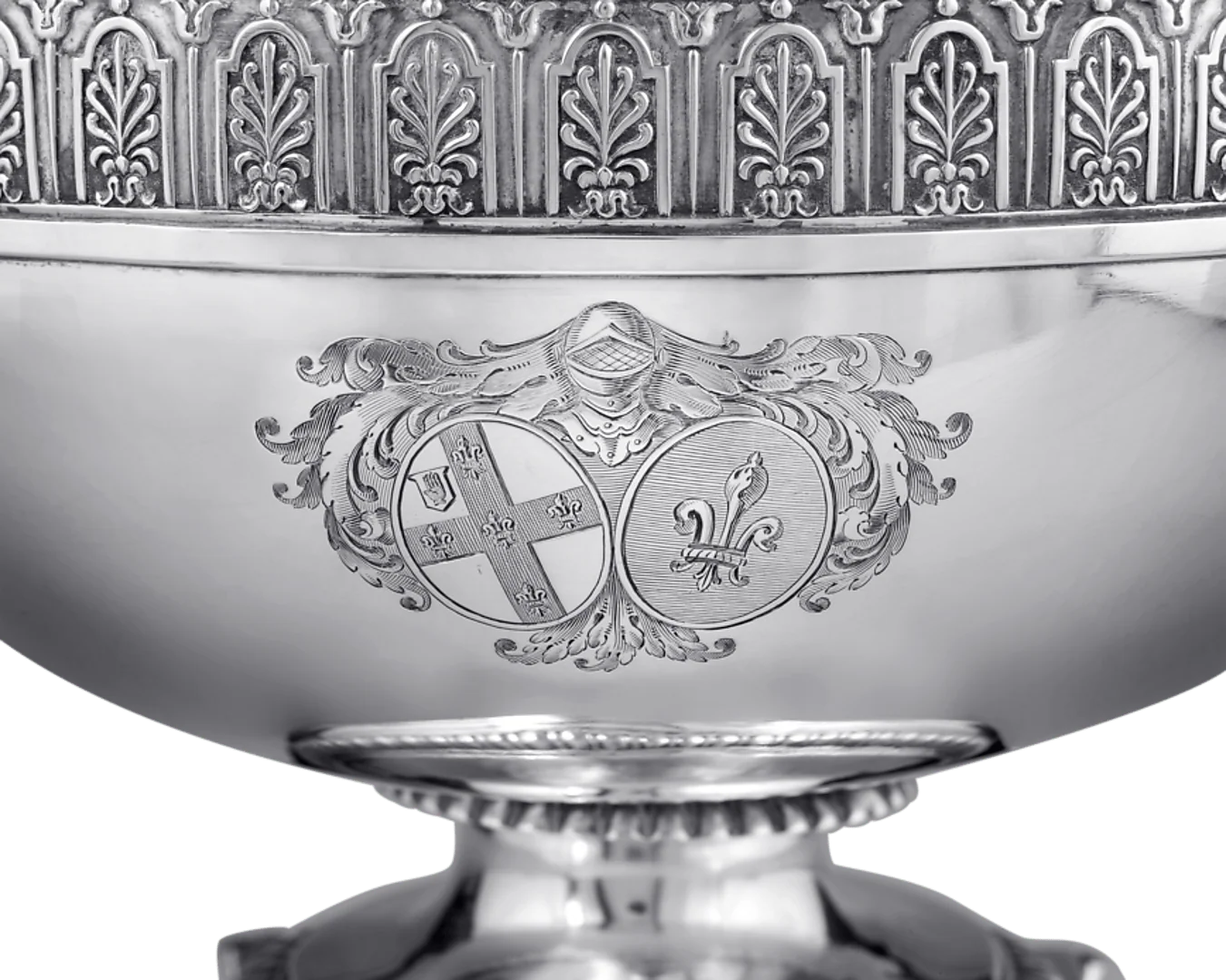
This extraordinarily rare and masterfully crafted tea urn is by the hand of the master Georgian silversmith Paul Storr. Created by Storr while working for Rundell, Bridge and Rundell, Jewelers and Goldsmiths to the King, this magnificent piece truly represents the sophisticated style of the renowned firm and the enormous talents of Paul Storr. Applied and engraved decoration envelop this masterpiece equipped with a carved handle, lion's head spigot and spectacular lion's paw supports. The piece bears the arms of the Neave Baronetcy and those of Digby, for Sir Thomas Neave and his wife Frances Caroline, daughter of the Hon. William Digby, the Dean of Durham.
Though he held no formal title, Storr enjoyed patronage from the most important and powerful figures of the period, including King George III and the Prince of Wales, the future King George IV. His first major work was a gold font commissioned by the Duke of Portland in 1797, and in 1799 he created the “Battle of the Nile Cup” for Lord Nelson. Many of Storr’s successes were partly due to the influence of Philip Rundell, of the popular silver retailing firm of Rundell, Bridge, and Rundell. Rundell’s firm nearly monopolized the early 19th-century market for superior silver, having obtained the Royal Warrant in 1806. A shrewd businessman, Rundell recognized the unique talents of Paul Storr and began pursuing him in 1803, but it wasn’t until after declining many offers that Storr finally joined the firm in 1806. Due to his remarkable talent, Storr was allowed to retain his own mark while working for Rundell.
Without question, Paul Storr is considered among history's finest smiths and he is known for perfecting the works, styles, and designs of the Regency period. His legacy is an extraordinary body of work of superior craftsmanship and quality that has seldom been seen since. Today works by this amazing smith are highly regarded and collected by museums and silver connoisseurs from around the world, though pieces are increasingly scarce.
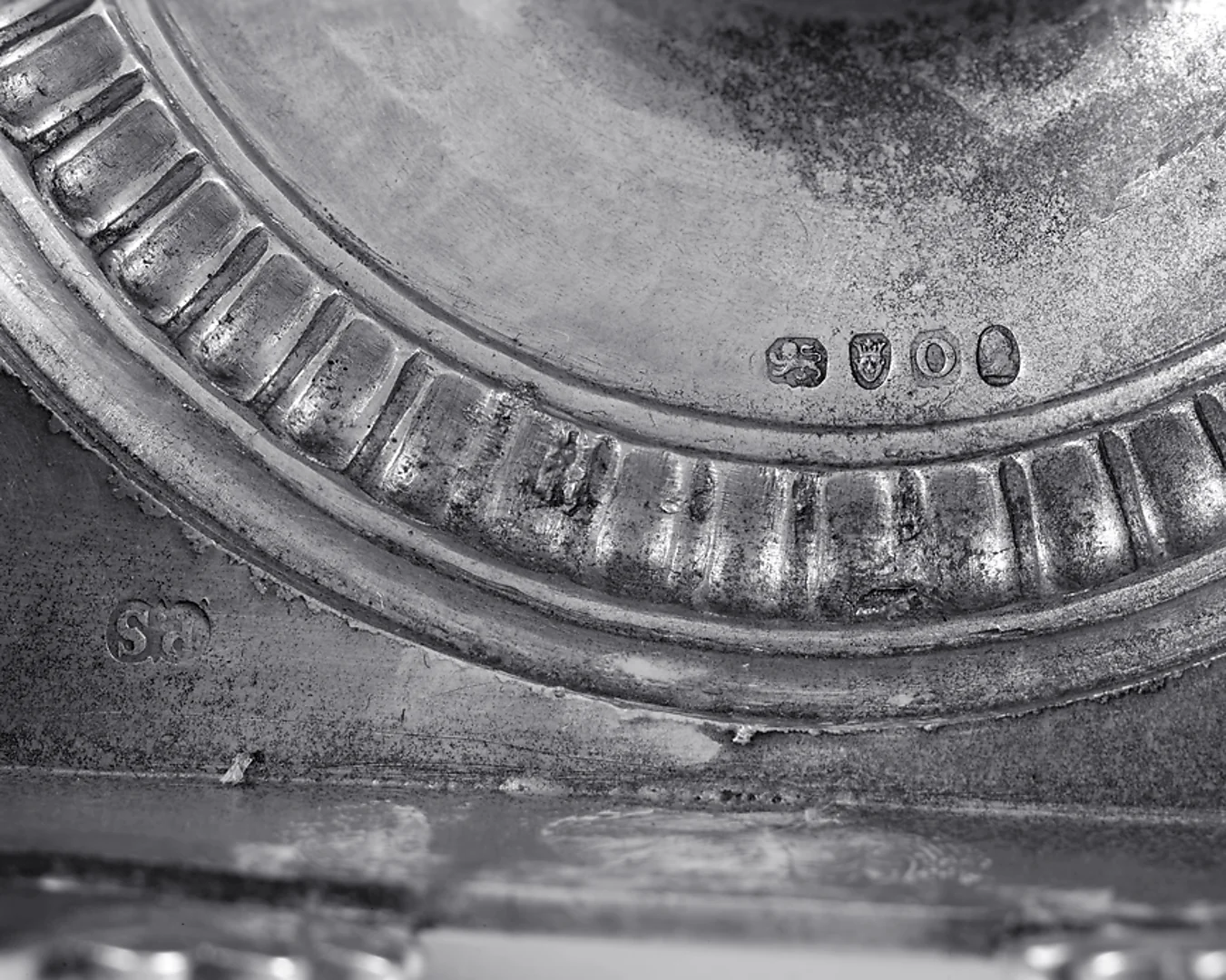
Hallmarked London, 1809
17 1/2" wide x 16" deep x 16" high
Though he held no formal title, Storr enjoyed patronage from the most important and powerful figures of the period, including King George III and the Prince of Wales, the future King George IV. His first major work was a gold font commissioned by the Duke of Portland in 1797, and in 1799 he created the “Battle of the Nile Cup” for Lord Nelson. Many of Storr’s successes were partly due to the influence of Philip Rundell, of the popular silver retailing firm of Rundell, Bridge, and Rundell. Rundell’s firm nearly monopolized the early 19th-century market for superior silver, having obtained the Royal Warrant in 1806. A shrewd businessman, Rundell recognized the unique talents of Paul Storr and began pursuing him in 1803, but it wasn’t until after declining many offers that Storr finally joined the firm in 1806. Due to his remarkable talent, Storr was allowed to retain his own mark while working for Rundell.
Without question, Paul Storr is considered among history's finest smiths and he is known for perfecting the works, styles, and designs of the Regency period. His legacy is an extraordinary body of work of superior craftsmanship and quality that has seldom been seen since. Today works by this amazing smith are highly regarded and collected by museums and silver connoisseurs from around the world, though pieces are increasingly scarce.
Hallmarked London, 1809
17 1/2" wide x 16" deep x 16" high
$30,975.00
Original: $88,500.00
-65%Paul Storr Silver Tea Urn—
$88,500.00
$30,975.00More Images





Paul Storr Silver Tea Urn
This extraordinarily rare and masterfully crafted tea urn is by the hand of the master Georgian silversmith Paul Storr. Created by Storr while working for Rundell, Bridge and Rundell, Jewelers and Goldsmiths to the King, this magnificent piece truly represents the sophisticated style of the renowned firm and the enormous talents of Paul Storr. Applied and engraved decoration envelop this masterpiece equipped with a carved handle, lion's head spigot and spectacular lion's paw supports. The piece bears the arms of the Neave Baronetcy and those of Digby, for Sir Thomas Neave and his wife Frances Caroline, daughter of the Hon. William Digby, the Dean of Durham.
Though he held no formal title, Storr enjoyed patronage from the most important and powerful figures of the period, including King George III and the Prince of Wales, the future King George IV. His first major work was a gold font commissioned by the Duke of Portland in 1797, and in 1799 he created the “Battle of the Nile Cup” for Lord Nelson. Many of Storr’s successes were partly due to the influence of Philip Rundell, of the popular silver retailing firm of Rundell, Bridge, and Rundell. Rundell’s firm nearly monopolized the early 19th-century market for superior silver, having obtained the Royal Warrant in 1806. A shrewd businessman, Rundell recognized the unique talents of Paul Storr and began pursuing him in 1803, but it wasn’t until after declining many offers that Storr finally joined the firm in 1806. Due to his remarkable talent, Storr was allowed to retain his own mark while working for Rundell.
Without question, Paul Storr is considered among history's finest smiths and he is known for perfecting the works, styles, and designs of the Regency period. His legacy is an extraordinary body of work of superior craftsmanship and quality that has seldom been seen since. Today works by this amazing smith are highly regarded and collected by museums and silver connoisseurs from around the world, though pieces are increasingly scarce.
Hallmarked London, 1809
17 1/2" wide x 16" deep x 16" high
Though he held no formal title, Storr enjoyed patronage from the most important and powerful figures of the period, including King George III and the Prince of Wales, the future King George IV. His first major work was a gold font commissioned by the Duke of Portland in 1797, and in 1799 he created the “Battle of the Nile Cup” for Lord Nelson. Many of Storr’s successes were partly due to the influence of Philip Rundell, of the popular silver retailing firm of Rundell, Bridge, and Rundell. Rundell’s firm nearly monopolized the early 19th-century market for superior silver, having obtained the Royal Warrant in 1806. A shrewd businessman, Rundell recognized the unique talents of Paul Storr and began pursuing him in 1803, but it wasn’t until after declining many offers that Storr finally joined the firm in 1806. Due to his remarkable talent, Storr was allowed to retain his own mark while working for Rundell.
Without question, Paul Storr is considered among history's finest smiths and he is known for perfecting the works, styles, and designs of the Regency period. His legacy is an extraordinary body of work of superior craftsmanship and quality that has seldom been seen since. Today works by this amazing smith are highly regarded and collected by museums and silver connoisseurs from around the world, though pieces are increasingly scarce.
Hallmarked London, 1809
17 1/2" wide x 16" deep x 16" high
Product Information
Product Information
Shipping & Returns
Shipping & Returns
Description
This extraordinarily rare and masterfully crafted tea urn is by the hand of the master Georgian silversmith Paul Storr. Created by Storr while working for Rundell, Bridge and Rundell, Jewelers and Goldsmiths to the King, this magnificent piece truly represents the sophisticated style of the renowned firm and the enormous talents of Paul Storr. Applied and engraved decoration envelop this masterpiece equipped with a carved handle, lion's head spigot and spectacular lion's paw supports. The piece bears the arms of the Neave Baronetcy and those of Digby, for Sir Thomas Neave and his wife Frances Caroline, daughter of the Hon. William Digby, the Dean of Durham.
Though he held no formal title, Storr enjoyed patronage from the most important and powerful figures of the period, including King George III and the Prince of Wales, the future King George IV. His first major work was a gold font commissioned by the Duke of Portland in 1797, and in 1799 he created the “Battle of the Nile Cup” for Lord Nelson. Many of Storr’s successes were partly due to the influence of Philip Rundell, of the popular silver retailing firm of Rundell, Bridge, and Rundell. Rundell’s firm nearly monopolized the early 19th-century market for superior silver, having obtained the Royal Warrant in 1806. A shrewd businessman, Rundell recognized the unique talents of Paul Storr and began pursuing him in 1803, but it wasn’t until after declining many offers that Storr finally joined the firm in 1806. Due to his remarkable talent, Storr was allowed to retain his own mark while working for Rundell.
Without question, Paul Storr is considered among history's finest smiths and he is known for perfecting the works, styles, and designs of the Regency period. His legacy is an extraordinary body of work of superior craftsmanship and quality that has seldom been seen since. Today works by this amazing smith are highly regarded and collected by museums and silver connoisseurs from around the world, though pieces are increasingly scarce.
Hallmarked London, 1809
17 1/2" wide x 16" deep x 16" high
Though he held no formal title, Storr enjoyed patronage from the most important and powerful figures of the period, including King George III and the Prince of Wales, the future King George IV. His first major work was a gold font commissioned by the Duke of Portland in 1797, and in 1799 he created the “Battle of the Nile Cup” for Lord Nelson. Many of Storr’s successes were partly due to the influence of Philip Rundell, of the popular silver retailing firm of Rundell, Bridge, and Rundell. Rundell’s firm nearly monopolized the early 19th-century market for superior silver, having obtained the Royal Warrant in 1806. A shrewd businessman, Rundell recognized the unique talents of Paul Storr and began pursuing him in 1803, but it wasn’t until after declining many offers that Storr finally joined the firm in 1806. Due to his remarkable talent, Storr was allowed to retain his own mark while working for Rundell.
Without question, Paul Storr is considered among history's finest smiths and he is known for perfecting the works, styles, and designs of the Regency period. His legacy is an extraordinary body of work of superior craftsmanship and quality that has seldom been seen since. Today works by this amazing smith are highly regarded and collected by museums and silver connoisseurs from around the world, though pieces are increasingly scarce.
Hallmarked London, 1809
17 1/2" wide x 16" deep x 16" high