✨ New Arrivals Just Dropped!Explore

Pair of Satsuma Vases
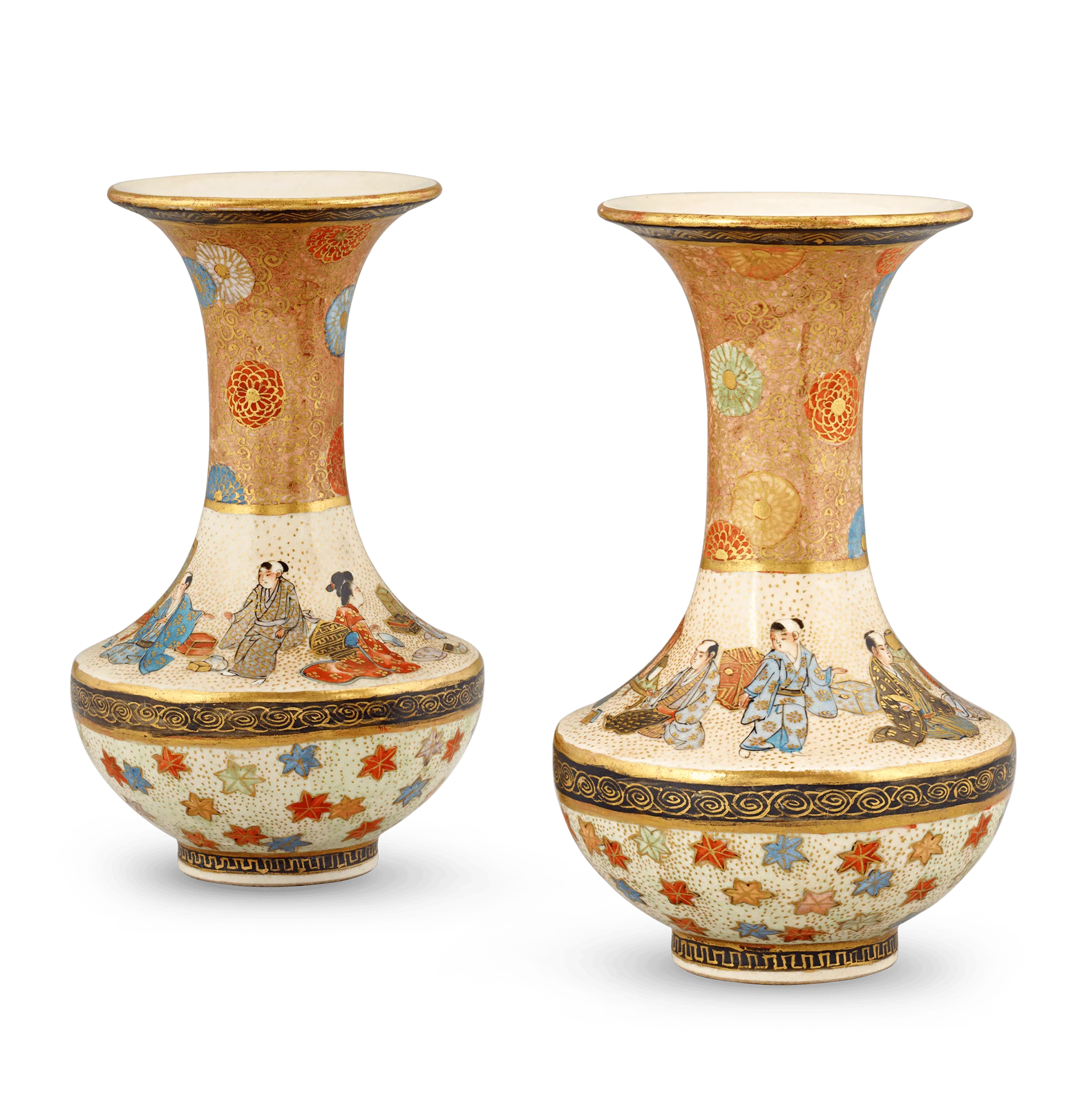
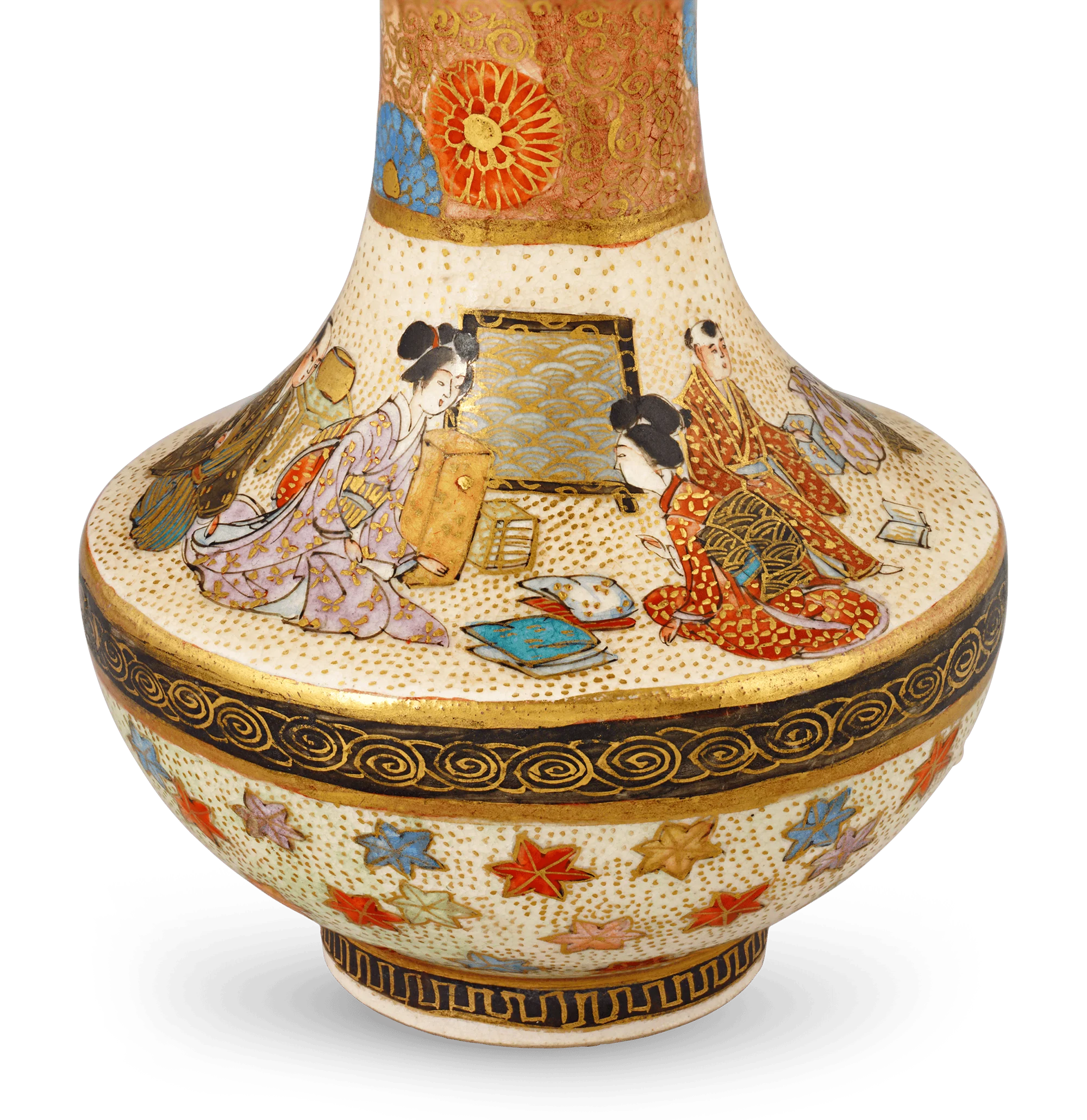
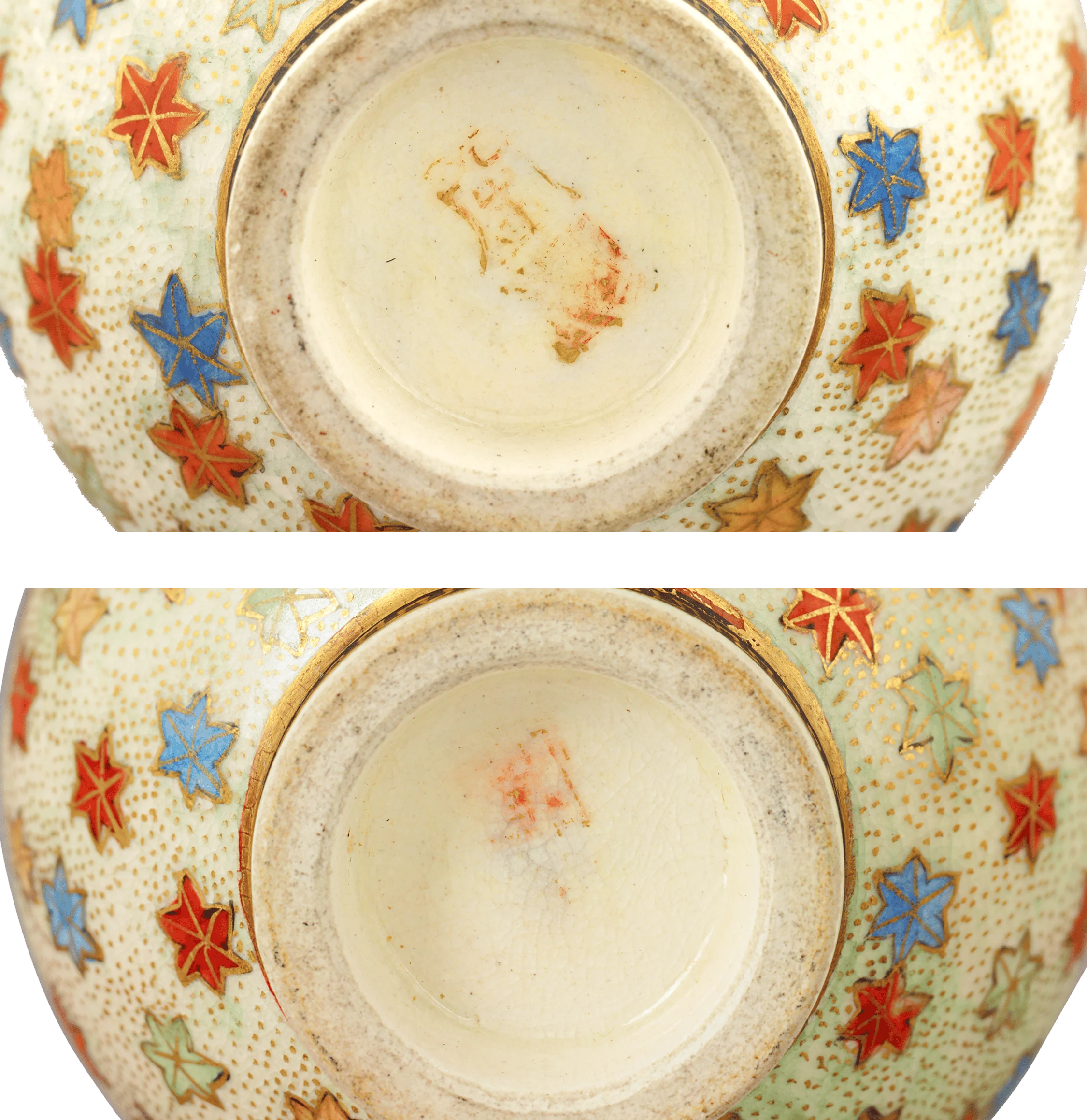
This unique pair of matching Satsuma vases includes colorful paintings of lively figures adorned in beautiful cloth and elegant gold gilding. Dainty stars and floral blooms add more delightful bursts of color to the designs. They are signed “Yasuda” on the underside, a Kyoto-based company that manufactured very fine earthenware in the Meiji period. The small stature of these vases further proves their meticulous artistry as the small figures are expertly captured. There’s a legend that the most esteemed Satsuma craftsmen risked their very sight to create such minute and exquisite details.
For over a century, Satsuma ware has captivated collectors with its intricate overglaze enameling and delicate gilding, hallmarks of Japan’s Meiji era. Born in the regions surrounding Kagoshima Prefecture, this fine pottery is a testament to nature’s beauty, with its vibrant depictions of flora and fauna. Korean artisans introduced this craft, which quickly became a staple in the homes of Japan’s elite. Satsuma ware’s international acclaim was cemented at the 1867 Exposition Universelle in Paris, transforming it into a globally coveted treasure. Today, it remains a celebrated art form, continuing its legacy as a cherished collectible.
Signed “Yasuda”
Meiji period (1868-1912)
3 3/4” high x 2 1/2” wide x 2 1/2” deep
For over a century, Satsuma ware has captivated collectors with its intricate overglaze enameling and delicate gilding, hallmarks of Japan’s Meiji era. Born in the regions surrounding Kagoshima Prefecture, this fine pottery is a testament to nature’s beauty, with its vibrant depictions of flora and fauna. Korean artisans introduced this craft, which quickly became a staple in the homes of Japan’s elite. Satsuma ware’s international acclaim was cemented at the 1867 Exposition Universelle in Paris, transforming it into a globally coveted treasure. Today, it remains a celebrated art form, continuing its legacy as a cherished collectible.
Signed “Yasuda”
Meiji period (1868-1912)
3 3/4” high x 2 1/2” wide x 2 1/2” deep
$5,450.00
Pair of Satsuma Vases—
$5,450.00
More Images

Pair of Satsuma Vases
This unique pair of matching Satsuma vases includes colorful paintings of lively figures adorned in beautiful cloth and elegant gold gilding. Dainty stars and floral blooms add more delightful bursts of color to the designs. They are signed “Yasuda” on the underside, a Kyoto-based company that manufactured very fine earthenware in the Meiji period. The small stature of these vases further proves their meticulous artistry as the small figures are expertly captured. There’s a legend that the most esteemed Satsuma craftsmen risked their very sight to create such minute and exquisite details.
For over a century, Satsuma ware has captivated collectors with its intricate overglaze enameling and delicate gilding, hallmarks of Japan’s Meiji era. Born in the regions surrounding Kagoshima Prefecture, this fine pottery is a testament to nature’s beauty, with its vibrant depictions of flora and fauna. Korean artisans introduced this craft, which quickly became a staple in the homes of Japan’s elite. Satsuma ware’s international acclaim was cemented at the 1867 Exposition Universelle in Paris, transforming it into a globally coveted treasure. Today, it remains a celebrated art form, continuing its legacy as a cherished collectible.
Signed “Yasuda”
Meiji period (1868-1912)
3 3/4” high x 2 1/2” wide x 2 1/2” deep
For over a century, Satsuma ware has captivated collectors with its intricate overglaze enameling and delicate gilding, hallmarks of Japan’s Meiji era. Born in the regions surrounding Kagoshima Prefecture, this fine pottery is a testament to nature’s beauty, with its vibrant depictions of flora and fauna. Korean artisans introduced this craft, which quickly became a staple in the homes of Japan’s elite. Satsuma ware’s international acclaim was cemented at the 1867 Exposition Universelle in Paris, transforming it into a globally coveted treasure. Today, it remains a celebrated art form, continuing its legacy as a cherished collectible.
Signed “Yasuda”
Meiji period (1868-1912)
3 3/4” high x 2 1/2” wide x 2 1/2” deep
Product Information
Product Information
Shipping & Returns
Shipping & Returns
Description
This unique pair of matching Satsuma vases includes colorful paintings of lively figures adorned in beautiful cloth and elegant gold gilding. Dainty stars and floral blooms add more delightful bursts of color to the designs. They are signed “Yasuda” on the underside, a Kyoto-based company that manufactured very fine earthenware in the Meiji period. The small stature of these vases further proves their meticulous artistry as the small figures are expertly captured. There’s a legend that the most esteemed Satsuma craftsmen risked their very sight to create such minute and exquisite details.
For over a century, Satsuma ware has captivated collectors with its intricate overglaze enameling and delicate gilding, hallmarks of Japan’s Meiji era. Born in the regions surrounding Kagoshima Prefecture, this fine pottery is a testament to nature’s beauty, with its vibrant depictions of flora and fauna. Korean artisans introduced this craft, which quickly became a staple in the homes of Japan’s elite. Satsuma ware’s international acclaim was cemented at the 1867 Exposition Universelle in Paris, transforming it into a globally coveted treasure. Today, it remains a celebrated art form, continuing its legacy as a cherished collectible.
Signed “Yasuda”
Meiji period (1868-1912)
3 3/4” high x 2 1/2” wide x 2 1/2” deep
For over a century, Satsuma ware has captivated collectors with its intricate overglaze enameling and delicate gilding, hallmarks of Japan’s Meiji era. Born in the regions surrounding Kagoshima Prefecture, this fine pottery is a testament to nature’s beauty, with its vibrant depictions of flora and fauna. Korean artisans introduced this craft, which quickly became a staple in the homes of Japan’s elite. Satsuma ware’s international acclaim was cemented at the 1867 Exposition Universelle in Paris, transforming it into a globally coveted treasure. Today, it remains a celebrated art form, continuing its legacy as a cherished collectible.
Signed “Yasuda”
Meiji period (1868-1912)
3 3/4” high x 2 1/2” wide x 2 1/2” deep