✨ New Arrivals Just Dropped!Explore

Pair of Meiji Period Bronze Birds on Driftwood Base
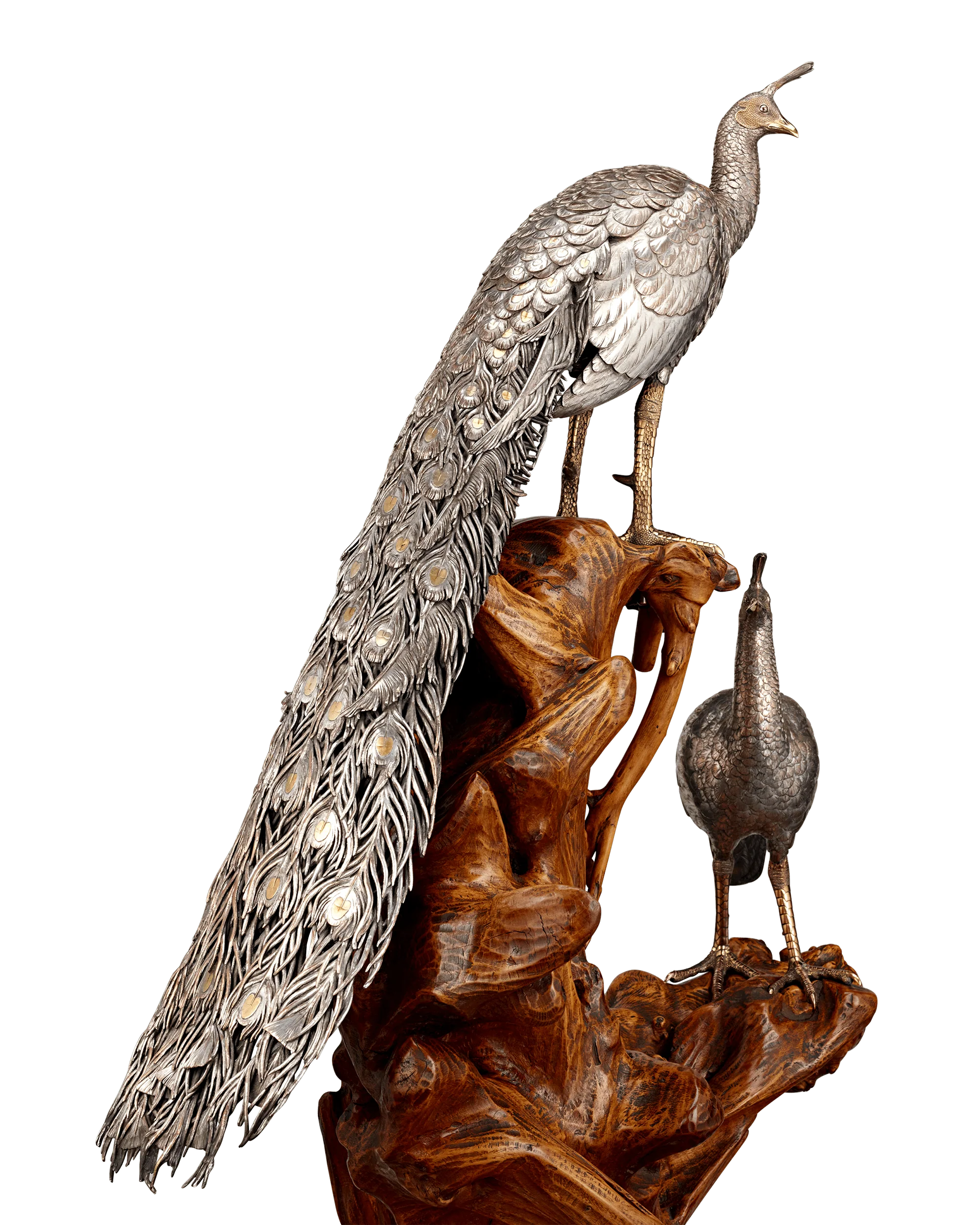
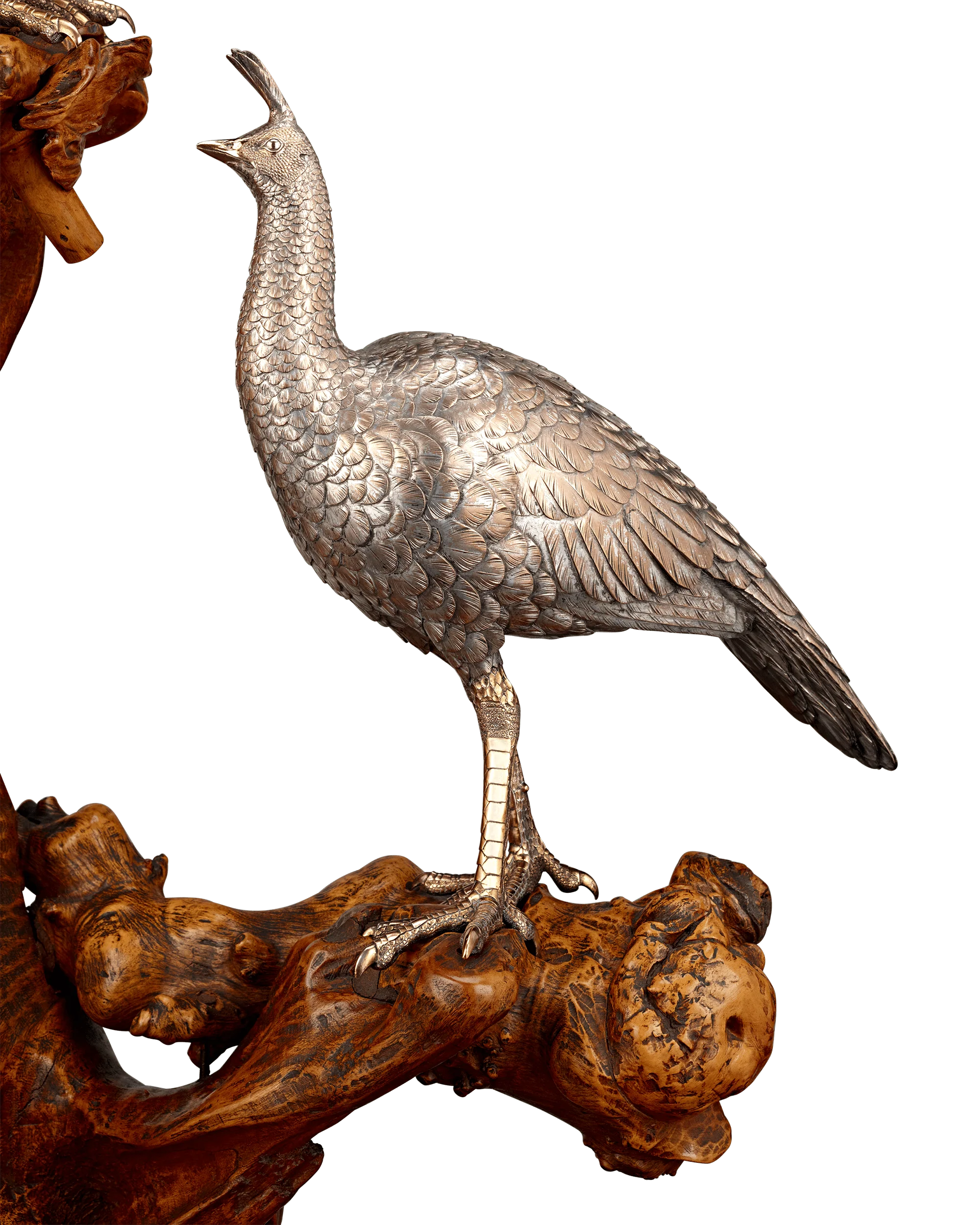
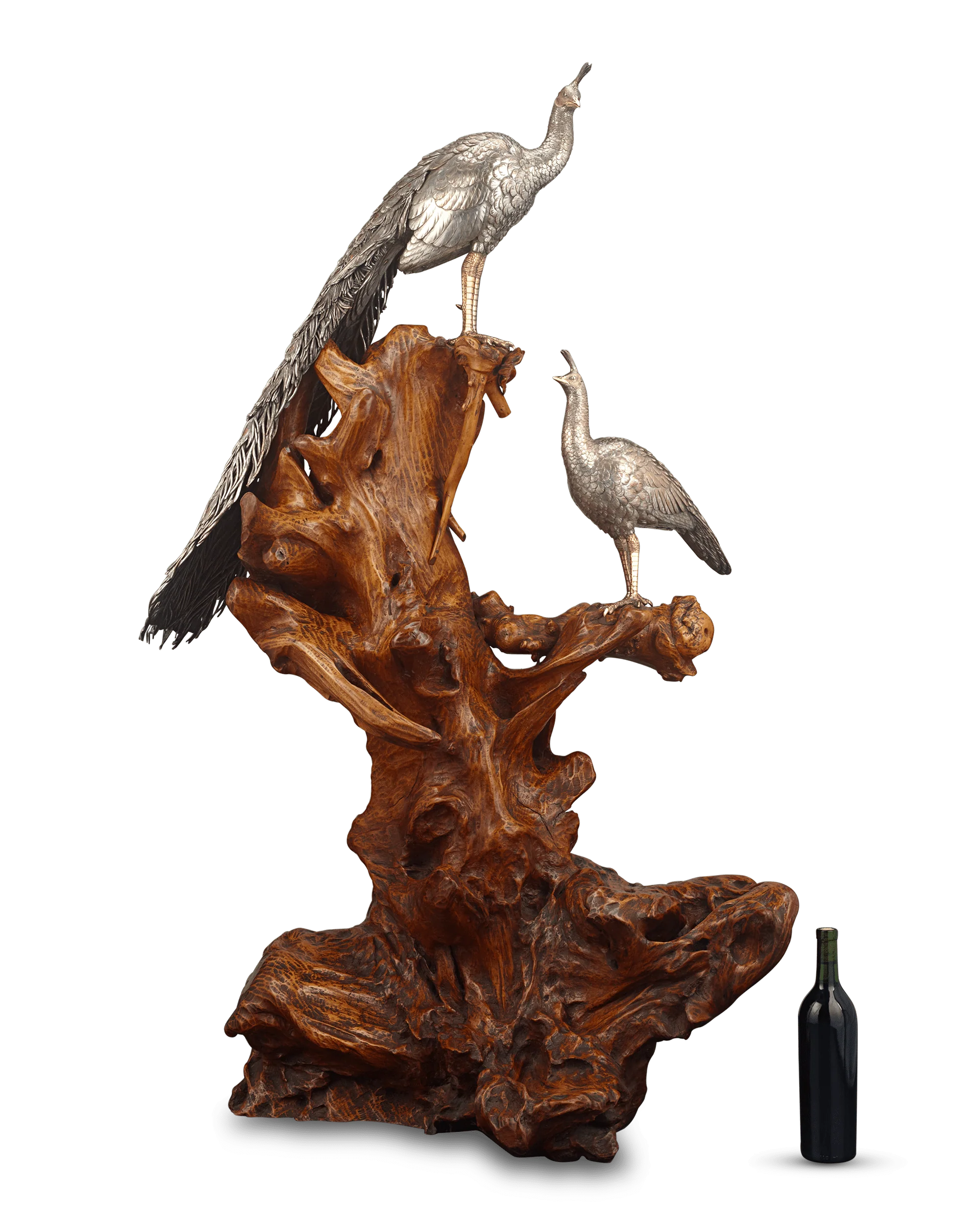
This rare and outstanding pair of Japanese okimono exemplifies the best of Meiji-period art. Formed of perfectly blended bronzes of varying patinas and fine gold work, these lifelike fowl—a peacock and a peahen—exhibit magnificent detail on every surface, from the tops of their plumed heads to individual feathers in their tails. Perched upon a driftwood pedestal of incredible natural beauty, these birds are a clear testament to their maker’s incredible skill and talent.
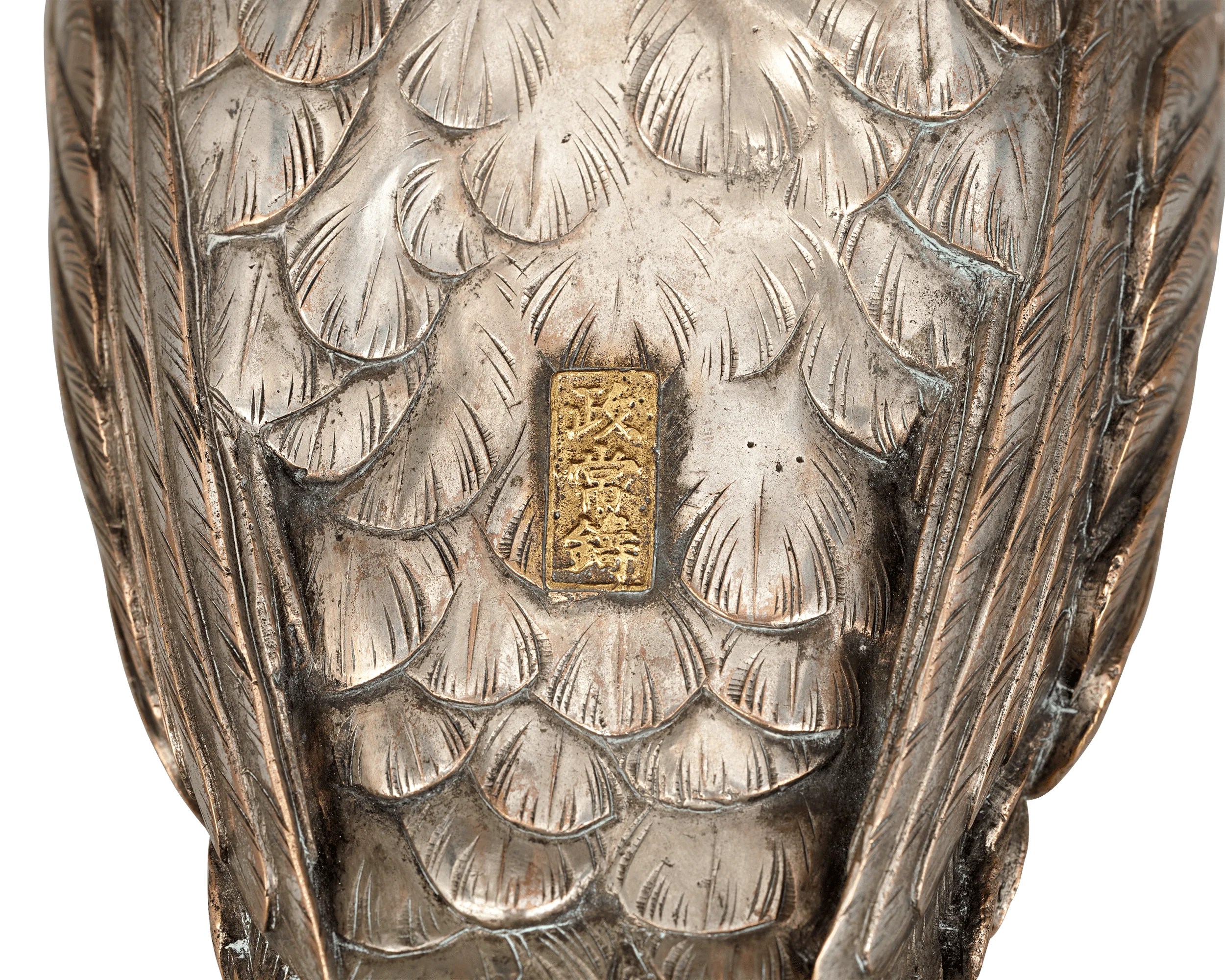
The stamp is highly likely the signature of the sword guard maker, Ishiguro Masatsune. The Ishiguro family was renowned for their exceptional sword guard craftsmanship. The artist who did this was probably Matasune III, as Matasune I died in 1828, before the start of the Meiji period.
The term okimono refers to ornamental objects crafted for display, akin to the French objet d’art. Originating in the early Meiji period, okimono embody the pinnacle of craftsmanship. With the cessation of Japan's isolationist policies, artisans, liberated from previous obligations, pursued creative endeavors with renewed vigor. Esteemed for their intricate designs and exceptional craftsmanship, okimono such as this one, depict a range of motifs from mythological narratives to auspicious animals, celebrating the zenith of artistic achievement during the Meiji period.
Each sculpture is signed in Japanese by Masatsune
Circa 1890
Peacock: 41 1/2” length (105.41 cm)
Peahen: 17 1/4” length (43.82 cm)
Sculpture and stand: 58 1/2“ tall x 23” wide x 37“ deep (148.59 x 58.42 x 93.98 cm)
The stamp is highly likely the signature of the sword guard maker, Ishiguro Masatsune. The Ishiguro family was renowned for their exceptional sword guard craftsmanship. The artist who did this was probably Matasune III, as Matasune I died in 1828, before the start of the Meiji period.
The term okimono refers to ornamental objects crafted for display, akin to the French objet d’art. Originating in the early Meiji period, okimono embody the pinnacle of craftsmanship. With the cessation of Japan's isolationist policies, artisans, liberated from previous obligations, pursued creative endeavors with renewed vigor. Esteemed for their intricate designs and exceptional craftsmanship, okimono such as this one, depict a range of motifs from mythological narratives to auspicious animals, celebrating the zenith of artistic achievement during the Meiji period.
Each sculpture is signed in Japanese by Masatsune
Circa 1890
Peacock: 41 1/2” length (105.41 cm)
Peahen: 17 1/4” length (43.82 cm)
Sculpture and stand: 58 1/2“ tall x 23” wide x 37“ deep (148.59 x 58.42 x 93.98 cm)
$34,475.00
Original: $98,500.00
-65%Pair of Meiji Period Bronze Birds on Driftwood Base—
$98,500.00
$34,475.00More Images




Pair of Meiji Period Bronze Birds on Driftwood Base
This rare and outstanding pair of Japanese okimono exemplifies the best of Meiji-period art. Formed of perfectly blended bronzes of varying patinas and fine gold work, these lifelike fowl—a peacock and a peahen—exhibit magnificent detail on every surface, from the tops of their plumed heads to individual feathers in their tails. Perched upon a driftwood pedestal of incredible natural beauty, these birds are a clear testament to their maker’s incredible skill and talent.
The stamp is highly likely the signature of the sword guard maker, Ishiguro Masatsune. The Ishiguro family was renowned for their exceptional sword guard craftsmanship. The artist who did this was probably Matasune III, as Matasune I died in 1828, before the start of the Meiji period.
The term okimono refers to ornamental objects crafted for display, akin to the French objet d’art. Originating in the early Meiji period, okimono embody the pinnacle of craftsmanship. With the cessation of Japan's isolationist policies, artisans, liberated from previous obligations, pursued creative endeavors with renewed vigor. Esteemed for their intricate designs and exceptional craftsmanship, okimono such as this one, depict a range of motifs from mythological narratives to auspicious animals, celebrating the zenith of artistic achievement during the Meiji period.
Each sculpture is signed in Japanese by Masatsune
Circa 1890
Peacock: 41 1/2” length (105.41 cm)
Peahen: 17 1/4” length (43.82 cm)
Sculpture and stand: 58 1/2“ tall x 23” wide x 37“ deep (148.59 x 58.42 x 93.98 cm)
The stamp is highly likely the signature of the sword guard maker, Ishiguro Masatsune. The Ishiguro family was renowned for their exceptional sword guard craftsmanship. The artist who did this was probably Matasune III, as Matasune I died in 1828, before the start of the Meiji period.
The term okimono refers to ornamental objects crafted for display, akin to the French objet d’art. Originating in the early Meiji period, okimono embody the pinnacle of craftsmanship. With the cessation of Japan's isolationist policies, artisans, liberated from previous obligations, pursued creative endeavors with renewed vigor. Esteemed for their intricate designs and exceptional craftsmanship, okimono such as this one, depict a range of motifs from mythological narratives to auspicious animals, celebrating the zenith of artistic achievement during the Meiji period.
Each sculpture is signed in Japanese by Masatsune
Circa 1890
Peacock: 41 1/2” length (105.41 cm)
Peahen: 17 1/4” length (43.82 cm)
Sculpture and stand: 58 1/2“ tall x 23” wide x 37“ deep (148.59 x 58.42 x 93.98 cm)
Product Information
Product Information
Shipping & Returns
Shipping & Returns
Description
This rare and outstanding pair of Japanese okimono exemplifies the best of Meiji-period art. Formed of perfectly blended bronzes of varying patinas and fine gold work, these lifelike fowl—a peacock and a peahen—exhibit magnificent detail on every surface, from the tops of their plumed heads to individual feathers in their tails. Perched upon a driftwood pedestal of incredible natural beauty, these birds are a clear testament to their maker’s incredible skill and talent.
The stamp is highly likely the signature of the sword guard maker, Ishiguro Masatsune. The Ishiguro family was renowned for their exceptional sword guard craftsmanship. The artist who did this was probably Matasune III, as Matasune I died in 1828, before the start of the Meiji period.
The term okimono refers to ornamental objects crafted for display, akin to the French objet d’art. Originating in the early Meiji period, okimono embody the pinnacle of craftsmanship. With the cessation of Japan's isolationist policies, artisans, liberated from previous obligations, pursued creative endeavors with renewed vigor. Esteemed for their intricate designs and exceptional craftsmanship, okimono such as this one, depict a range of motifs from mythological narratives to auspicious animals, celebrating the zenith of artistic achievement during the Meiji period.
Each sculpture is signed in Japanese by Masatsune
Circa 1890
Peacock: 41 1/2” length (105.41 cm)
Peahen: 17 1/4” length (43.82 cm)
Sculpture and stand: 58 1/2“ tall x 23” wide x 37“ deep (148.59 x 58.42 x 93.98 cm)
The stamp is highly likely the signature of the sword guard maker, Ishiguro Masatsune. The Ishiguro family was renowned for their exceptional sword guard craftsmanship. The artist who did this was probably Matasune III, as Matasune I died in 1828, before the start of the Meiji period.
The term okimono refers to ornamental objects crafted for display, akin to the French objet d’art. Originating in the early Meiji period, okimono embody the pinnacle of craftsmanship. With the cessation of Japan's isolationist policies, artisans, liberated from previous obligations, pursued creative endeavors with renewed vigor. Esteemed for their intricate designs and exceptional craftsmanship, okimono such as this one, depict a range of motifs from mythological narratives to auspicious animals, celebrating the zenith of artistic achievement during the Meiji period.
Each sculpture is signed in Japanese by Masatsune
Circa 1890
Peacock: 41 1/2” length (105.41 cm)
Peahen: 17 1/4” length (43.82 cm)
Sculpture and stand: 58 1/2“ tall x 23” wide x 37“ deep (148.59 x 58.42 x 93.98 cm)