✨ New Arrivals Just Dropped!Explore
Georgian 21-Inch Terrestrial and Celestial Floor Globes by J. W. Cary
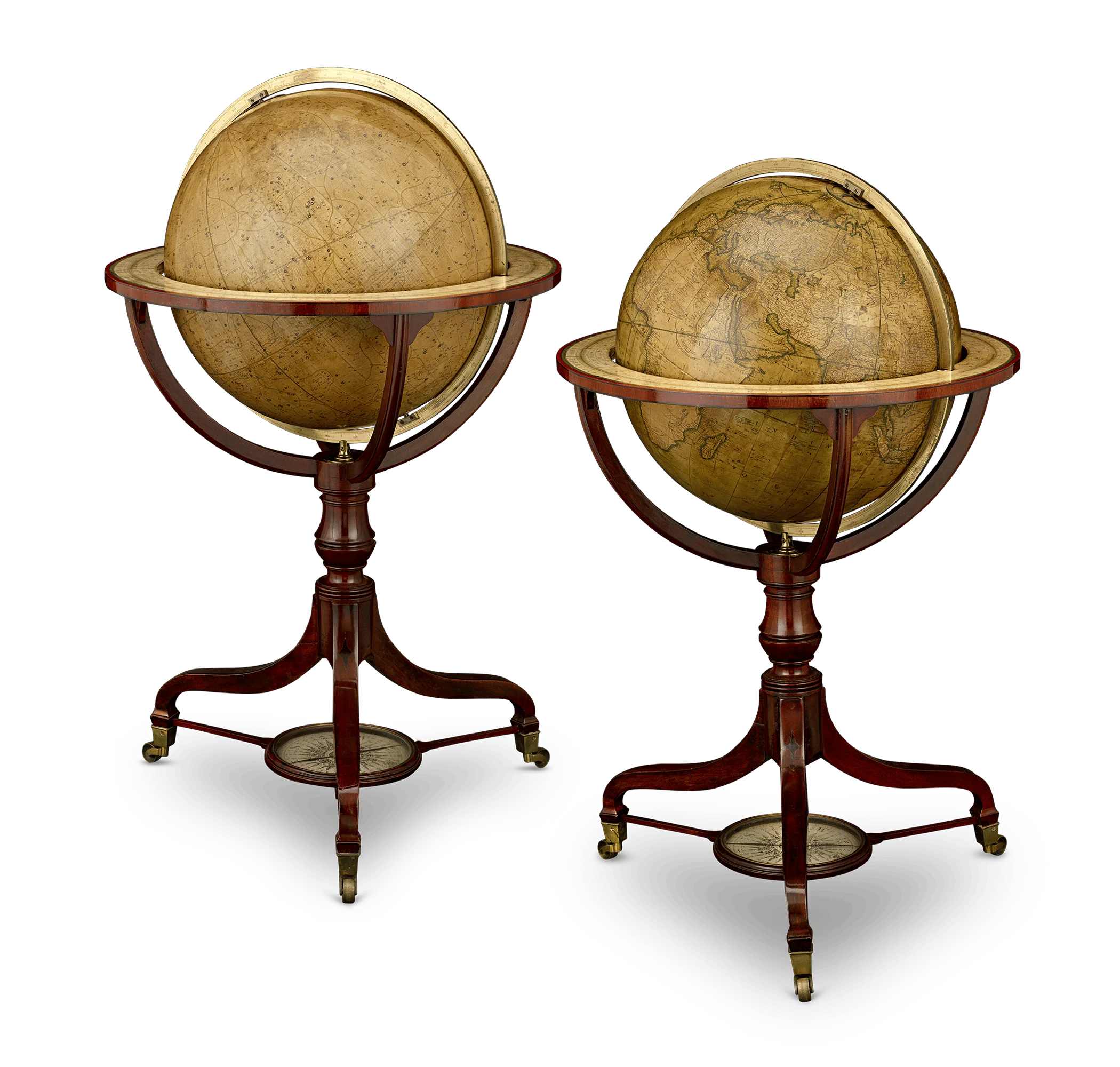
Pair of Cary Celestial and Terrestrial Globes
John & William Cary
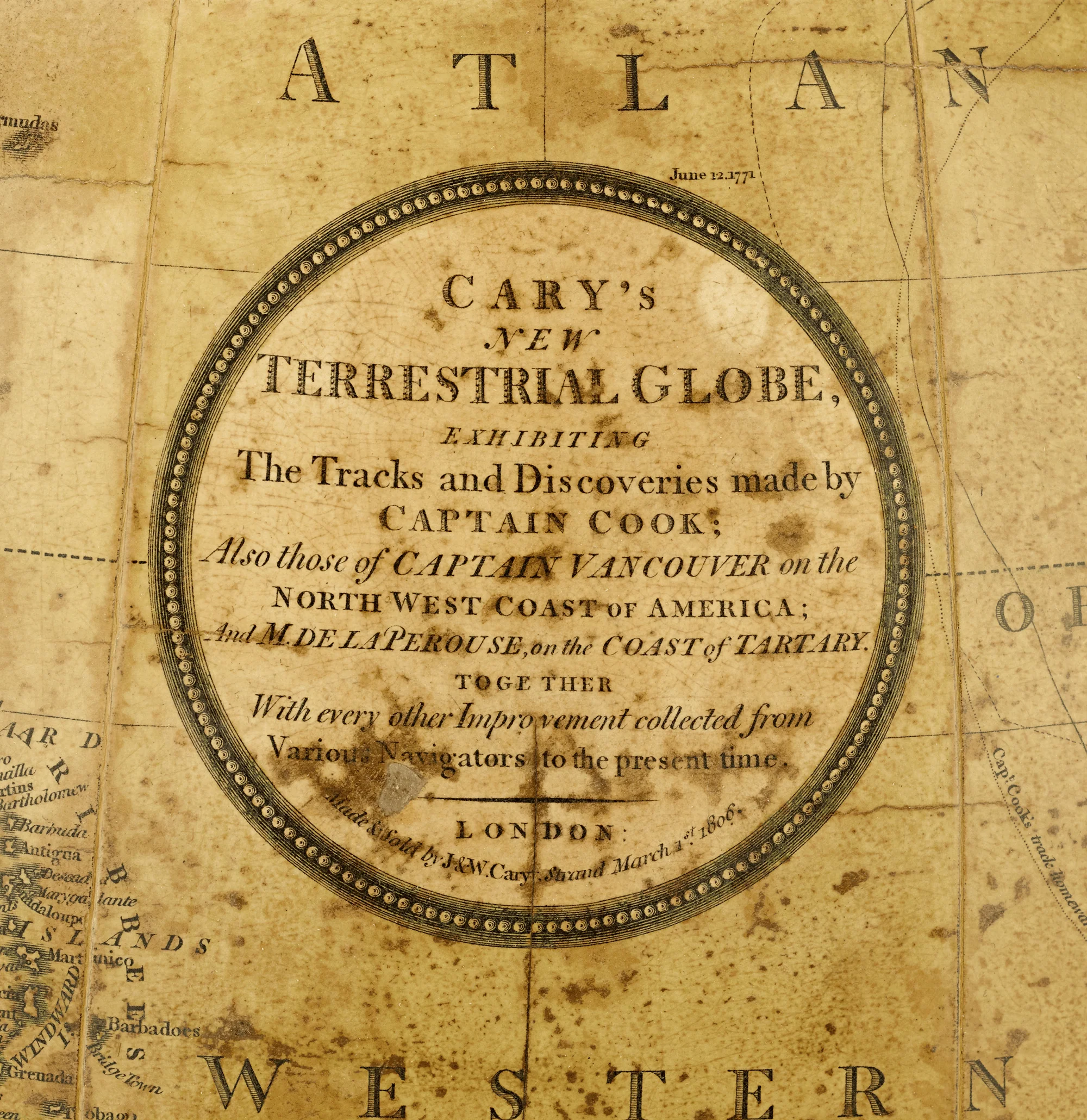
Terrestrial globe dated 1806, with additions around 1817
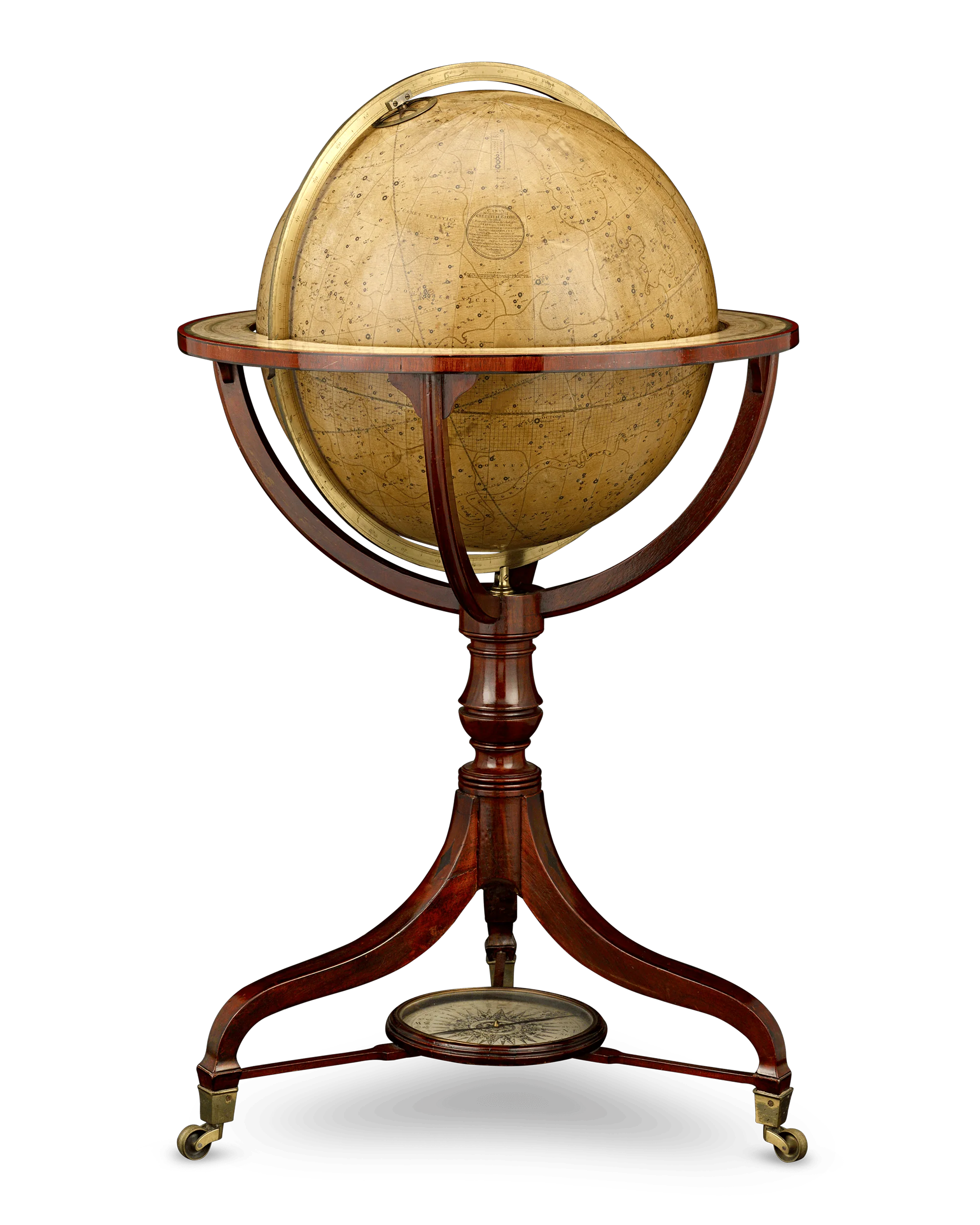
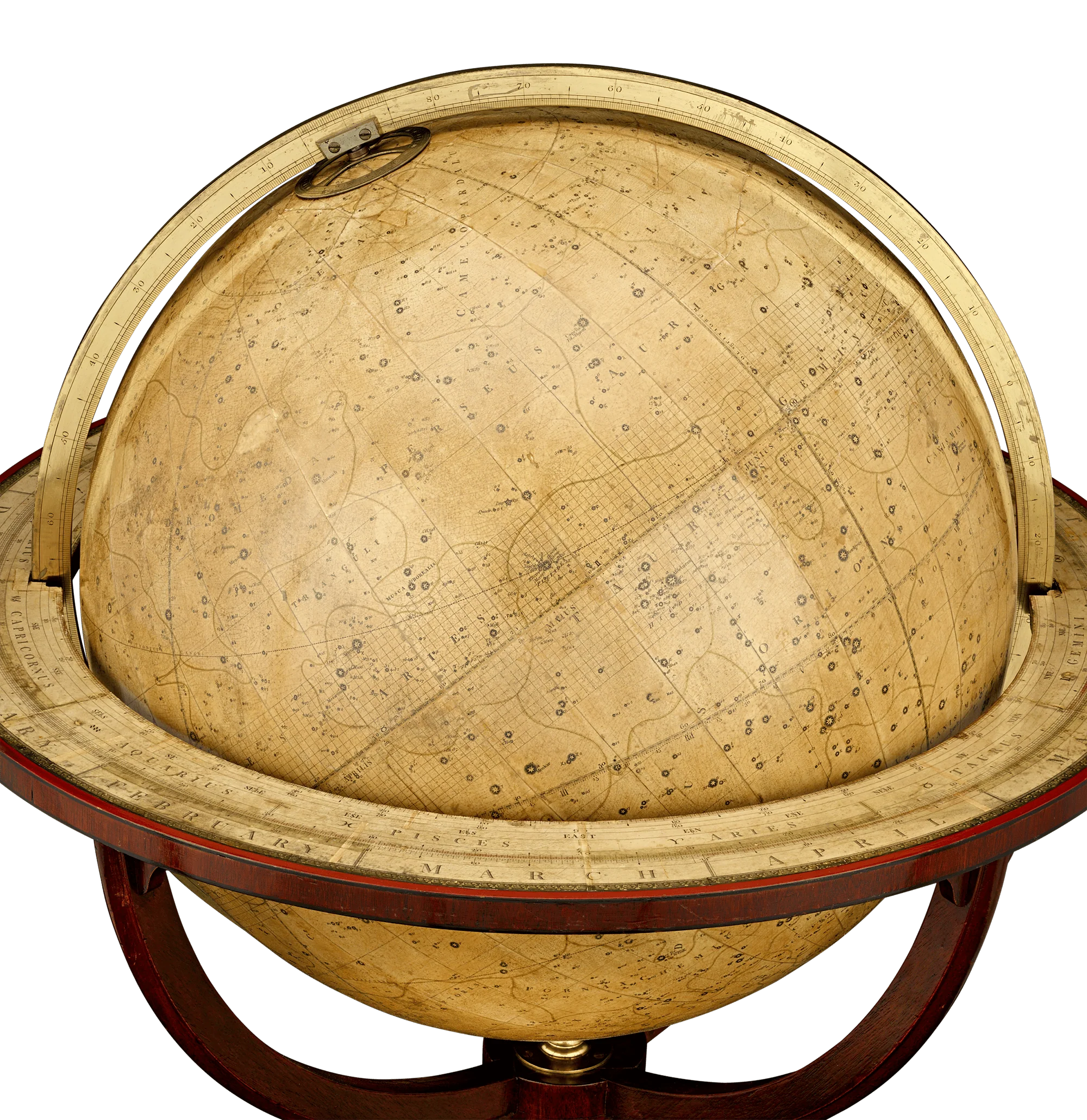
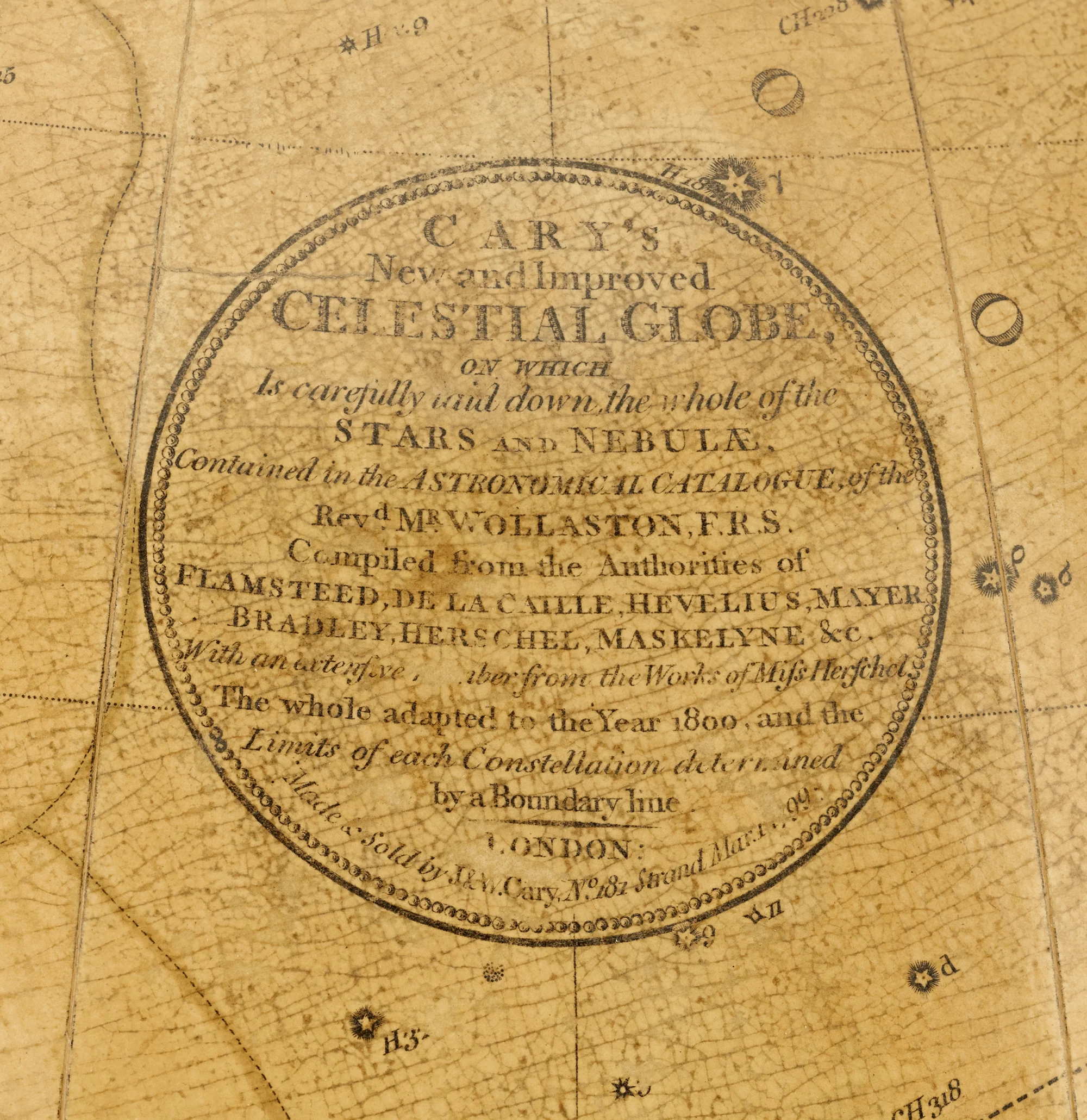
Celestial globe dated 1799
Among the finest globes produced in Georgian England, this stately pair of celestial and terrestrial globes was crafted by the renowned firm of John & William Cary of London. Regarded as the leading British globe makers of their era, the Cary brothers combined scientific accuracy with exceptional craftsmanship. These globes served as indispensable tools for navigation, commerce and education, capturing both the known world and the heavens at the dawn of the 19th century.
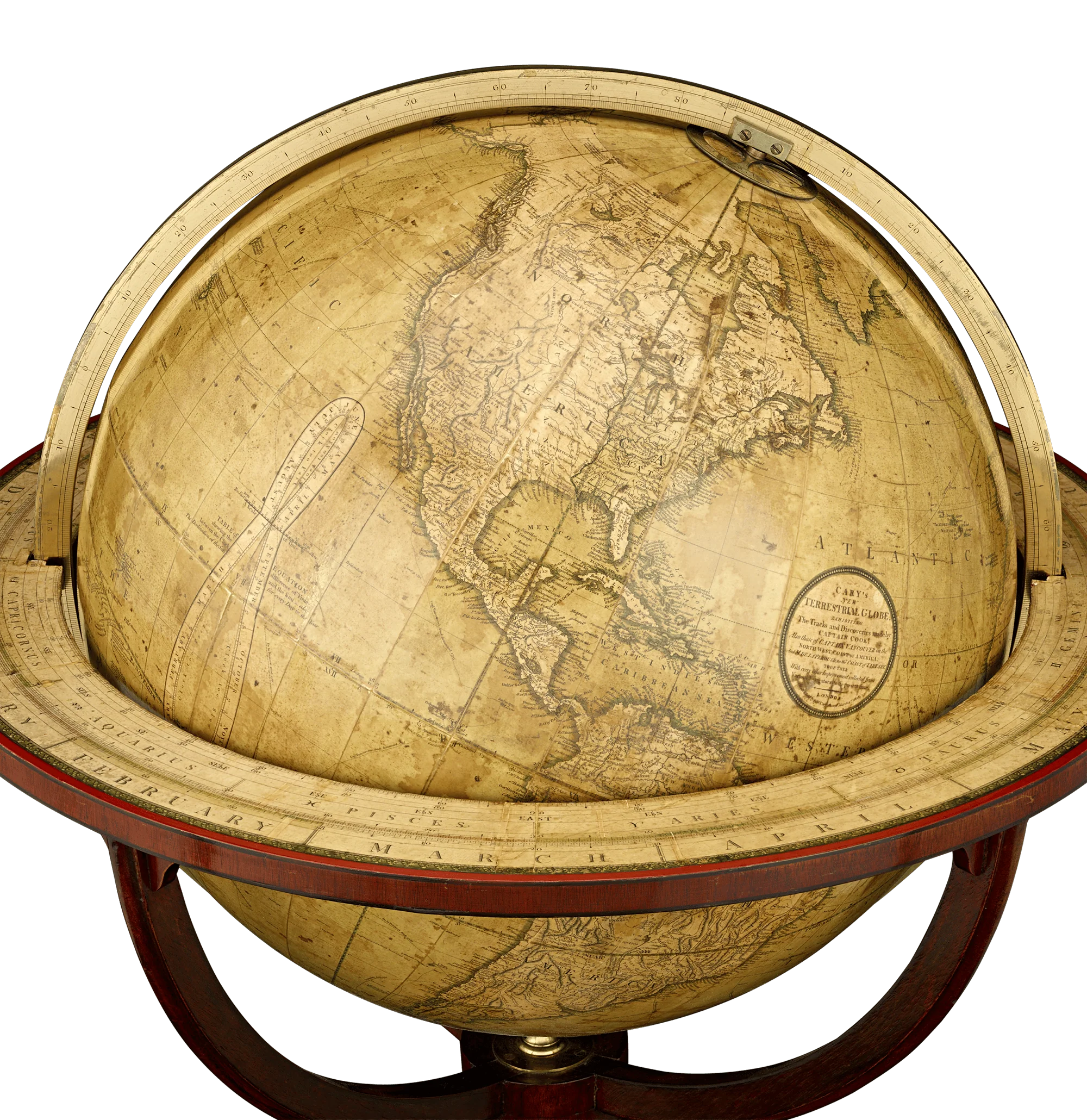
Measuring an impressive 21 inches in diameter, these globes are far larger and more detailed than the standard 12-inch examples. A 21-inch sphere has over three times the map area and over five times the volume of a 12-inch example. They were very expensive to make and are the rarest of all the giant pairs. It is also interesting to note that the celestial globes are almost always dated earlier than the terrestrial examples. At the turn of the 19th century, geographic discoveries were continually reshaping terrestrial maps, while the stars remained unchanged. Thus, Cary made six celestial globes at a time and paired them with newly updated terrestrial globes only when an order was received, ensuring the latest discoveries were represented.
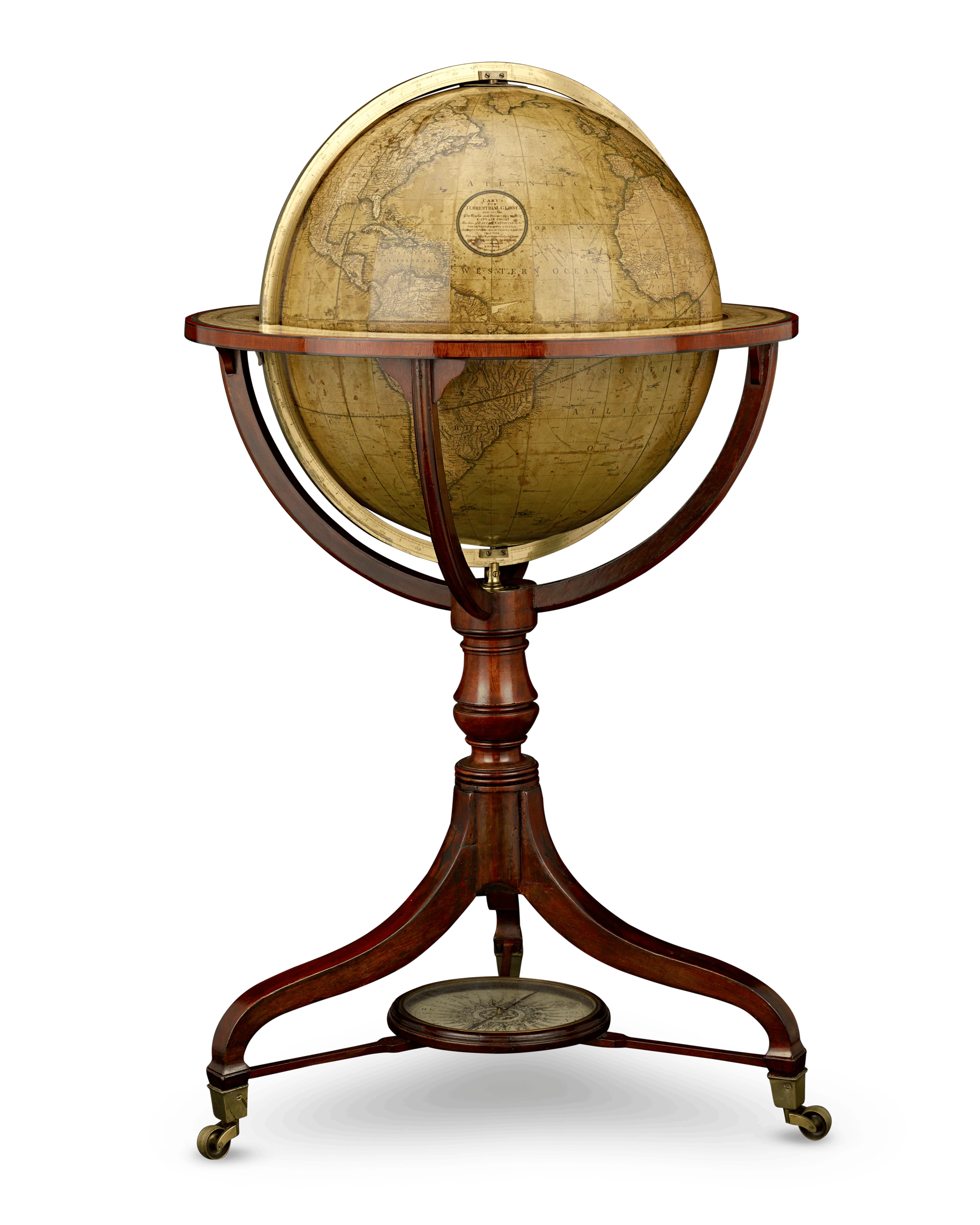
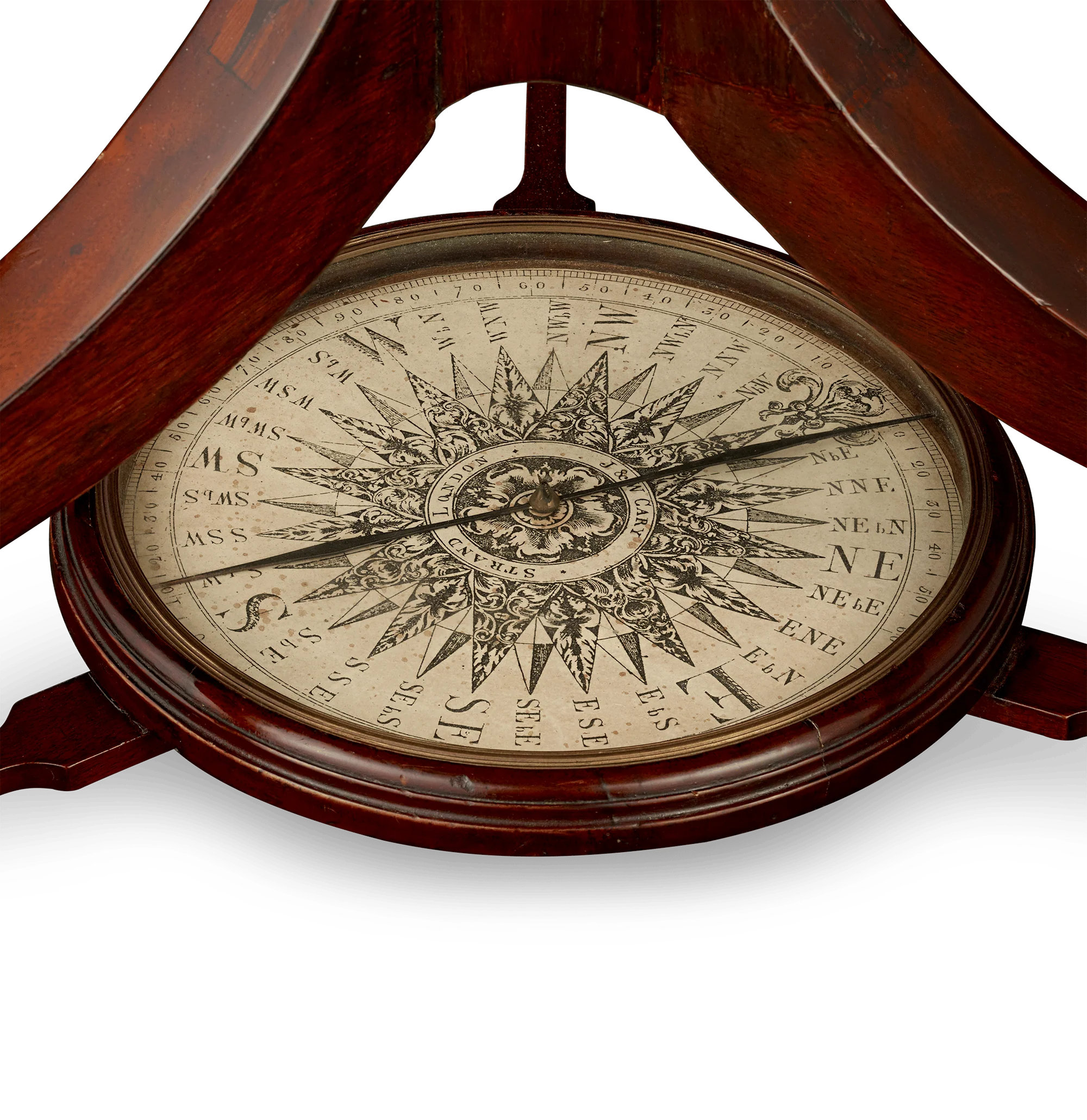
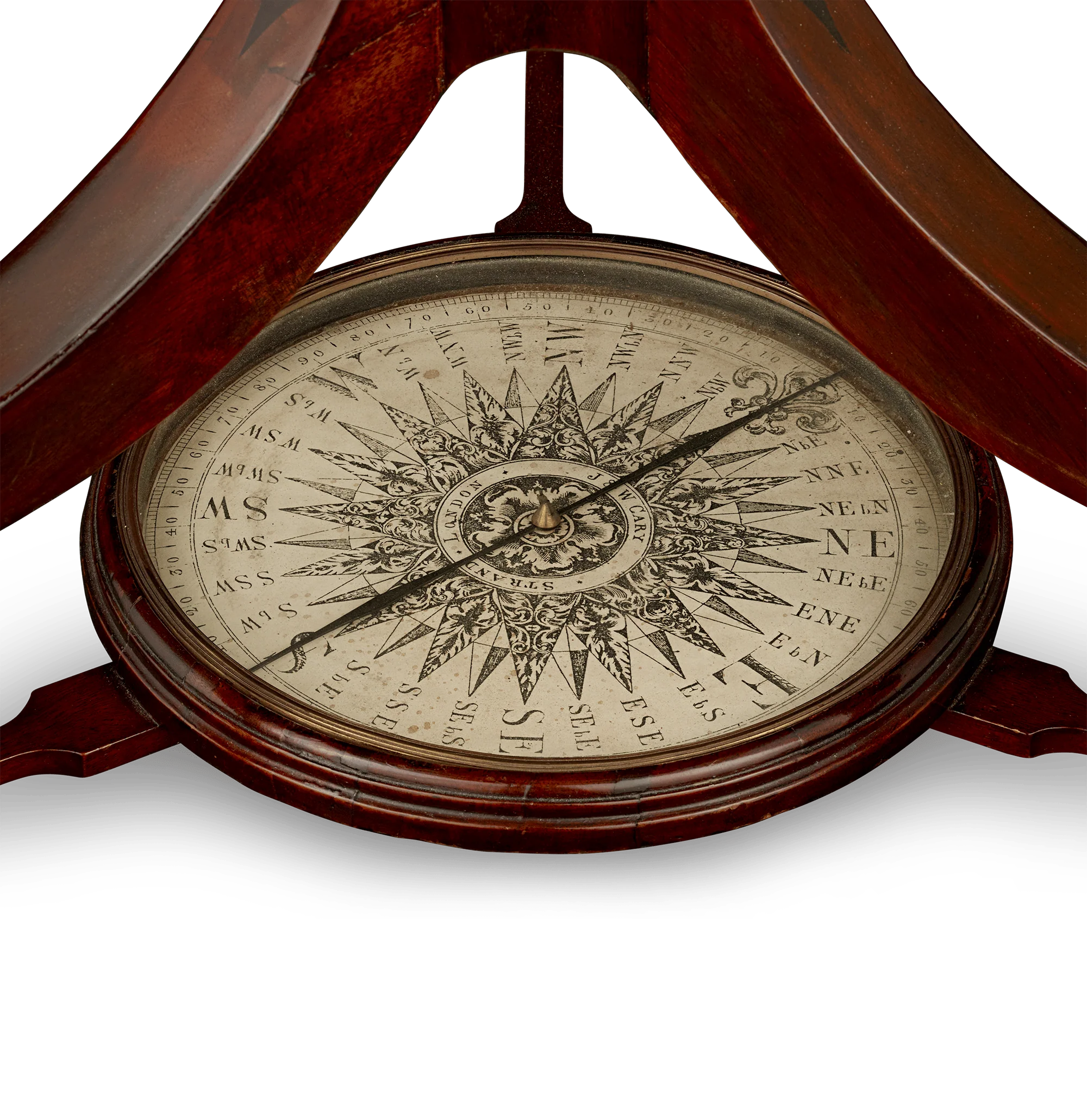
The terrestrial globe records the latest geographical discoveries of its day, including the voyages of Captains Cook and Vancouver, while the celestial globe charts the stars and constellations according to the leading astronomical authorities of the period. Each rests in its original mahogany stand with engraved brass meridian, tripod base, cross stretcher and compass, all beautifully aged with a rich patina acquired over two centuries.
John Cary and his brother William established their firm as London's premier globe manufacturers by the close of the 18th century. Their globes were widely regarded as the finest produced in England, prized for their precision, accuracy and elegant design. Today, large-format Cary globes remain among the most sought-after examples of antique scientific instruments, representing the height of British cartographic and astronomical achievement.
48" high x 28 3/4" diameter
John & William Cary
Terrestrial globe dated 1806, with additions around 1817
Celestial globe dated 1799
Among the finest globes produced in Georgian England, this stately pair of celestial and terrestrial globes was crafted by the renowned firm of John & William Cary of London. Regarded as the leading British globe makers of their era, the Cary brothers combined scientific accuracy with exceptional craftsmanship. These globes served as indispensable tools for navigation, commerce and education, capturing both the known world and the heavens at the dawn of the 19th century.
Measuring an impressive 21 inches in diameter, these globes are far larger and more detailed than the standard 12-inch examples. A 21-inch sphere has over three times the map area and over five times the volume of a 12-inch example. They were very expensive to make and are the rarest of all the giant pairs. It is also interesting to note that the celestial globes are almost always dated earlier than the terrestrial examples. At the turn of the 19th century, geographic discoveries were continually reshaping terrestrial maps, while the stars remained unchanged. Thus, Cary made six celestial globes at a time and paired them with newly updated terrestrial globes only when an order was received, ensuring the latest discoveries were represented.
The terrestrial globe records the latest geographical discoveries of its day, including the voyages of Captains Cook and Vancouver, while the celestial globe charts the stars and constellations according to the leading astronomical authorities of the period. Each rests in its original mahogany stand with engraved brass meridian, tripod base, cross stretcher and compass, all beautifully aged with a rich patina acquired over two centuries.
John Cary and his brother William established their firm as London's premier globe manufacturers by the close of the 18th century. Their globes were widely regarded as the finest produced in England, prized for their precision, accuracy and elegant design. Today, large-format Cary globes remain among the most sought-after examples of antique scientific instruments, representing the height of British cartographic and astronomical achievement.
48" high x 28 3/4" diameter
$51,975.00
Original: $148,500.00
-65%Georgian 21-Inch Terrestrial and Celestial Floor Globes by J. W. Cary—
$148,500.00
$51,975.00More Images
Georgian 21-Inch Terrestrial and Celestial Floor Globes by J. W. Cary
Pair of Cary Celestial and Terrestrial Globes
John & William Cary
Terrestrial globe dated 1806, with additions around 1817
Celestial globe dated 1799
Among the finest globes produced in Georgian England, this stately pair of celestial and terrestrial globes was crafted by the renowned firm of John & William Cary of London. Regarded as the leading British globe makers of their era, the Cary brothers combined scientific accuracy with exceptional craftsmanship. These globes served as indispensable tools for navigation, commerce and education, capturing both the known world and the heavens at the dawn of the 19th century.
Measuring an impressive 21 inches in diameter, these globes are far larger and more detailed than the standard 12-inch examples. A 21-inch sphere has over three times the map area and over five times the volume of a 12-inch example. They were very expensive to make and are the rarest of all the giant pairs. It is also interesting to note that the celestial globes are almost always dated earlier than the terrestrial examples. At the turn of the 19th century, geographic discoveries were continually reshaping terrestrial maps, while the stars remained unchanged. Thus, Cary made six celestial globes at a time and paired them with newly updated terrestrial globes only when an order was received, ensuring the latest discoveries were represented.
The terrestrial globe records the latest geographical discoveries of its day, including the voyages of Captains Cook and Vancouver, while the celestial globe charts the stars and constellations according to the leading astronomical authorities of the period. Each rests in its original mahogany stand with engraved brass meridian, tripod base, cross stretcher and compass, all beautifully aged with a rich patina acquired over two centuries.
John Cary and his brother William established their firm as London's premier globe manufacturers by the close of the 18th century. Their globes were widely regarded as the finest produced in England, prized for their precision, accuracy and elegant design. Today, large-format Cary globes remain among the most sought-after examples of antique scientific instruments, representing the height of British cartographic and astronomical achievement.
48" high x 28 3/4" diameter
John & William Cary
Terrestrial globe dated 1806, with additions around 1817
Celestial globe dated 1799
Among the finest globes produced in Georgian England, this stately pair of celestial and terrestrial globes was crafted by the renowned firm of John & William Cary of London. Regarded as the leading British globe makers of their era, the Cary brothers combined scientific accuracy with exceptional craftsmanship. These globes served as indispensable tools for navigation, commerce and education, capturing both the known world and the heavens at the dawn of the 19th century.
Measuring an impressive 21 inches in diameter, these globes are far larger and more detailed than the standard 12-inch examples. A 21-inch sphere has over three times the map area and over five times the volume of a 12-inch example. They were very expensive to make and are the rarest of all the giant pairs. It is also interesting to note that the celestial globes are almost always dated earlier than the terrestrial examples. At the turn of the 19th century, geographic discoveries were continually reshaping terrestrial maps, while the stars remained unchanged. Thus, Cary made six celestial globes at a time and paired them with newly updated terrestrial globes only when an order was received, ensuring the latest discoveries were represented.
The terrestrial globe records the latest geographical discoveries of its day, including the voyages of Captains Cook and Vancouver, while the celestial globe charts the stars and constellations according to the leading astronomical authorities of the period. Each rests in its original mahogany stand with engraved brass meridian, tripod base, cross stretcher and compass, all beautifully aged with a rich patina acquired over two centuries.
John Cary and his brother William established their firm as London's premier globe manufacturers by the close of the 18th century. Their globes were widely regarded as the finest produced in England, prized for their precision, accuracy and elegant design. Today, large-format Cary globes remain among the most sought-after examples of antique scientific instruments, representing the height of British cartographic and astronomical achievement.
48" high x 28 3/4" diameter
Product Information
Product Information
Shipping & Returns
Shipping & Returns
Description
Pair of Cary Celestial and Terrestrial Globes
John & William Cary
Terrestrial globe dated 1806, with additions around 1817
Celestial globe dated 1799
Among the finest globes produced in Georgian England, this stately pair of celestial and terrestrial globes was crafted by the renowned firm of John & William Cary of London. Regarded as the leading British globe makers of their era, the Cary brothers combined scientific accuracy with exceptional craftsmanship. These globes served as indispensable tools for navigation, commerce and education, capturing both the known world and the heavens at the dawn of the 19th century.
Measuring an impressive 21 inches in diameter, these globes are far larger and more detailed than the standard 12-inch examples. A 21-inch sphere has over three times the map area and over five times the volume of a 12-inch example. They were very expensive to make and are the rarest of all the giant pairs. It is also interesting to note that the celestial globes are almost always dated earlier than the terrestrial examples. At the turn of the 19th century, geographic discoveries were continually reshaping terrestrial maps, while the stars remained unchanged. Thus, Cary made six celestial globes at a time and paired them with newly updated terrestrial globes only when an order was received, ensuring the latest discoveries were represented.
The terrestrial globe records the latest geographical discoveries of its day, including the voyages of Captains Cook and Vancouver, while the celestial globe charts the stars and constellations according to the leading astronomical authorities of the period. Each rests in its original mahogany stand with engraved brass meridian, tripod base, cross stretcher and compass, all beautifully aged with a rich patina acquired over two centuries.
John Cary and his brother William established their firm as London's premier globe manufacturers by the close of the 18th century. Their globes were widely regarded as the finest produced in England, prized for their precision, accuracy and elegant design. Today, large-format Cary globes remain among the most sought-after examples of antique scientific instruments, representing the height of British cartographic and astronomical achievement.
48" high x 28 3/4" diameter
John & William Cary
Terrestrial globe dated 1806, with additions around 1817
Celestial globe dated 1799
Among the finest globes produced in Georgian England, this stately pair of celestial and terrestrial globes was crafted by the renowned firm of John & William Cary of London. Regarded as the leading British globe makers of their era, the Cary brothers combined scientific accuracy with exceptional craftsmanship. These globes served as indispensable tools for navigation, commerce and education, capturing both the known world and the heavens at the dawn of the 19th century.
Measuring an impressive 21 inches in diameter, these globes are far larger and more detailed than the standard 12-inch examples. A 21-inch sphere has over three times the map area and over five times the volume of a 12-inch example. They were very expensive to make and are the rarest of all the giant pairs. It is also interesting to note that the celestial globes are almost always dated earlier than the terrestrial examples. At the turn of the 19th century, geographic discoveries were continually reshaping terrestrial maps, while the stars remained unchanged. Thus, Cary made six celestial globes at a time and paired them with newly updated terrestrial globes only when an order was received, ensuring the latest discoveries were represented.
The terrestrial globe records the latest geographical discoveries of its day, including the voyages of Captains Cook and Vancouver, while the celestial globe charts the stars and constellations according to the leading astronomical authorities of the period. Each rests in its original mahogany stand with engraved brass meridian, tripod base, cross stretcher and compass, all beautifully aged with a rich patina acquired over two centuries.
John Cary and his brother William established their firm as London's premier globe manufacturers by the close of the 18th century. Their globes were widely regarded as the finest produced in England, prized for their precision, accuracy and elegant design. Today, large-format Cary globes remain among the most sought-after examples of antique scientific instruments, representing the height of British cartographic and astronomical achievement.
48" high x 28 3/4" diameter