✨ New Arrivals Just Dropped!Explore
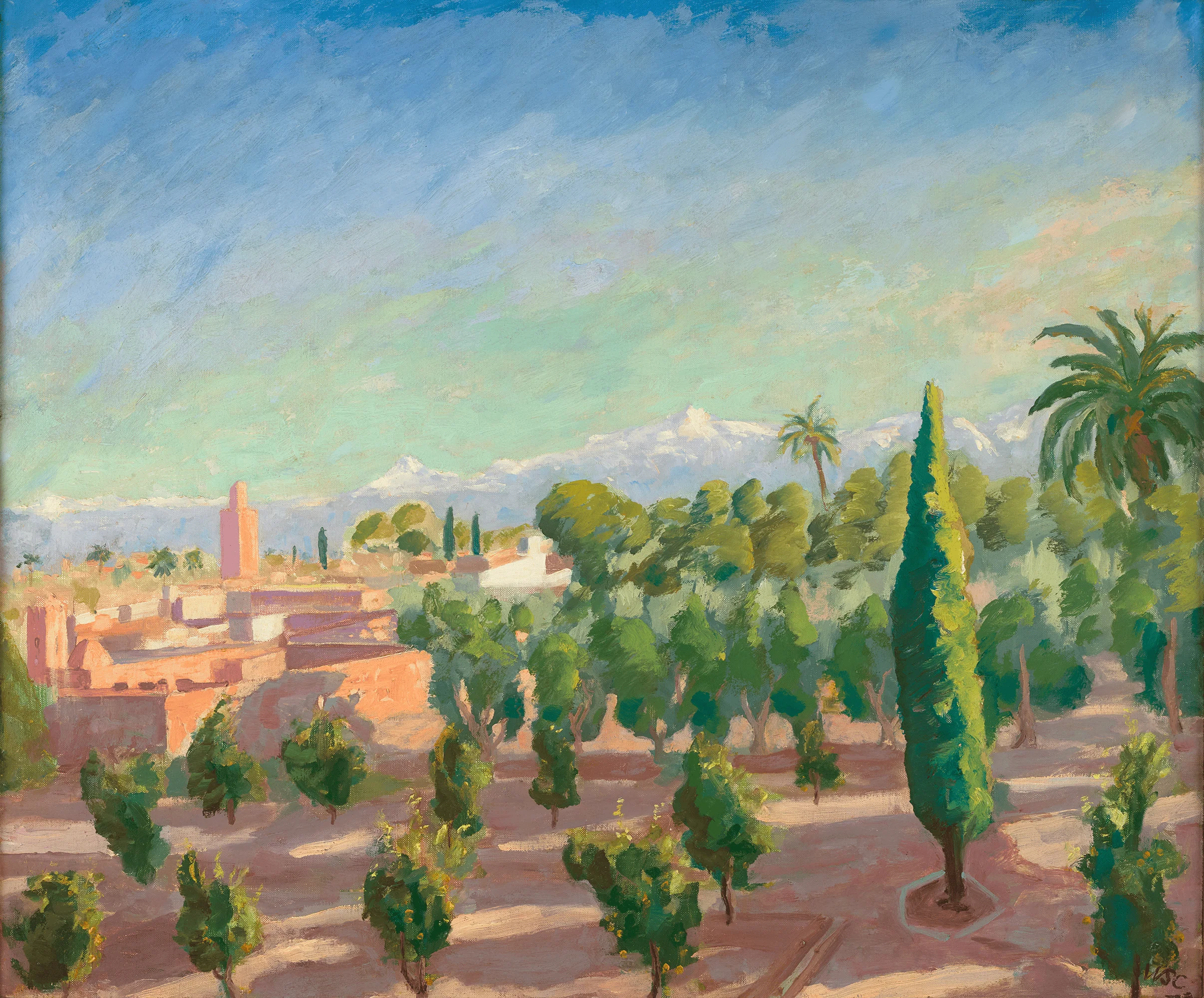
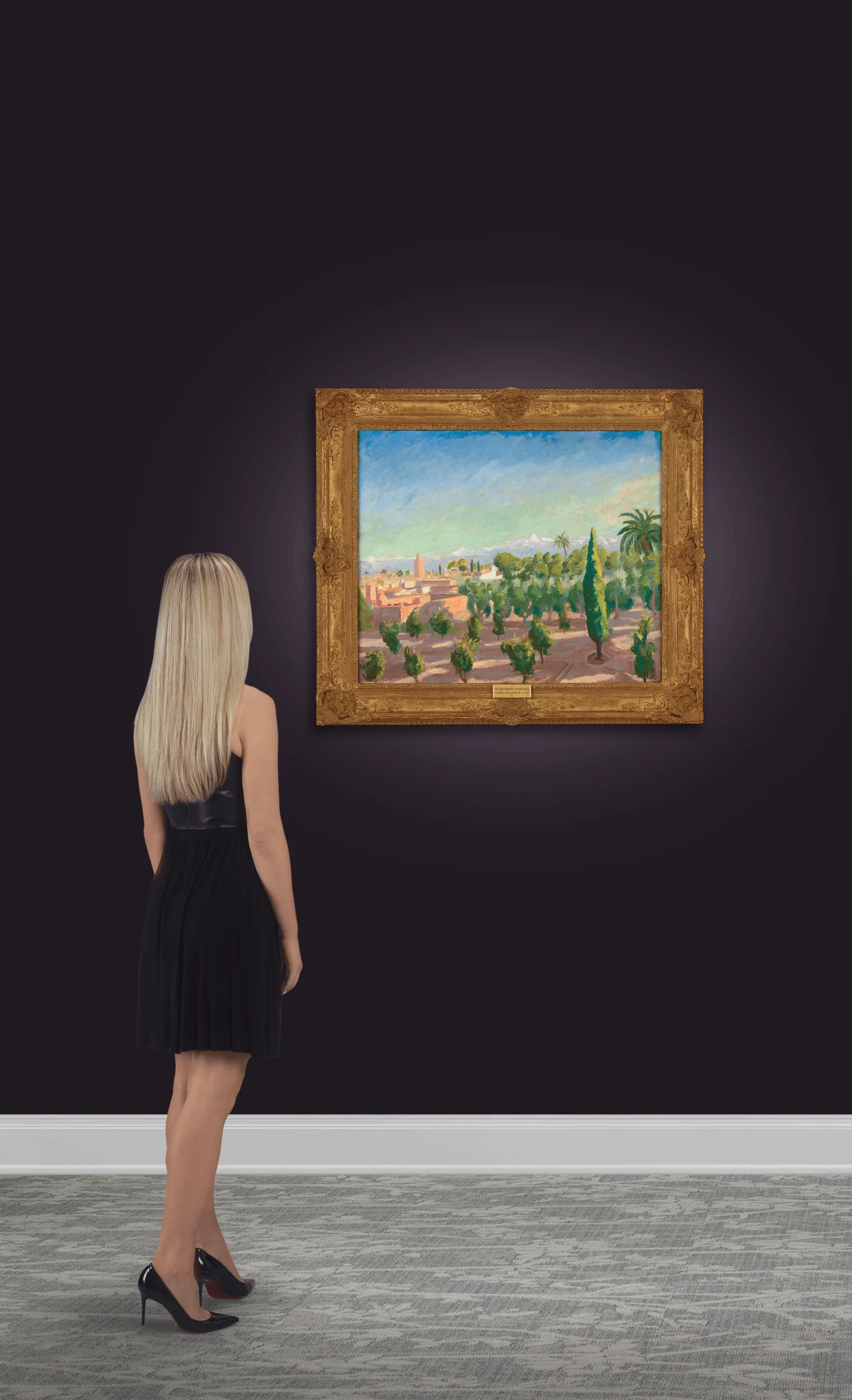
Garden at Marrakech by Winston Churchill
Sir Winston Churchill
1874-1965 | British
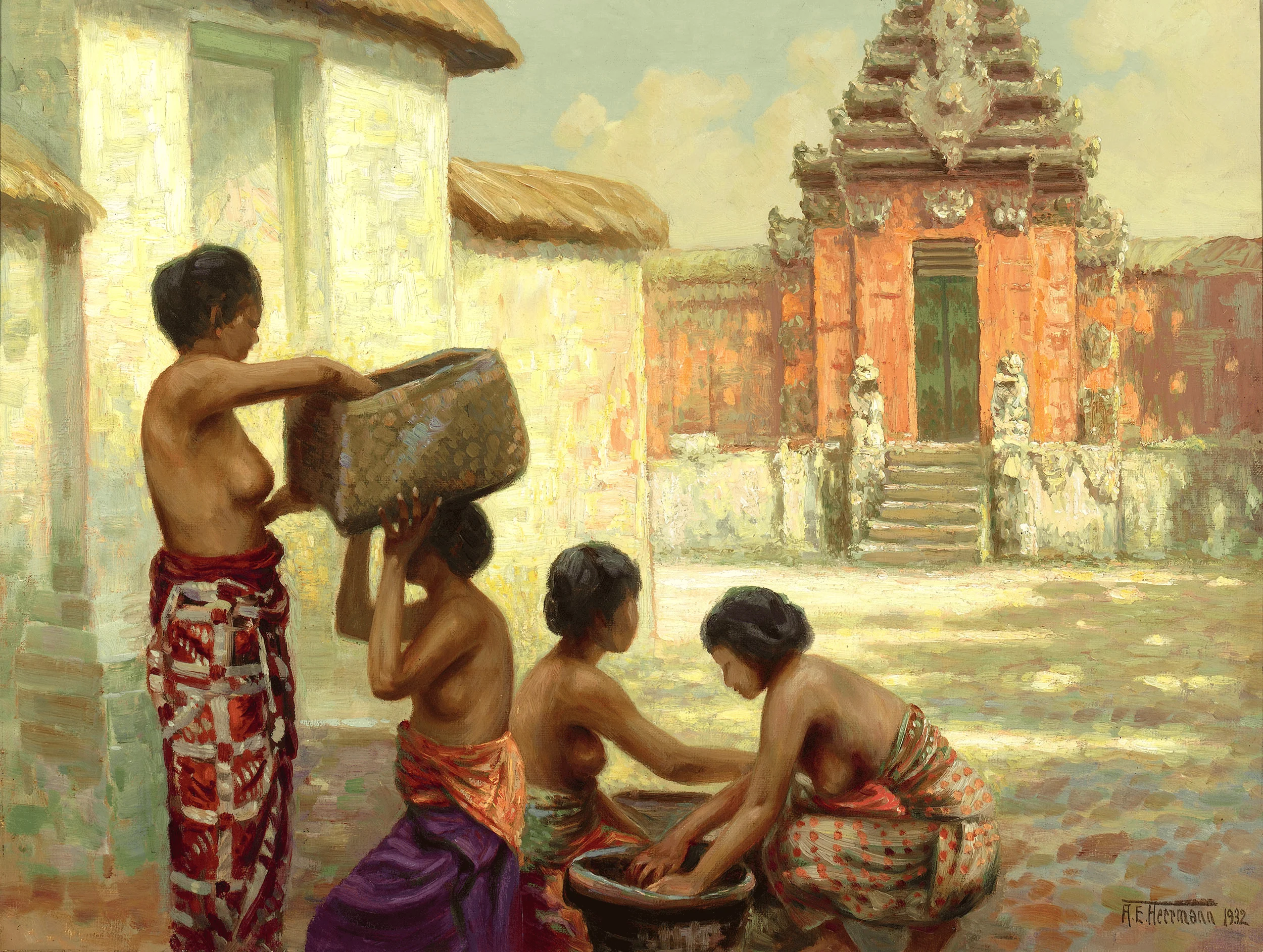
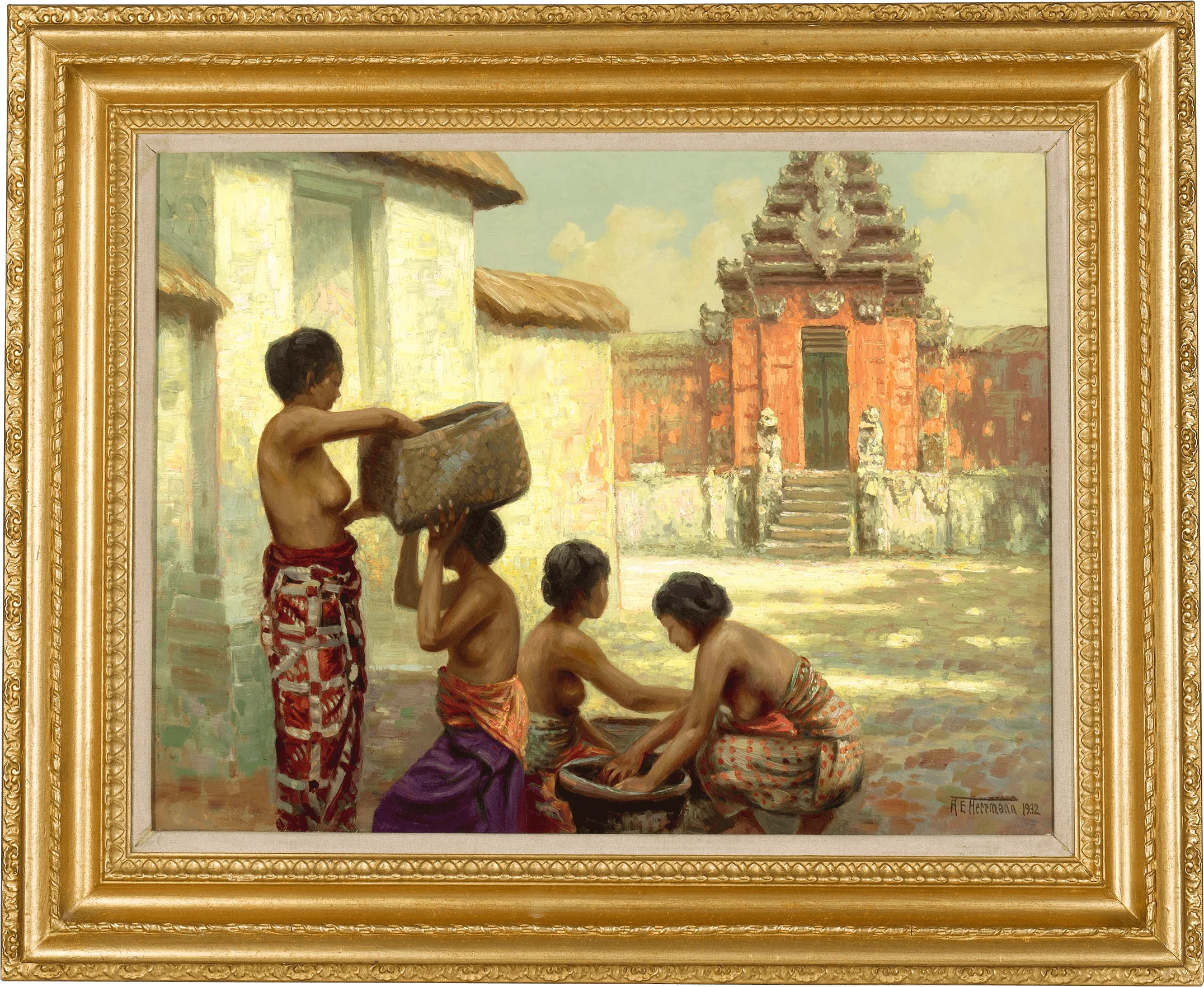
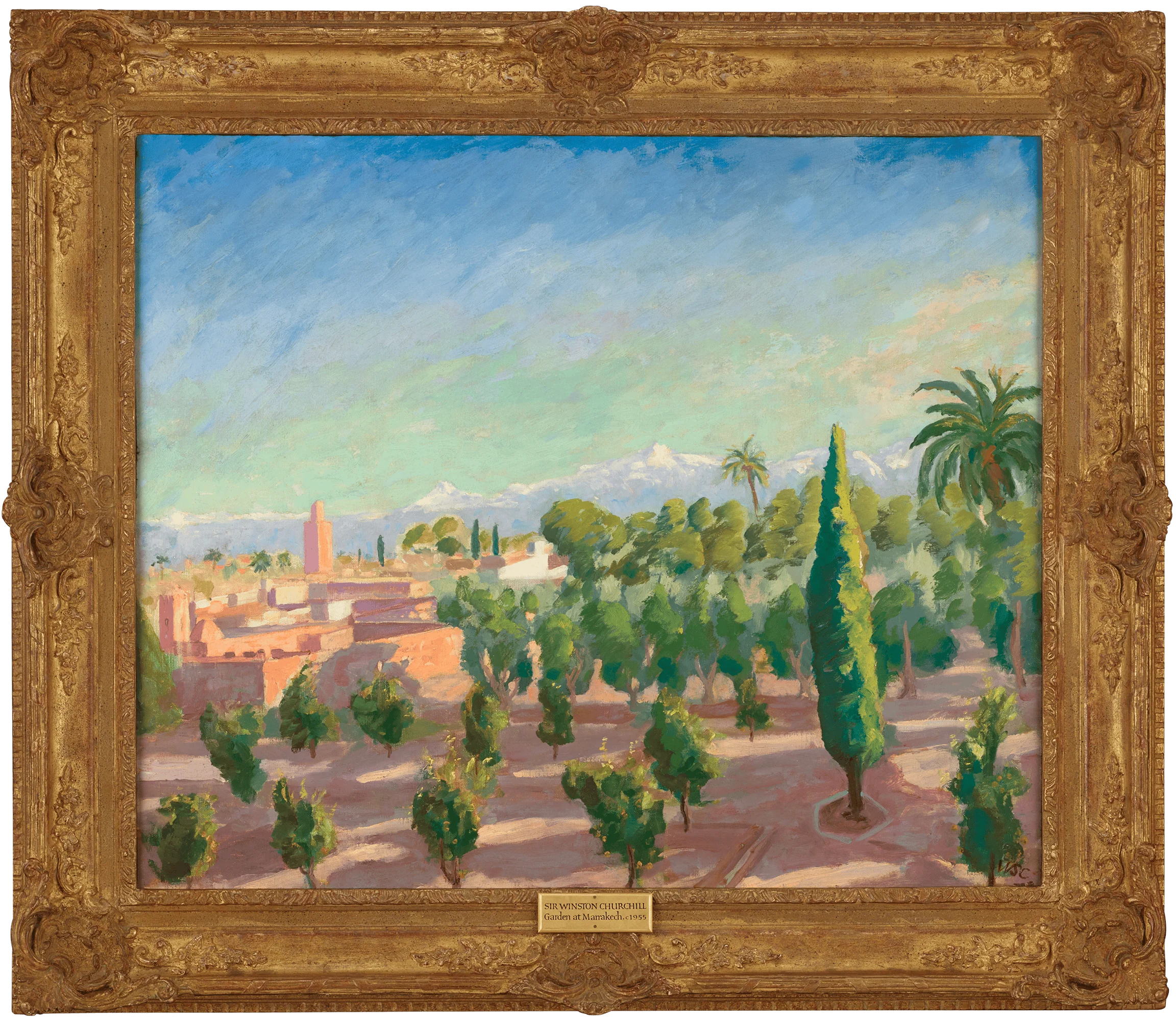
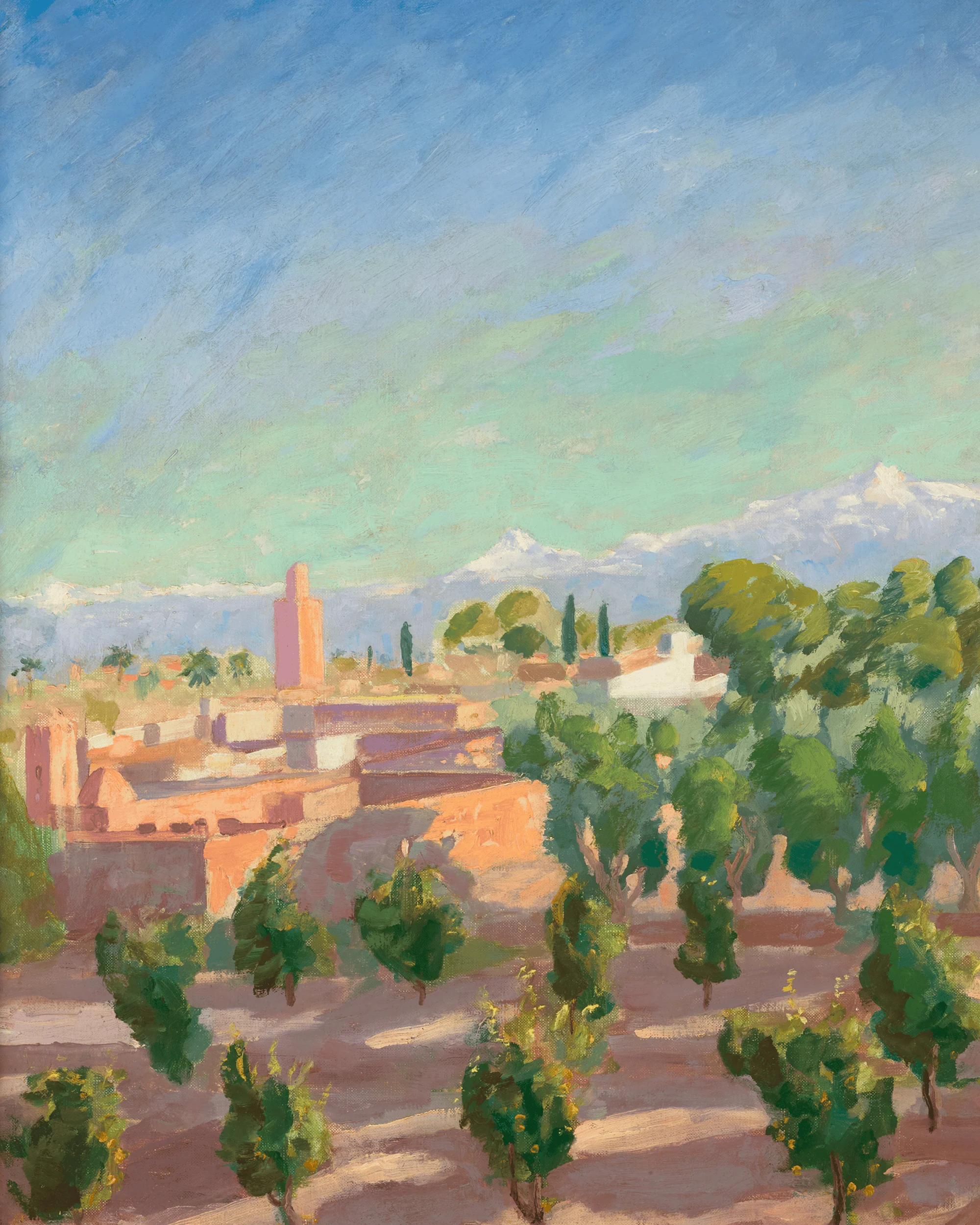
Garden at Marrakech
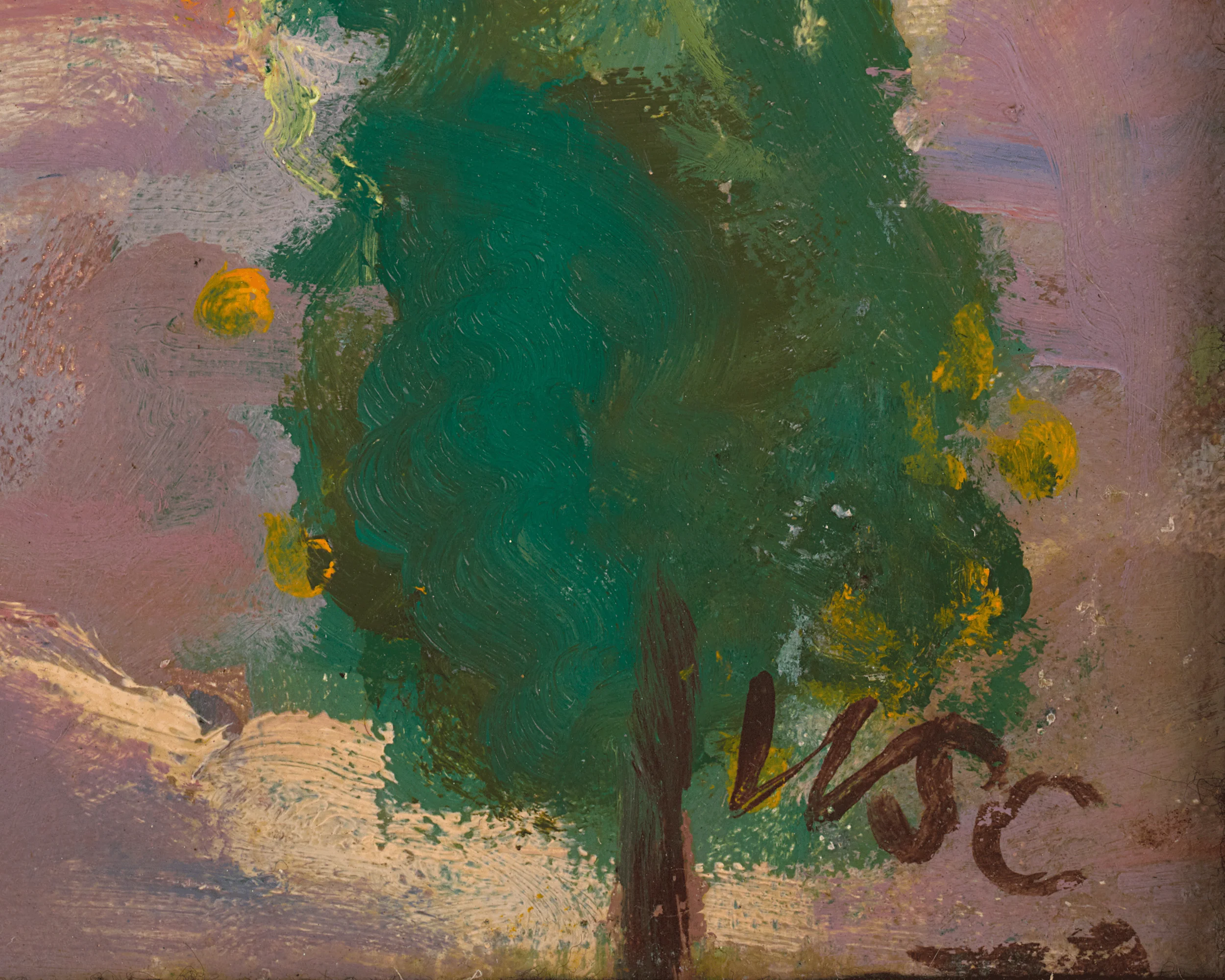
Signed "WSC" (lower right)
Oil on canvas
“Marrakech is the most beautiful place in the world.” –Sir Winston Churchill to Franklin Roosevelt, January 1943
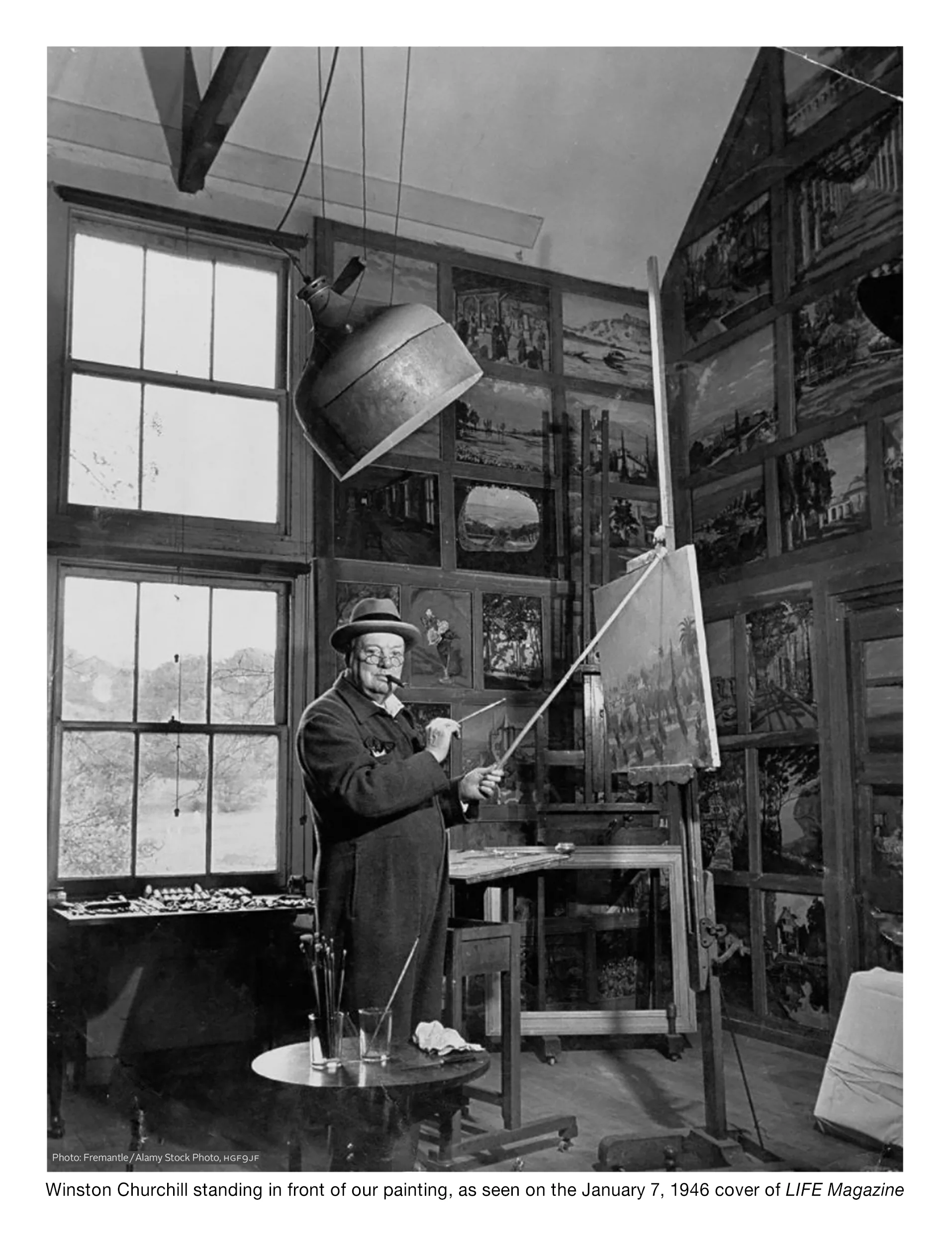
Widely considered the greatest Briton of all time, Sir Winston Churchill also pursued the art of painting for more than 40 years. This exceptional painting, Garden at Marrakech, is among his greatest and largest masterpieces, chosen by the great statesman to accompany him on the cover of LIFE magazine in January 1946.
In the iconic cover photograph, Churchill stands in the act of painting Garden at Marrakech, donning his classic Homburg hat, spectacles and his cigar. It is no surprise that Churchill chose this stunning and monumental painting of his favorite subject for his important appearance on the cover of LIFE—the largest and most influential weekly picture magazine in America at the time.
Churchill's Marrakech scenes are among the artist's most coveted for their magnificent radiance. He famously called the city “the most beautiful place in the world,” and his love of its brilliant light and its dramatic meeting of desert, mountains and city is perfectly captured here in Garden at Marrakech.
Importantly, this work is also among the largest Churchill ever completed, substantially larger even than another Marrakech painting, which set Churchill's world record when it sold for $11.5 million at Christie's in 2021. With important Marrakech paintings such as these representing such a small percentage of Churchill’s output, this masterpiece is an extraordinarily rare treasure.
Finally pronouncing the work complete in 1955, he signed the work—an important distinction, as the great majority of Churchill’s paintings are unsigned—and eventually gifted it to his granddaughter, further affirming the special place it held within his own life and family.
Painting was a dominating passion for Churchill in the last half of his life. There is little evidence that he had any artistic training prior to his 40s. In fact, his wife Clementine mentioned at one point that before he began painting, Churchill had hardly visited an art museum, much less created art. Churchill first began painting following a personal and political disaster—the Dardanelles campaign in 1915. He is quoted as telling the painter Sir John Rothenstein: “If it weren’t for painting, I couldn’t live; I couldn’t bear the strain of things.”
In 1948, Churchill was bestowed the prestigious recognition of Honorary Academician Extraordinary by The Royal Academy of Arts. Churchill painted roughly 500 works, approximately 350 of which are housed in Churchill’s garden studio at Chartwell, with few others ever coming to market. Created by one of the most influential figures of the 20th century, this extraordinary gift to a close confidant provides a rare and intimate glimpse into who the “real” Winston Churchill was.
Circa 1946-1955
Canvas: 25” high x 30” wide (62.2 x 74.9 cm)
Frame: 32 3/4” high x 37 3/4” wide x 3 1/2” deep (83.2 x 96 x 8.9 cm)
Provenance:
The artist
Miss Edwina Sandys (Churchill’s granddaughter)
Sale: Sotheby’s Dec. 5th 2001
Private collection
M.S. Rau, New Orleans
Literature:
David Coombs, Sir Winston Churchill: His Life and His Paintings, 2003, no. 465, illustrated
1874-1965 | British
Garden at Marrakech
Signed "WSC" (lower right)
Oil on canvas
“Marrakech is the most beautiful place in the world.” –Sir Winston Churchill to Franklin Roosevelt, January 1943
Widely considered the greatest Briton of all time, Sir Winston Churchill also pursued the art of painting for more than 40 years. This exceptional painting, Garden at Marrakech, is among his greatest and largest masterpieces, chosen by the great statesman to accompany him on the cover of LIFE magazine in January 1946.
In the iconic cover photograph, Churchill stands in the act of painting Garden at Marrakech, donning his classic Homburg hat, spectacles and his cigar. It is no surprise that Churchill chose this stunning and monumental painting of his favorite subject for his important appearance on the cover of LIFE—the largest and most influential weekly picture magazine in America at the time.
Churchill's Marrakech scenes are among the artist's most coveted for their magnificent radiance. He famously called the city “the most beautiful place in the world,” and his love of its brilliant light and its dramatic meeting of desert, mountains and city is perfectly captured here in Garden at Marrakech.
Importantly, this work is also among the largest Churchill ever completed, substantially larger even than another Marrakech painting, which set Churchill's world record when it sold for $11.5 million at Christie's in 2021. With important Marrakech paintings such as these representing such a small percentage of Churchill’s output, this masterpiece is an extraordinarily rare treasure.
Finally pronouncing the work complete in 1955, he signed the work—an important distinction, as the great majority of Churchill’s paintings are unsigned—and eventually gifted it to his granddaughter, further affirming the special place it held within his own life and family.
Painting was a dominating passion for Churchill in the last half of his life. There is little evidence that he had any artistic training prior to his 40s. In fact, his wife Clementine mentioned at one point that before he began painting, Churchill had hardly visited an art museum, much less created art. Churchill first began painting following a personal and political disaster—the Dardanelles campaign in 1915. He is quoted as telling the painter Sir John Rothenstein: “If it weren’t for painting, I couldn’t live; I couldn’t bear the strain of things.”
In 1948, Churchill was bestowed the prestigious recognition of Honorary Academician Extraordinary by The Royal Academy of Arts. Churchill painted roughly 500 works, approximately 350 of which are housed in Churchill’s garden studio at Chartwell, with few others ever coming to market. Created by one of the most influential figures of the 20th century, this extraordinary gift to a close confidant provides a rare and intimate glimpse into who the “real” Winston Churchill was.
Circa 1946-1955
Canvas: 25” high x 30” wide (62.2 x 74.9 cm)
Frame: 32 3/4” high x 37 3/4” wide x 3 1/2” deep (83.2 x 96 x 8.9 cm)
Provenance:
The artist
Miss Edwina Sandys (Churchill’s granddaughter)
Sale: Sotheby’s Dec. 5th 2001
Private collection
M.S. Rau, New Orleans
Literature:
David Coombs, Sir Winston Churchill: His Life and His Paintings, 2003, no. 465, illustrated
$1,312,500.00
Original: $3,750,000.00
-65%Garden at Marrakech by Winston Churchill—
$3,750,000.00
$1,312,500.00More Images
Garden at Marrakech by Winston Churchill
Sir Winston Churchill
1874-1965 | British
Garden at Marrakech
Signed "WSC" (lower right)
Oil on canvas
“Marrakech is the most beautiful place in the world.” –Sir Winston Churchill to Franklin Roosevelt, January 1943
Widely considered the greatest Briton of all time, Sir Winston Churchill also pursued the art of painting for more than 40 years. This exceptional painting, Garden at Marrakech, is among his greatest and largest masterpieces, chosen by the great statesman to accompany him on the cover of LIFE magazine in January 1946.
In the iconic cover photograph, Churchill stands in the act of painting Garden at Marrakech, donning his classic Homburg hat, spectacles and his cigar. It is no surprise that Churchill chose this stunning and monumental painting of his favorite subject for his important appearance on the cover of LIFE—the largest and most influential weekly picture magazine in America at the time.
Churchill's Marrakech scenes are among the artist's most coveted for their magnificent radiance. He famously called the city “the most beautiful place in the world,” and his love of its brilliant light and its dramatic meeting of desert, mountains and city is perfectly captured here in Garden at Marrakech.
Importantly, this work is also among the largest Churchill ever completed, substantially larger even than another Marrakech painting, which set Churchill's world record when it sold for $11.5 million at Christie's in 2021. With important Marrakech paintings such as these representing such a small percentage of Churchill’s output, this masterpiece is an extraordinarily rare treasure.
Finally pronouncing the work complete in 1955, he signed the work—an important distinction, as the great majority of Churchill’s paintings are unsigned—and eventually gifted it to his granddaughter, further affirming the special place it held within his own life and family.
Painting was a dominating passion for Churchill in the last half of his life. There is little evidence that he had any artistic training prior to his 40s. In fact, his wife Clementine mentioned at one point that before he began painting, Churchill had hardly visited an art museum, much less created art. Churchill first began painting following a personal and political disaster—the Dardanelles campaign in 1915. He is quoted as telling the painter Sir John Rothenstein: “If it weren’t for painting, I couldn’t live; I couldn’t bear the strain of things.”
In 1948, Churchill was bestowed the prestigious recognition of Honorary Academician Extraordinary by The Royal Academy of Arts. Churchill painted roughly 500 works, approximately 350 of which are housed in Churchill’s garden studio at Chartwell, with few others ever coming to market. Created by one of the most influential figures of the 20th century, this extraordinary gift to a close confidant provides a rare and intimate glimpse into who the “real” Winston Churchill was.
Circa 1946-1955
Canvas: 25” high x 30” wide (62.2 x 74.9 cm)
Frame: 32 3/4” high x 37 3/4” wide x 3 1/2” deep (83.2 x 96 x 8.9 cm)
Provenance:
The artist
Miss Edwina Sandys (Churchill’s granddaughter)
Sale: Sotheby’s Dec. 5th 2001
Private collection
M.S. Rau, New Orleans
Literature:
David Coombs, Sir Winston Churchill: His Life and His Paintings, 2003, no. 465, illustrated
1874-1965 | British
Garden at Marrakech
Signed "WSC" (lower right)
Oil on canvas
“Marrakech is the most beautiful place in the world.” –Sir Winston Churchill to Franklin Roosevelt, January 1943
Widely considered the greatest Briton of all time, Sir Winston Churchill also pursued the art of painting for more than 40 years. This exceptional painting, Garden at Marrakech, is among his greatest and largest masterpieces, chosen by the great statesman to accompany him on the cover of LIFE magazine in January 1946.
In the iconic cover photograph, Churchill stands in the act of painting Garden at Marrakech, donning his classic Homburg hat, spectacles and his cigar. It is no surprise that Churchill chose this stunning and monumental painting of his favorite subject for his important appearance on the cover of LIFE—the largest and most influential weekly picture magazine in America at the time.
Churchill's Marrakech scenes are among the artist's most coveted for their magnificent radiance. He famously called the city “the most beautiful place in the world,” and his love of its brilliant light and its dramatic meeting of desert, mountains and city is perfectly captured here in Garden at Marrakech.
Importantly, this work is also among the largest Churchill ever completed, substantially larger even than another Marrakech painting, which set Churchill's world record when it sold for $11.5 million at Christie's in 2021. With important Marrakech paintings such as these representing such a small percentage of Churchill’s output, this masterpiece is an extraordinarily rare treasure.
Finally pronouncing the work complete in 1955, he signed the work—an important distinction, as the great majority of Churchill’s paintings are unsigned—and eventually gifted it to his granddaughter, further affirming the special place it held within his own life and family.
Painting was a dominating passion for Churchill in the last half of his life. There is little evidence that he had any artistic training prior to his 40s. In fact, his wife Clementine mentioned at one point that before he began painting, Churchill had hardly visited an art museum, much less created art. Churchill first began painting following a personal and political disaster—the Dardanelles campaign in 1915. He is quoted as telling the painter Sir John Rothenstein: “If it weren’t for painting, I couldn’t live; I couldn’t bear the strain of things.”
In 1948, Churchill was bestowed the prestigious recognition of Honorary Academician Extraordinary by The Royal Academy of Arts. Churchill painted roughly 500 works, approximately 350 of which are housed in Churchill’s garden studio at Chartwell, with few others ever coming to market. Created by one of the most influential figures of the 20th century, this extraordinary gift to a close confidant provides a rare and intimate glimpse into who the “real” Winston Churchill was.
Circa 1946-1955
Canvas: 25” high x 30” wide (62.2 x 74.9 cm)
Frame: 32 3/4” high x 37 3/4” wide x 3 1/2” deep (83.2 x 96 x 8.9 cm)
Provenance:
The artist
Miss Edwina Sandys (Churchill’s granddaughter)
Sale: Sotheby’s Dec. 5th 2001
Private collection
M.S. Rau, New Orleans
Literature:
David Coombs, Sir Winston Churchill: His Life and His Paintings, 2003, no. 465, illustrated
Product Information
Product Information
Shipping & Returns
Shipping & Returns
Description
Sir Winston Churchill
1874-1965 | British
Garden at Marrakech
Signed "WSC" (lower right)
Oil on canvas
“Marrakech is the most beautiful place in the world.” –Sir Winston Churchill to Franklin Roosevelt, January 1943
Widely considered the greatest Briton of all time, Sir Winston Churchill also pursued the art of painting for more than 40 years. This exceptional painting, Garden at Marrakech, is among his greatest and largest masterpieces, chosen by the great statesman to accompany him on the cover of LIFE magazine in January 1946.
In the iconic cover photograph, Churchill stands in the act of painting Garden at Marrakech, donning his classic Homburg hat, spectacles and his cigar. It is no surprise that Churchill chose this stunning and monumental painting of his favorite subject for his important appearance on the cover of LIFE—the largest and most influential weekly picture magazine in America at the time.
Churchill's Marrakech scenes are among the artist's most coveted for their magnificent radiance. He famously called the city “the most beautiful place in the world,” and his love of its brilliant light and its dramatic meeting of desert, mountains and city is perfectly captured here in Garden at Marrakech.
Importantly, this work is also among the largest Churchill ever completed, substantially larger even than another Marrakech painting, which set Churchill's world record when it sold for $11.5 million at Christie's in 2021. With important Marrakech paintings such as these representing such a small percentage of Churchill’s output, this masterpiece is an extraordinarily rare treasure.
Finally pronouncing the work complete in 1955, he signed the work—an important distinction, as the great majority of Churchill’s paintings are unsigned—and eventually gifted it to his granddaughter, further affirming the special place it held within his own life and family.
Painting was a dominating passion for Churchill in the last half of his life. There is little evidence that he had any artistic training prior to his 40s. In fact, his wife Clementine mentioned at one point that before he began painting, Churchill had hardly visited an art museum, much less created art. Churchill first began painting following a personal and political disaster—the Dardanelles campaign in 1915. He is quoted as telling the painter Sir John Rothenstein: “If it weren’t for painting, I couldn’t live; I couldn’t bear the strain of things.”
In 1948, Churchill was bestowed the prestigious recognition of Honorary Academician Extraordinary by The Royal Academy of Arts. Churchill painted roughly 500 works, approximately 350 of which are housed in Churchill’s garden studio at Chartwell, with few others ever coming to market. Created by one of the most influential figures of the 20th century, this extraordinary gift to a close confidant provides a rare and intimate glimpse into who the “real” Winston Churchill was.
Circa 1946-1955
Canvas: 25” high x 30” wide (62.2 x 74.9 cm)
Frame: 32 3/4” high x 37 3/4” wide x 3 1/2” deep (83.2 x 96 x 8.9 cm)
Provenance:
The artist
Miss Edwina Sandys (Churchill’s granddaughter)
Sale: Sotheby’s Dec. 5th 2001
Private collection
M.S. Rau, New Orleans
Literature:
David Coombs, Sir Winston Churchill: His Life and His Paintings, 2003, no. 465, illustrated
1874-1965 | British
Garden at Marrakech
Signed "WSC" (lower right)
Oil on canvas
“Marrakech is the most beautiful place in the world.” –Sir Winston Churchill to Franklin Roosevelt, January 1943
Widely considered the greatest Briton of all time, Sir Winston Churchill also pursued the art of painting for more than 40 years. This exceptional painting, Garden at Marrakech, is among his greatest and largest masterpieces, chosen by the great statesman to accompany him on the cover of LIFE magazine in January 1946.
In the iconic cover photograph, Churchill stands in the act of painting Garden at Marrakech, donning his classic Homburg hat, spectacles and his cigar. It is no surprise that Churchill chose this stunning and monumental painting of his favorite subject for his important appearance on the cover of LIFE—the largest and most influential weekly picture magazine in America at the time.
Churchill's Marrakech scenes are among the artist's most coveted for their magnificent radiance. He famously called the city “the most beautiful place in the world,” and his love of its brilliant light and its dramatic meeting of desert, mountains and city is perfectly captured here in Garden at Marrakech.
Importantly, this work is also among the largest Churchill ever completed, substantially larger even than another Marrakech painting, which set Churchill's world record when it sold for $11.5 million at Christie's in 2021. With important Marrakech paintings such as these representing such a small percentage of Churchill’s output, this masterpiece is an extraordinarily rare treasure.
Finally pronouncing the work complete in 1955, he signed the work—an important distinction, as the great majority of Churchill’s paintings are unsigned—and eventually gifted it to his granddaughter, further affirming the special place it held within his own life and family.
Painting was a dominating passion for Churchill in the last half of his life. There is little evidence that he had any artistic training prior to his 40s. In fact, his wife Clementine mentioned at one point that before he began painting, Churchill had hardly visited an art museum, much less created art. Churchill first began painting following a personal and political disaster—the Dardanelles campaign in 1915. He is quoted as telling the painter Sir John Rothenstein: “If it weren’t for painting, I couldn’t live; I couldn’t bear the strain of things.”
In 1948, Churchill was bestowed the prestigious recognition of Honorary Academician Extraordinary by The Royal Academy of Arts. Churchill painted roughly 500 works, approximately 350 of which are housed in Churchill’s garden studio at Chartwell, with few others ever coming to market. Created by one of the most influential figures of the 20th century, this extraordinary gift to a close confidant provides a rare and intimate glimpse into who the “real” Winston Churchill was.
Circa 1946-1955
Canvas: 25” high x 30” wide (62.2 x 74.9 cm)
Frame: 32 3/4” high x 37 3/4” wide x 3 1/2” deep (83.2 x 96 x 8.9 cm)
Provenance:
The artist
Miss Edwina Sandys (Churchill’s granddaughter)
Sale: Sotheby’s Dec. 5th 2001
Private collection
M.S. Rau, New Orleans
Literature:
David Coombs, Sir Winston Churchill: His Life and His Paintings, 2003, no. 465, illustrated