✨ New Arrivals Just Dropped!Explore
Expanding Jupe Dining Table by Johnstone and Jeanes
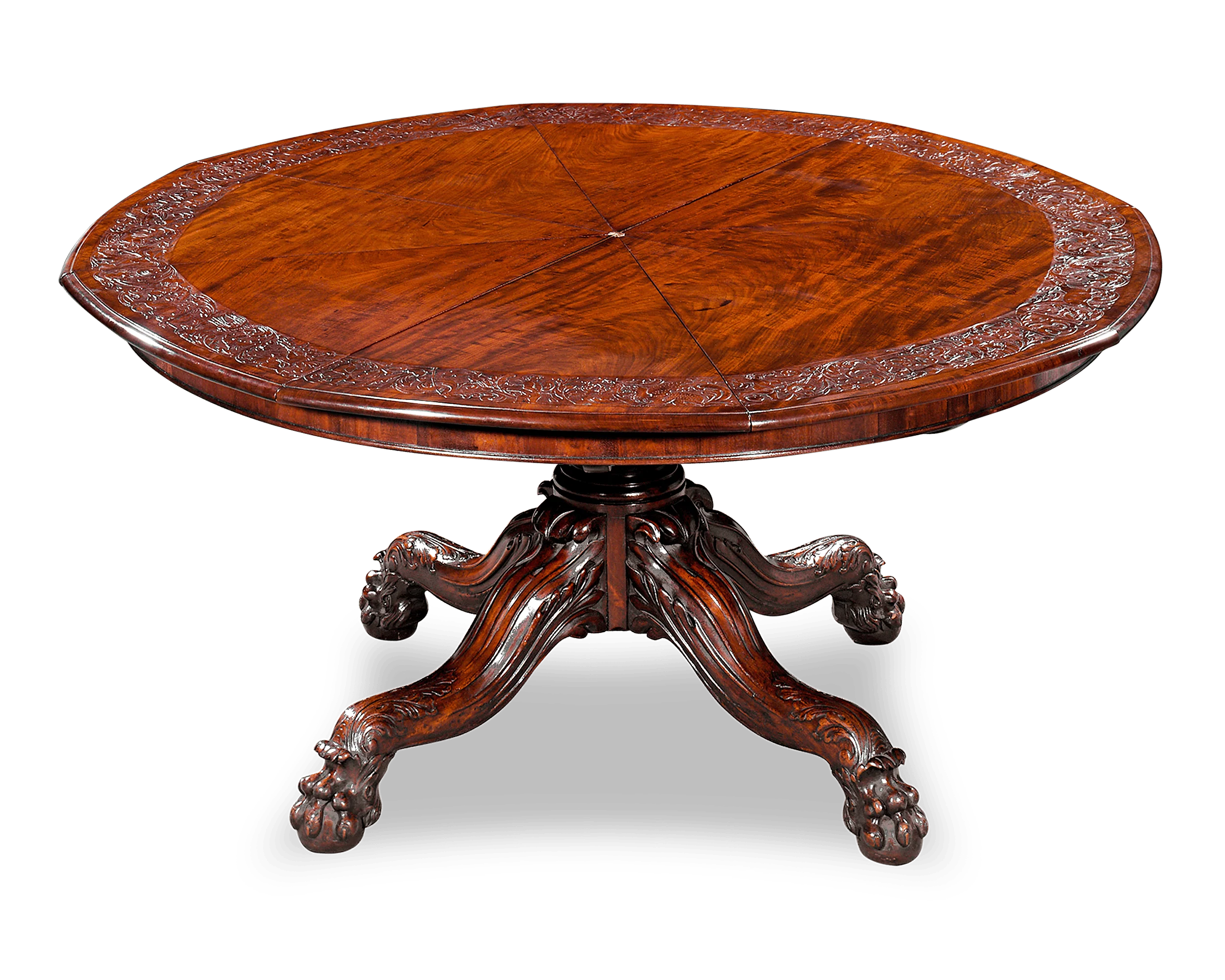
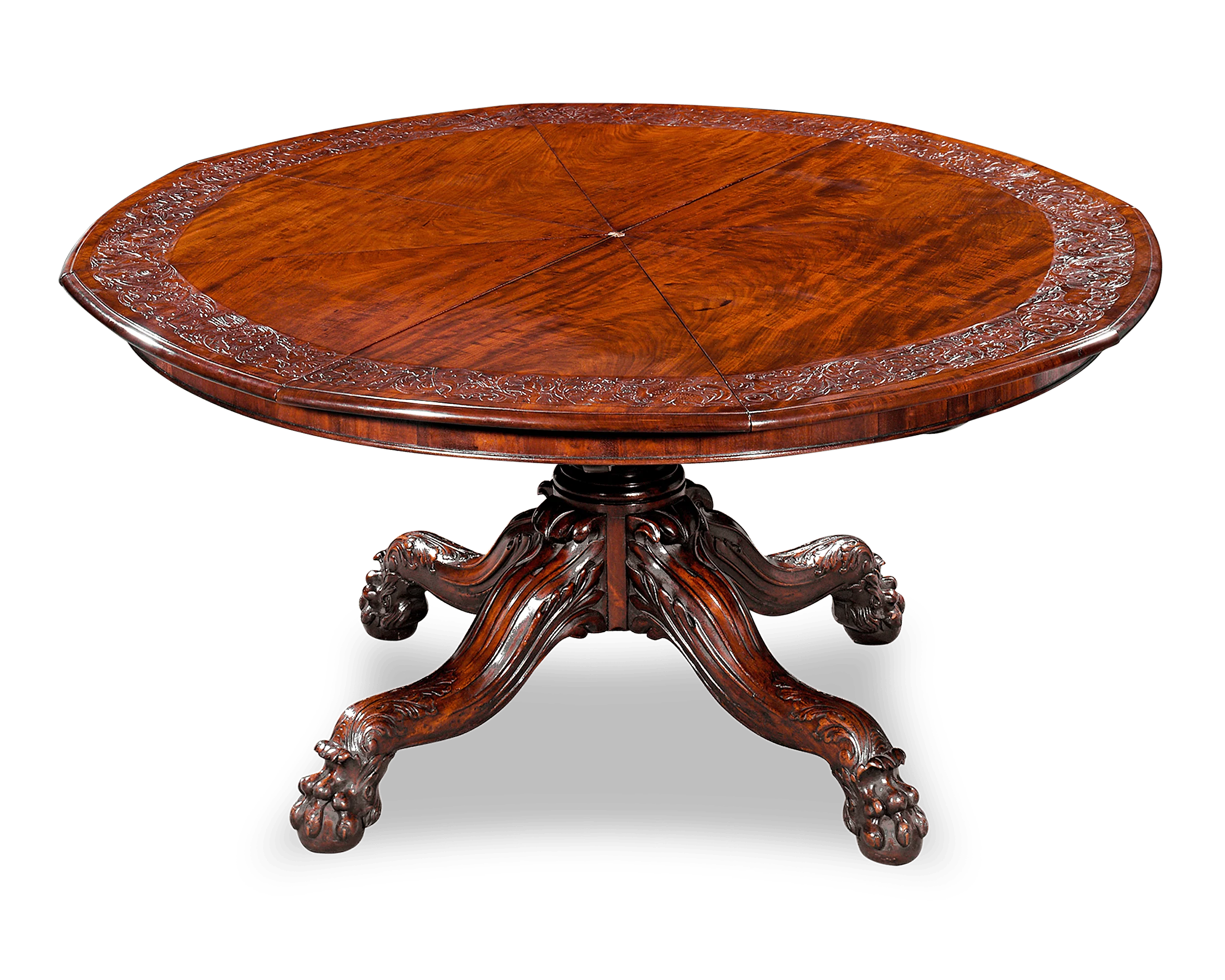
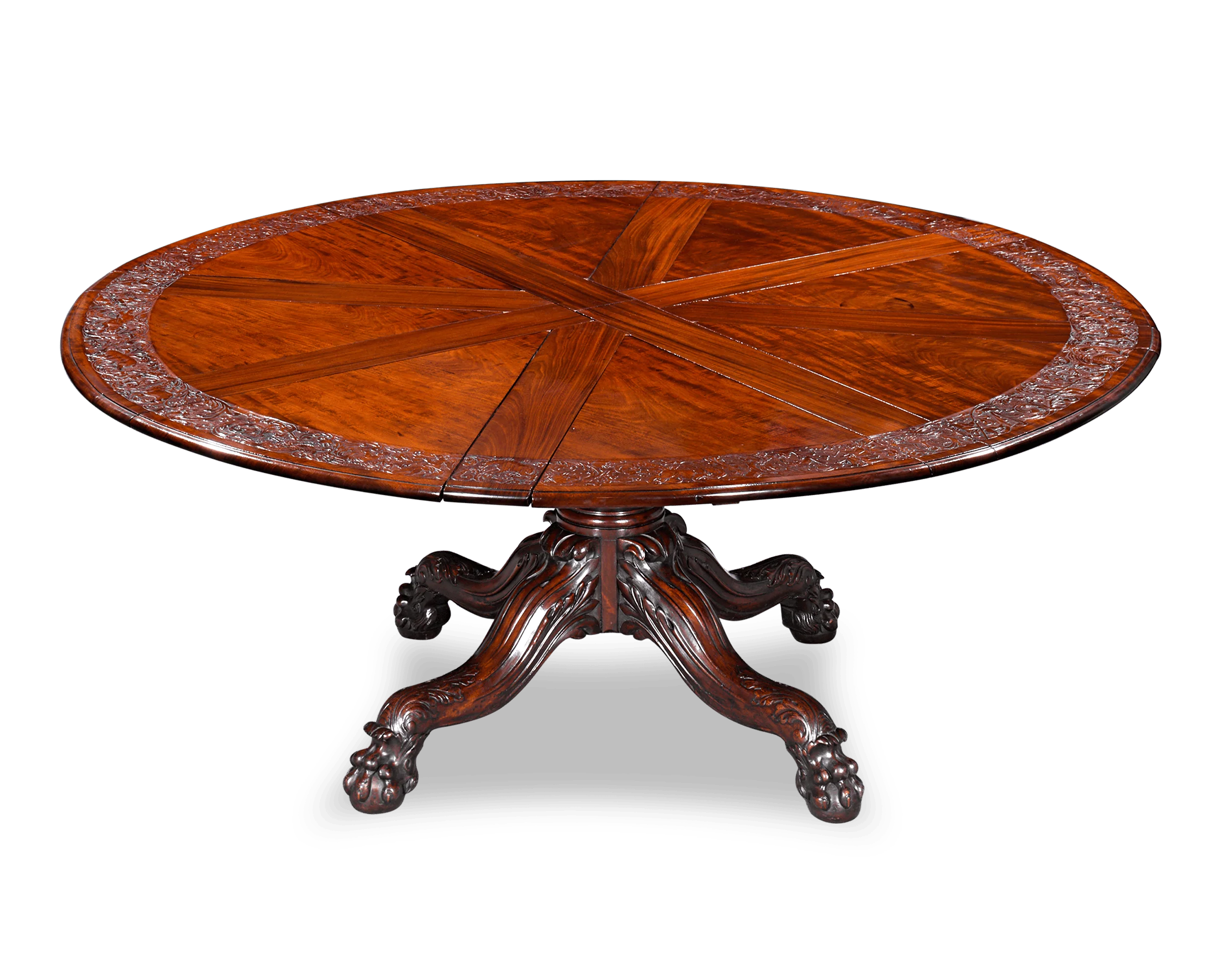
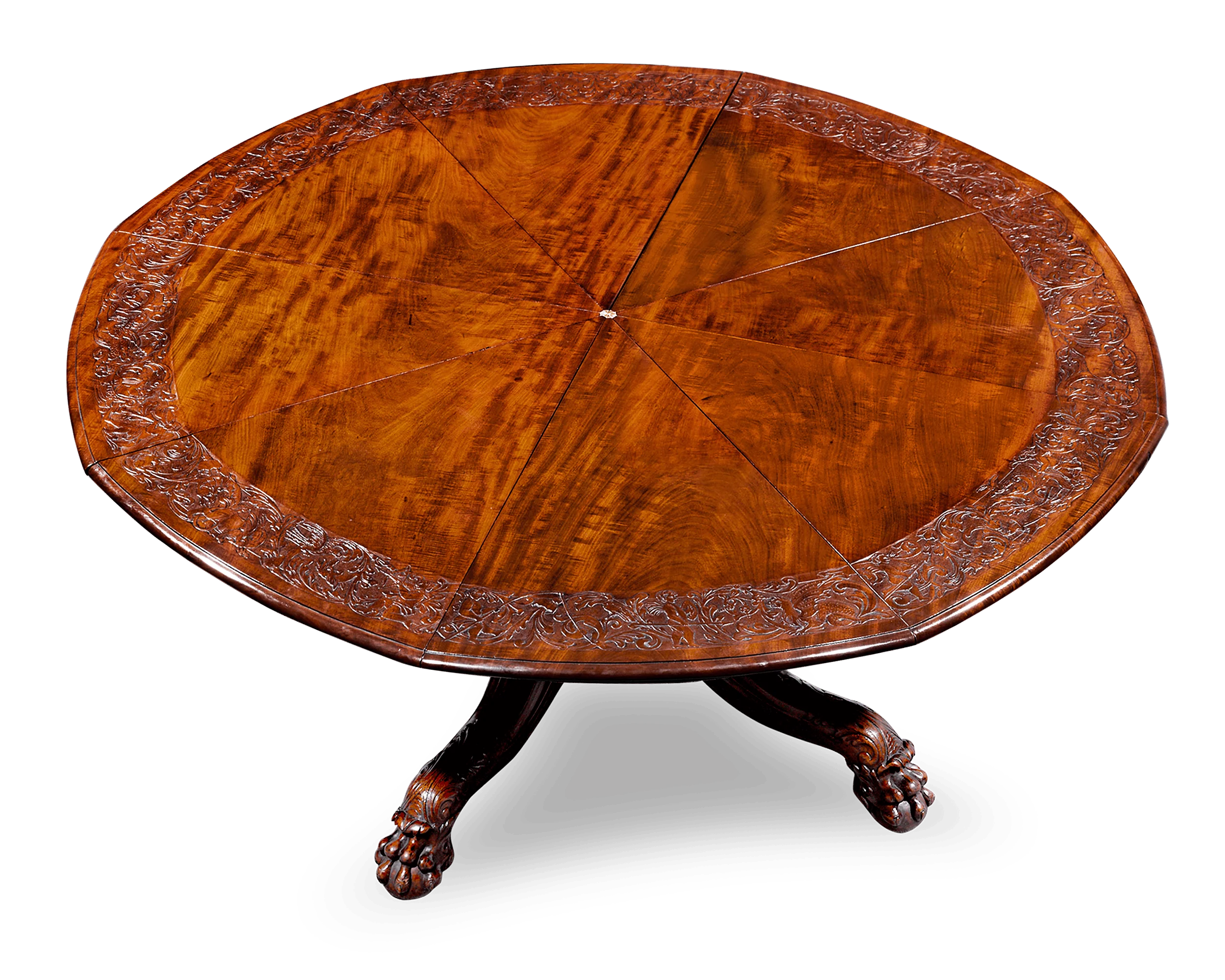
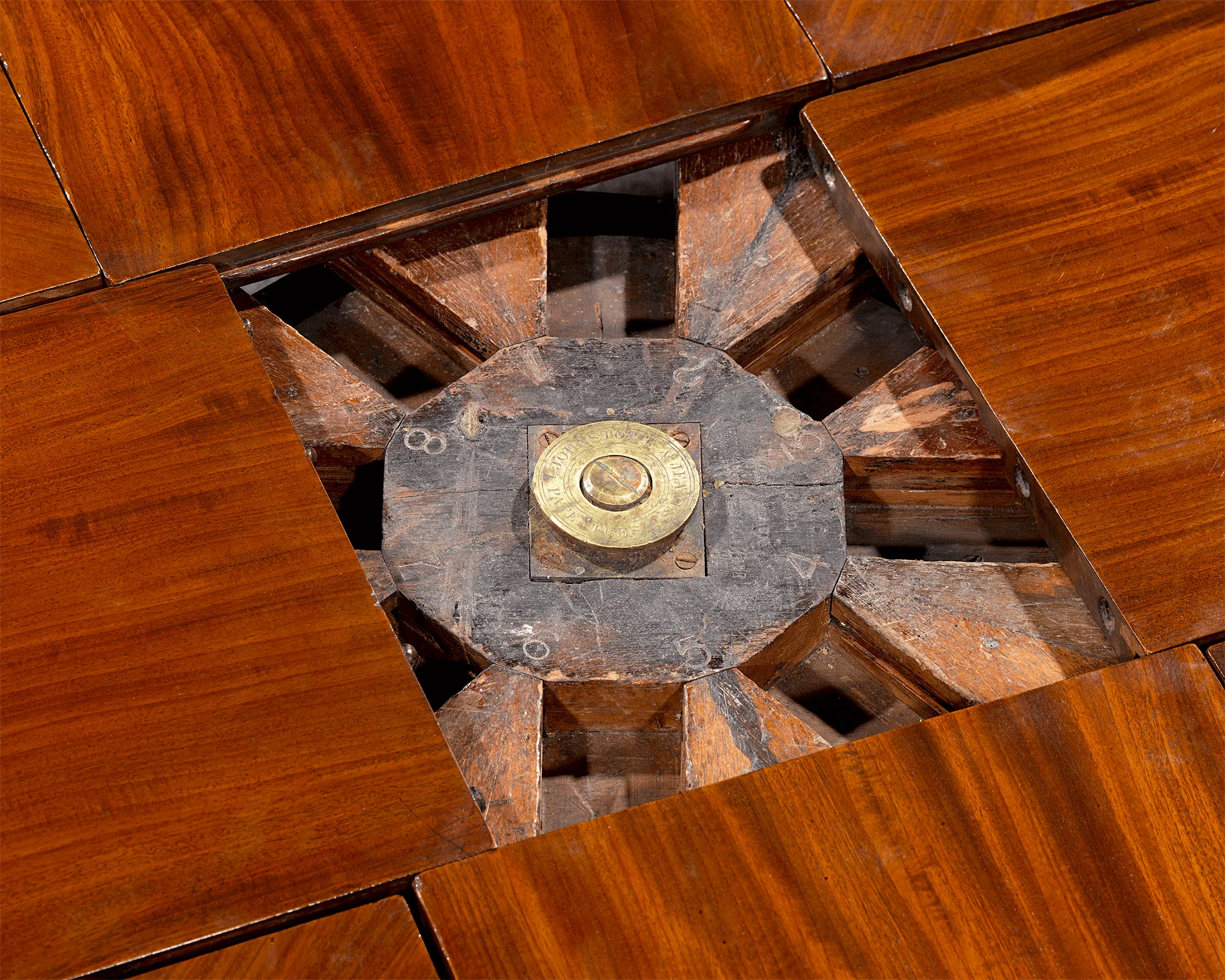
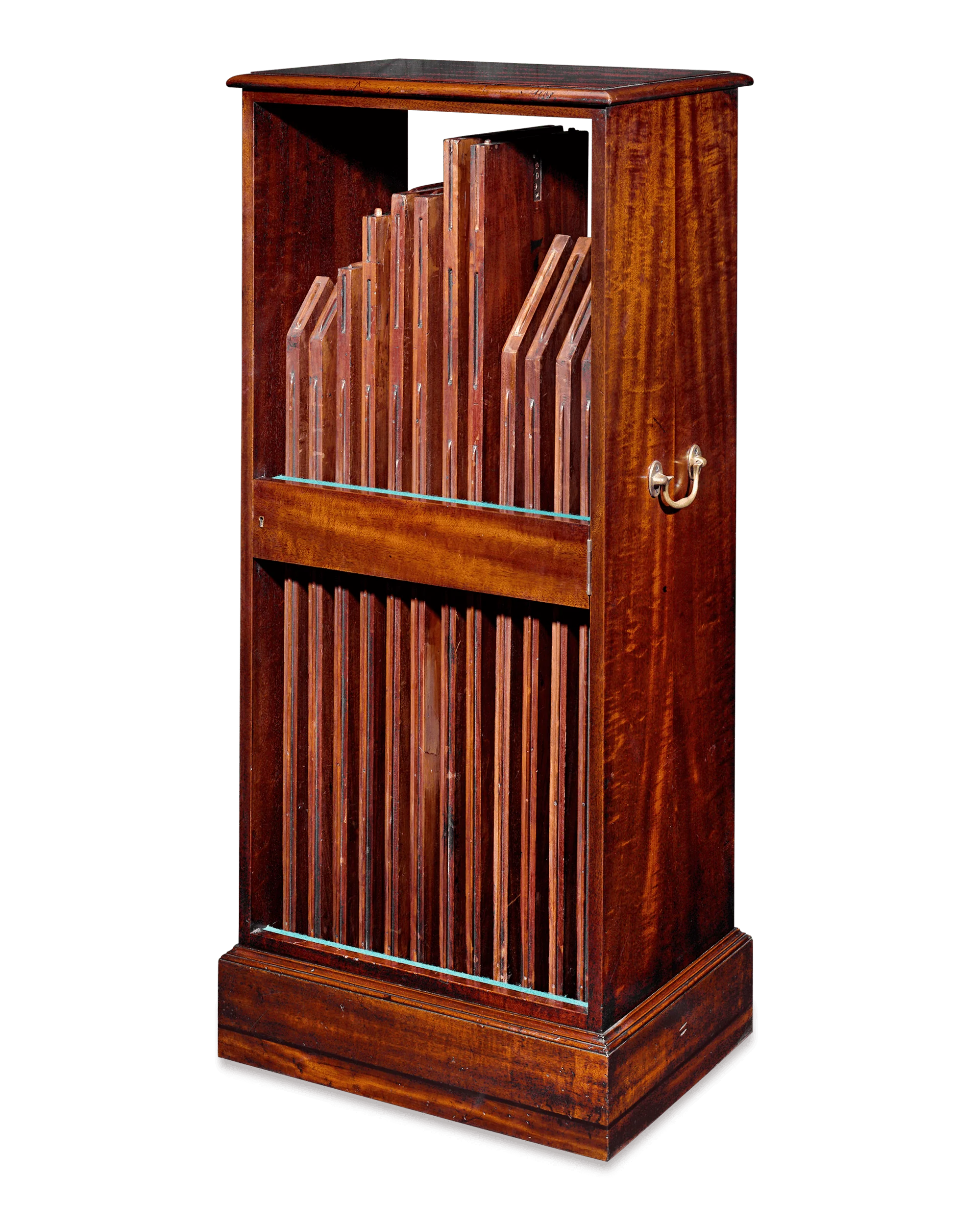
This exceptionally rare circular expanding dining table was designed by Robert Jupe and crafted by the English cabinetmakers Johnstone & Jeanes, successors to Johnstone, Jupe & Co. One of only a handful known from the firm, this table illustrates the Victorian era's quest to combine technical innovation with superb and beautiful craftsmanship. Complete with its original leaves, the table’s circular top is formed from eight separate segments. When the top is rotated, an ingenious swivel mechanism causes the sections to diverge, allowing a set of small or large leaves to be inserted for an adjustable increase in size.
The design for the table was patented by Robert Jupe in 1835, who had envisioned “an improved expanding table so constructed that the sections composing its surface may be caused to diverge from a common center and that the spaces caused thereby may be filled up by inserting leaves or filling pieces.” The first of these fascinating tables were created between 1835 and 1840 during his partnership with John Johnstone and their firm of Johnstone, Jupe & Co. in London. Jupe left the company in 1840, after which the firm changed its name due to a new partnership and became Johnstone & Jeanes. The firm would eventually achieve international fame for its remarkable designs, exhibiting a "circular table...made on the expanding principle" like this one at the Great Exhibition of 1851.
Jupe was not alone in his fascination with combining the technical merits of engineering and mechanics with the more artful pursuit of cabinet making. The first half of the 19th century saw a prolific increase in the popularity of applying new ideas to furniture principles, which allowed furniture to serve many purposes. The resulting “patent” furniture was practical and refined, although none so much as this remarkable and quite stunning table which is equally suited for intimate gatherings or large, formal dinners.
Features brass Johnstone & Jeanes plaque
Circa 1850
65" diameter x 29 3/4" high
93" diameter when fully expanded
The design for the table was patented by Robert Jupe in 1835, who had envisioned “an improved expanding table so constructed that the sections composing its surface may be caused to diverge from a common center and that the spaces caused thereby may be filled up by inserting leaves or filling pieces.” The first of these fascinating tables were created between 1835 and 1840 during his partnership with John Johnstone and their firm of Johnstone, Jupe & Co. in London. Jupe left the company in 1840, after which the firm changed its name due to a new partnership and became Johnstone & Jeanes. The firm would eventually achieve international fame for its remarkable designs, exhibiting a "circular table...made on the expanding principle" like this one at the Great Exhibition of 1851.
Jupe was not alone in his fascination with combining the technical merits of engineering and mechanics with the more artful pursuit of cabinet making. The first half of the 19th century saw a prolific increase in the popularity of applying new ideas to furniture principles, which allowed furniture to serve many purposes. The resulting “patent” furniture was practical and refined, although none so much as this remarkable and quite stunning table which is equally suited for intimate gatherings or large, formal dinners.
Features brass Johnstone & Jeanes plaque
Circa 1850
65" diameter x 29 3/4" high
93" diameter when fully expanded
$100,975.00
Original: $288,500.00
-65%Expanding Jupe Dining Table by Johnstone and Jeanes—
$288,500.00
$100,975.00More Images




Expanding Jupe Dining Table by Johnstone and Jeanes
This exceptionally rare circular expanding dining table was designed by Robert Jupe and crafted by the English cabinetmakers Johnstone & Jeanes, successors to Johnstone, Jupe & Co. One of only a handful known from the firm, this table illustrates the Victorian era's quest to combine technical innovation with superb and beautiful craftsmanship. Complete with its original leaves, the table’s circular top is formed from eight separate segments. When the top is rotated, an ingenious swivel mechanism causes the sections to diverge, allowing a set of small or large leaves to be inserted for an adjustable increase in size.
The design for the table was patented by Robert Jupe in 1835, who had envisioned “an improved expanding table so constructed that the sections composing its surface may be caused to diverge from a common center and that the spaces caused thereby may be filled up by inserting leaves or filling pieces.” The first of these fascinating tables were created between 1835 and 1840 during his partnership with John Johnstone and their firm of Johnstone, Jupe & Co. in London. Jupe left the company in 1840, after which the firm changed its name due to a new partnership and became Johnstone & Jeanes. The firm would eventually achieve international fame for its remarkable designs, exhibiting a "circular table...made on the expanding principle" like this one at the Great Exhibition of 1851.
Jupe was not alone in his fascination with combining the technical merits of engineering and mechanics with the more artful pursuit of cabinet making. The first half of the 19th century saw a prolific increase in the popularity of applying new ideas to furniture principles, which allowed furniture to serve many purposes. The resulting “patent” furniture was practical and refined, although none so much as this remarkable and quite stunning table which is equally suited for intimate gatherings or large, formal dinners.
Features brass Johnstone & Jeanes plaque
Circa 1850
65" diameter x 29 3/4" high
93" diameter when fully expanded
The design for the table was patented by Robert Jupe in 1835, who had envisioned “an improved expanding table so constructed that the sections composing its surface may be caused to diverge from a common center and that the spaces caused thereby may be filled up by inserting leaves or filling pieces.” The first of these fascinating tables were created between 1835 and 1840 during his partnership with John Johnstone and their firm of Johnstone, Jupe & Co. in London. Jupe left the company in 1840, after which the firm changed its name due to a new partnership and became Johnstone & Jeanes. The firm would eventually achieve international fame for its remarkable designs, exhibiting a "circular table...made on the expanding principle" like this one at the Great Exhibition of 1851.
Jupe was not alone in his fascination with combining the technical merits of engineering and mechanics with the more artful pursuit of cabinet making. The first half of the 19th century saw a prolific increase in the popularity of applying new ideas to furniture principles, which allowed furniture to serve many purposes. The resulting “patent” furniture was practical and refined, although none so much as this remarkable and quite stunning table which is equally suited for intimate gatherings or large, formal dinners.
Features brass Johnstone & Jeanes plaque
Circa 1850
65" diameter x 29 3/4" high
93" diameter when fully expanded
Product Information
Product Information
Shipping & Returns
Shipping & Returns
Description
This exceptionally rare circular expanding dining table was designed by Robert Jupe and crafted by the English cabinetmakers Johnstone & Jeanes, successors to Johnstone, Jupe & Co. One of only a handful known from the firm, this table illustrates the Victorian era's quest to combine technical innovation with superb and beautiful craftsmanship. Complete with its original leaves, the table’s circular top is formed from eight separate segments. When the top is rotated, an ingenious swivel mechanism causes the sections to diverge, allowing a set of small or large leaves to be inserted for an adjustable increase in size.
The design for the table was patented by Robert Jupe in 1835, who had envisioned “an improved expanding table so constructed that the sections composing its surface may be caused to diverge from a common center and that the spaces caused thereby may be filled up by inserting leaves or filling pieces.” The first of these fascinating tables were created between 1835 and 1840 during his partnership with John Johnstone and their firm of Johnstone, Jupe & Co. in London. Jupe left the company in 1840, after which the firm changed its name due to a new partnership and became Johnstone & Jeanes. The firm would eventually achieve international fame for its remarkable designs, exhibiting a "circular table...made on the expanding principle" like this one at the Great Exhibition of 1851.
Jupe was not alone in his fascination with combining the technical merits of engineering and mechanics with the more artful pursuit of cabinet making. The first half of the 19th century saw a prolific increase in the popularity of applying new ideas to furniture principles, which allowed furniture to serve many purposes. The resulting “patent” furniture was practical and refined, although none so much as this remarkable and quite stunning table which is equally suited for intimate gatherings or large, formal dinners.
Features brass Johnstone & Jeanes plaque
Circa 1850
65" diameter x 29 3/4" high
93" diameter when fully expanded
The design for the table was patented by Robert Jupe in 1835, who had envisioned “an improved expanding table so constructed that the sections composing its surface may be caused to diverge from a common center and that the spaces caused thereby may be filled up by inserting leaves or filling pieces.” The first of these fascinating tables were created between 1835 and 1840 during his partnership with John Johnstone and their firm of Johnstone, Jupe & Co. in London. Jupe left the company in 1840, after which the firm changed its name due to a new partnership and became Johnstone & Jeanes. The firm would eventually achieve international fame for its remarkable designs, exhibiting a "circular table...made on the expanding principle" like this one at the Great Exhibition of 1851.
Jupe was not alone in his fascination with combining the technical merits of engineering and mechanics with the more artful pursuit of cabinet making. The first half of the 19th century saw a prolific increase in the popularity of applying new ideas to furniture principles, which allowed furniture to serve many purposes. The resulting “patent” furniture was practical and refined, although none so much as this remarkable and quite stunning table which is equally suited for intimate gatherings or large, formal dinners.
Features brass Johnstone & Jeanes plaque
Circa 1850
65" diameter x 29 3/4" high
93" diameter when fully expanded