✨ New Arrivals Just Dropped!Explore
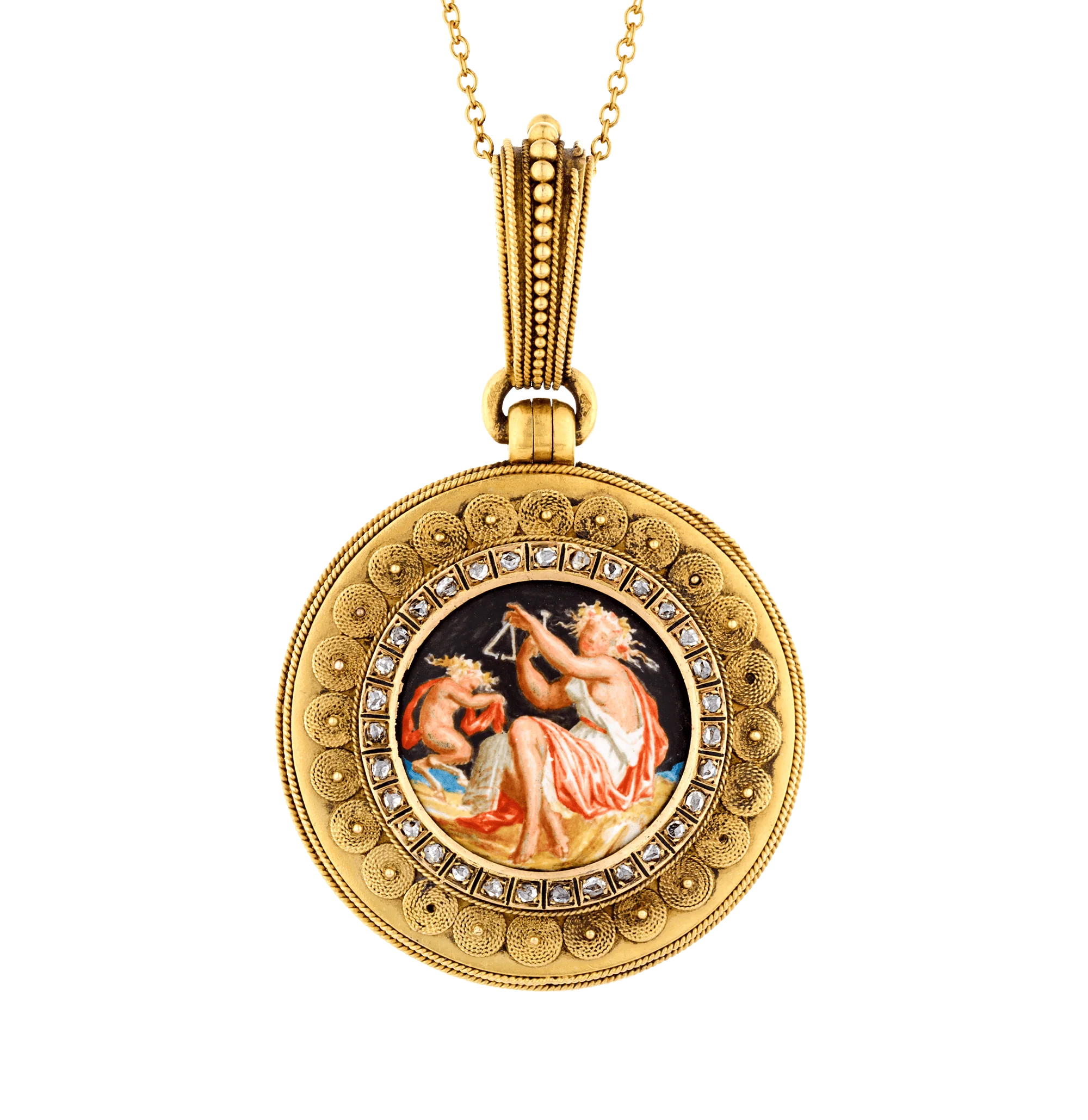
Eugène Fontenay Etruscan Revival Gold and Enamel Locket
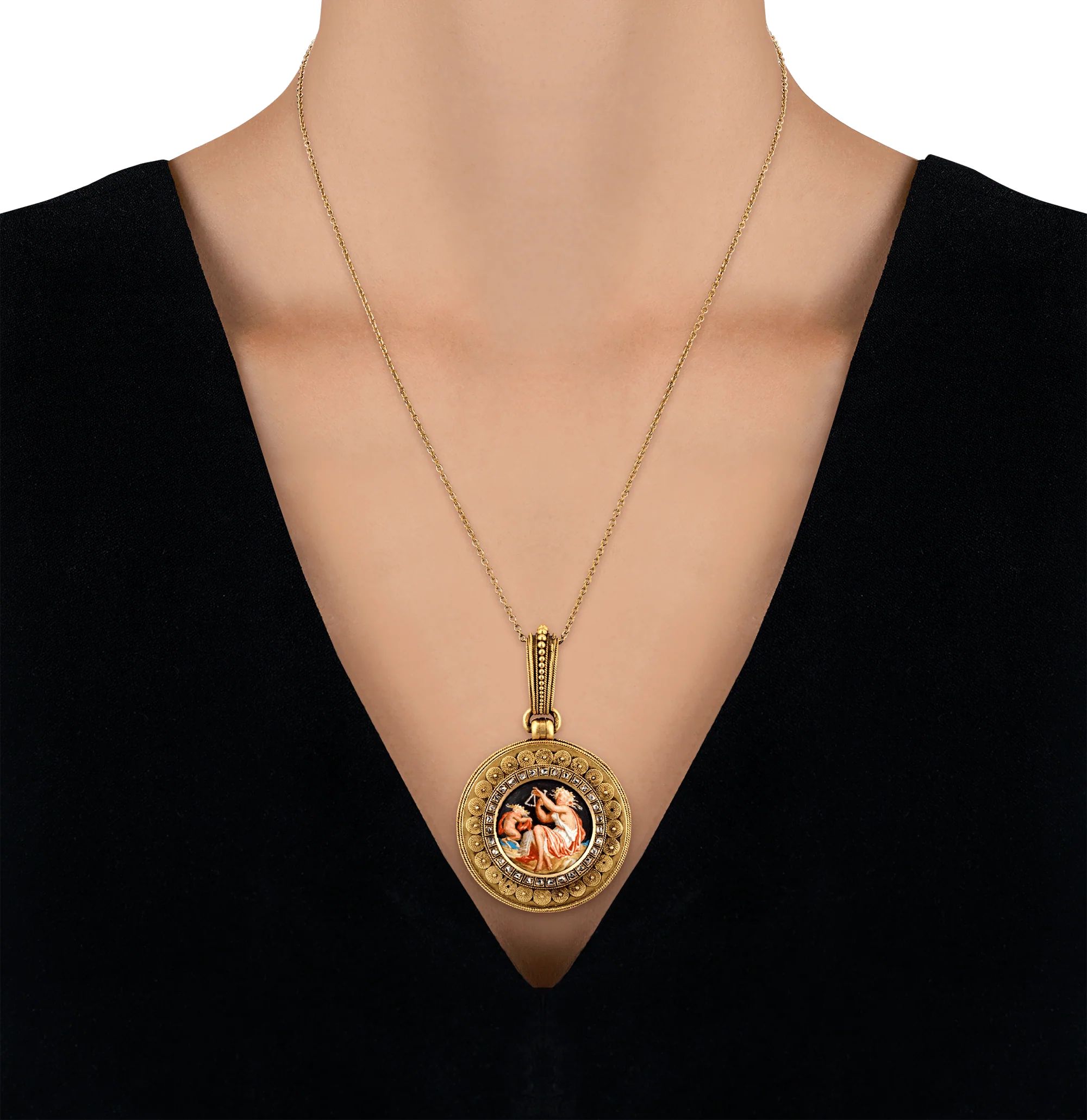
Among the finest expressions of the Etruscan Revival, this locket by renowned Parisian jeweler Eugène Fontenay centers a matte enamel miniature by Salon painter Eugène Richet. This celebrated jewelry series earned a Gold Medal at the 1867 Paris Exposition Universelle, with examples held in major museum collections, including the Metropolitan Museum of Art and the British Museum.
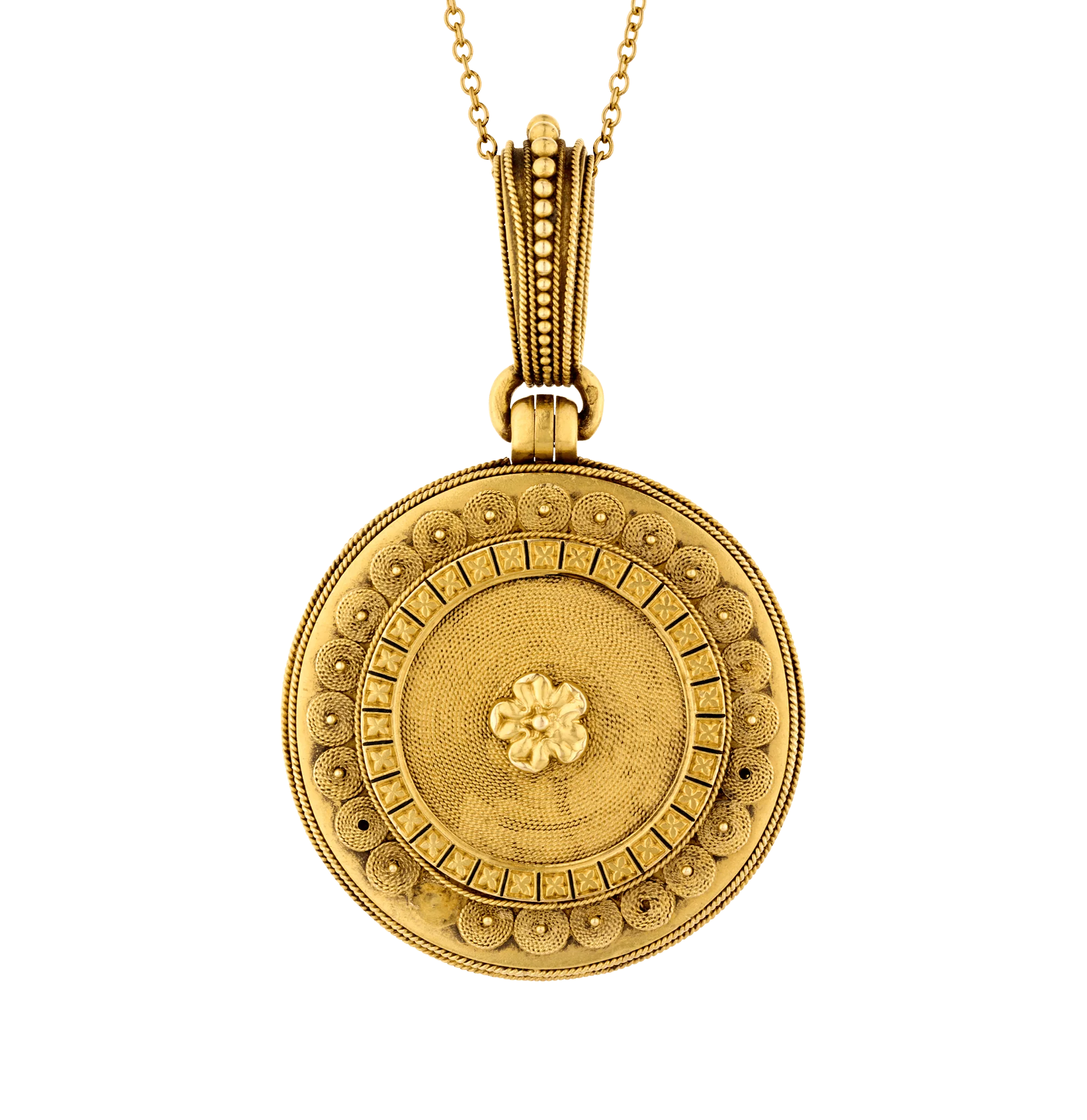
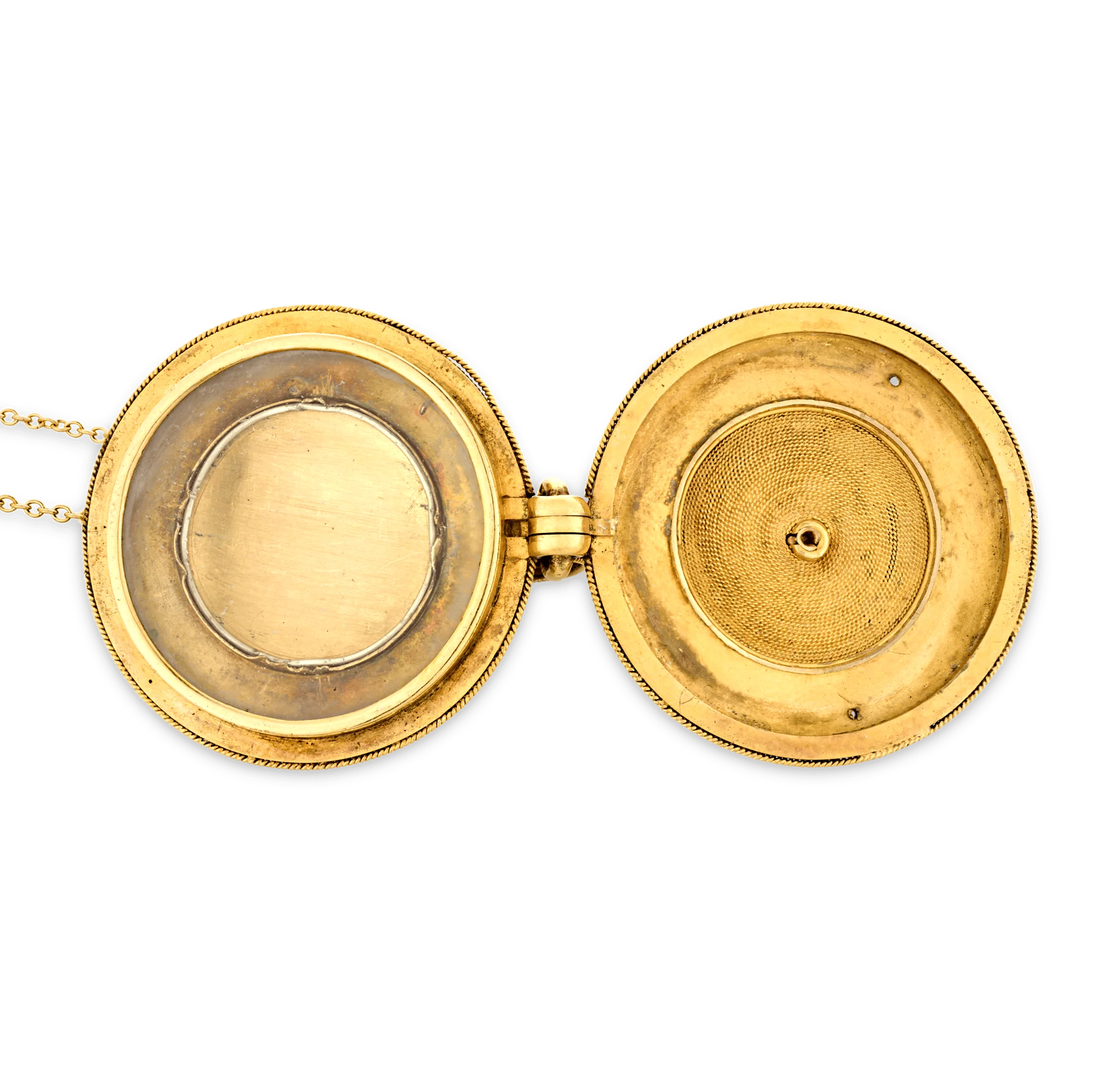
The jewel is rendered in richly toned 18K yellow gold, formulated in Fontenay’s own workshop to achieve a distinctive antique hue. The effect recalls the softly weathered surfaces of ancient frescoes uncovered in Pompeii, echoed in Richet’s matte enamel technique. Delicate rose cut diamonds accent the jewel, while the interior is fitted with a glass compartment framed in 18K gold for a treasured photograph or keepsake.
A leading figure of the 19th-century archaeological revival, Eugène Fontenay drew inspiration from the famed Campana Collection acquired by Napoleon III, translating ancient motifs into jewels of remarkable refinement. His collaborations with artists such as Eugène Richet elevated his work beyond ornament, blending fine art and goldsmithing in a manner that defined the height of Second Empire taste. Today, Fontenay's works are preserved in institutions such as the Musée d’Orsay and the Musée des Arts Décoratifs in Paris, affirming his legacy as one of the most innovative jewelers of his time.
Circa 1870
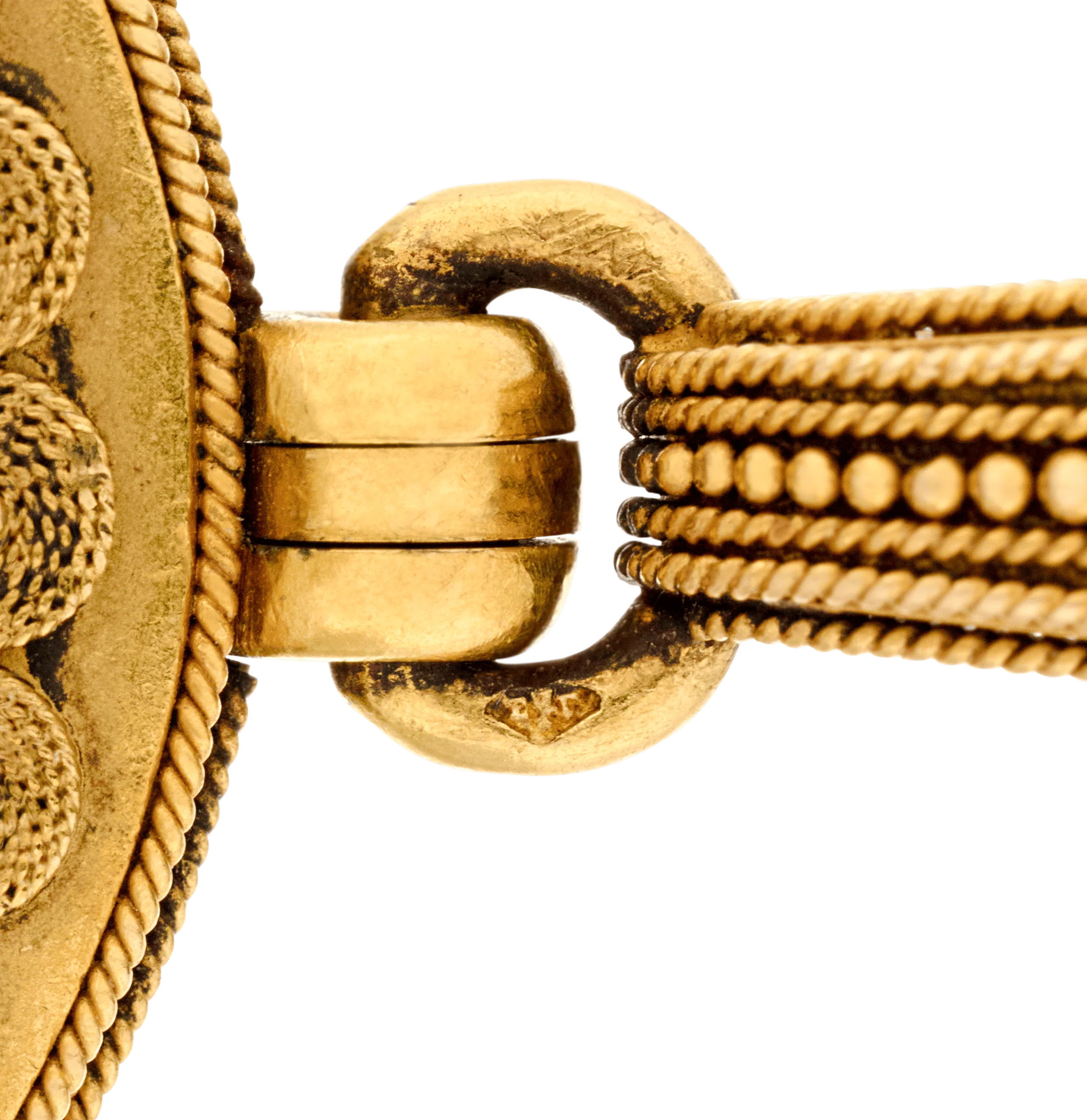
Signed with maker's mark "EF"
The jewel is rendered in richly toned 18K yellow gold, formulated in Fontenay’s own workshop to achieve a distinctive antique hue. The effect recalls the softly weathered surfaces of ancient frescoes uncovered in Pompeii, echoed in Richet’s matte enamel technique. Delicate rose cut diamonds accent the jewel, while the interior is fitted with a glass compartment framed in 18K gold for a treasured photograph or keepsake.
A leading figure of the 19th-century archaeological revival, Eugène Fontenay drew inspiration from the famed Campana Collection acquired by Napoleon III, translating ancient motifs into jewels of remarkable refinement. His collaborations with artists such as Eugène Richet elevated his work beyond ornament, blending fine art and goldsmithing in a manner that defined the height of Second Empire taste. Today, Fontenay's works are preserved in institutions such as the Musée d’Orsay and the Musée des Arts Décoratifs in Paris, affirming his legacy as one of the most innovative jewelers of his time.
Circa 1870
Signed with maker's mark "EF"
$12,075.00
Original: $34,500.00
-65%Eugène Fontenay Etruscan Revival Gold and Enamel Locket—
$34,500.00
$12,075.00More Images
Eugène Fontenay Etruscan Revival Gold and Enamel Locket
Among the finest expressions of the Etruscan Revival, this locket by renowned Parisian jeweler Eugène Fontenay centers a matte enamel miniature by Salon painter Eugène Richet. This celebrated jewelry series earned a Gold Medal at the 1867 Paris Exposition Universelle, with examples held in major museum collections, including the Metropolitan Museum of Art and the British Museum.
The jewel is rendered in richly toned 18K yellow gold, formulated in Fontenay’s own workshop to achieve a distinctive antique hue. The effect recalls the softly weathered surfaces of ancient frescoes uncovered in Pompeii, echoed in Richet’s matte enamel technique. Delicate rose cut diamonds accent the jewel, while the interior is fitted with a glass compartment framed in 18K gold for a treasured photograph or keepsake.
A leading figure of the 19th-century archaeological revival, Eugène Fontenay drew inspiration from the famed Campana Collection acquired by Napoleon III, translating ancient motifs into jewels of remarkable refinement. His collaborations with artists such as Eugène Richet elevated his work beyond ornament, blending fine art and goldsmithing in a manner that defined the height of Second Empire taste. Today, Fontenay's works are preserved in institutions such as the Musée d’Orsay and the Musée des Arts Décoratifs in Paris, affirming his legacy as one of the most innovative jewelers of his time.
Circa 1870
Signed with maker's mark "EF"
The jewel is rendered in richly toned 18K yellow gold, formulated in Fontenay’s own workshop to achieve a distinctive antique hue. The effect recalls the softly weathered surfaces of ancient frescoes uncovered in Pompeii, echoed in Richet’s matte enamel technique. Delicate rose cut diamonds accent the jewel, while the interior is fitted with a glass compartment framed in 18K gold for a treasured photograph or keepsake.
A leading figure of the 19th-century archaeological revival, Eugène Fontenay drew inspiration from the famed Campana Collection acquired by Napoleon III, translating ancient motifs into jewels of remarkable refinement. His collaborations with artists such as Eugène Richet elevated his work beyond ornament, blending fine art and goldsmithing in a manner that defined the height of Second Empire taste. Today, Fontenay's works are preserved in institutions such as the Musée d’Orsay and the Musée des Arts Décoratifs in Paris, affirming his legacy as one of the most innovative jewelers of his time.
Circa 1870
Signed with maker's mark "EF"
Product Information
Product Information
Shipping & Returns
Shipping & Returns
Description
Among the finest expressions of the Etruscan Revival, this locket by renowned Parisian jeweler Eugène Fontenay centers a matte enamel miniature by Salon painter Eugène Richet. This celebrated jewelry series earned a Gold Medal at the 1867 Paris Exposition Universelle, with examples held in major museum collections, including the Metropolitan Museum of Art and the British Museum.
The jewel is rendered in richly toned 18K yellow gold, formulated in Fontenay’s own workshop to achieve a distinctive antique hue. The effect recalls the softly weathered surfaces of ancient frescoes uncovered in Pompeii, echoed in Richet’s matte enamel technique. Delicate rose cut diamonds accent the jewel, while the interior is fitted with a glass compartment framed in 18K gold for a treasured photograph or keepsake.
A leading figure of the 19th-century archaeological revival, Eugène Fontenay drew inspiration from the famed Campana Collection acquired by Napoleon III, translating ancient motifs into jewels of remarkable refinement. His collaborations with artists such as Eugène Richet elevated his work beyond ornament, blending fine art and goldsmithing in a manner that defined the height of Second Empire taste. Today, Fontenay's works are preserved in institutions such as the Musée d’Orsay and the Musée des Arts Décoratifs in Paris, affirming his legacy as one of the most innovative jewelers of his time.
Circa 1870
Signed with maker's mark "EF"
The jewel is rendered in richly toned 18K yellow gold, formulated in Fontenay’s own workshop to achieve a distinctive antique hue. The effect recalls the softly weathered surfaces of ancient frescoes uncovered in Pompeii, echoed in Richet’s matte enamel technique. Delicate rose cut diamonds accent the jewel, while the interior is fitted with a glass compartment framed in 18K gold for a treasured photograph or keepsake.
A leading figure of the 19th-century archaeological revival, Eugène Fontenay drew inspiration from the famed Campana Collection acquired by Napoleon III, translating ancient motifs into jewels of remarkable refinement. His collaborations with artists such as Eugène Richet elevated his work beyond ornament, blending fine art and goldsmithing in a manner that defined the height of Second Empire taste. Today, Fontenay's works are preserved in institutions such as the Musée d’Orsay and the Musée des Arts Décoratifs in Paris, affirming his legacy as one of the most innovative jewelers of his time.
Circa 1870
Signed with maker's mark "EF"