✨ New Arrivals Just Dropped!Explore

Art Deco Intaglio Untreated Ceylon Sapphire Ring, 11.48 Carats
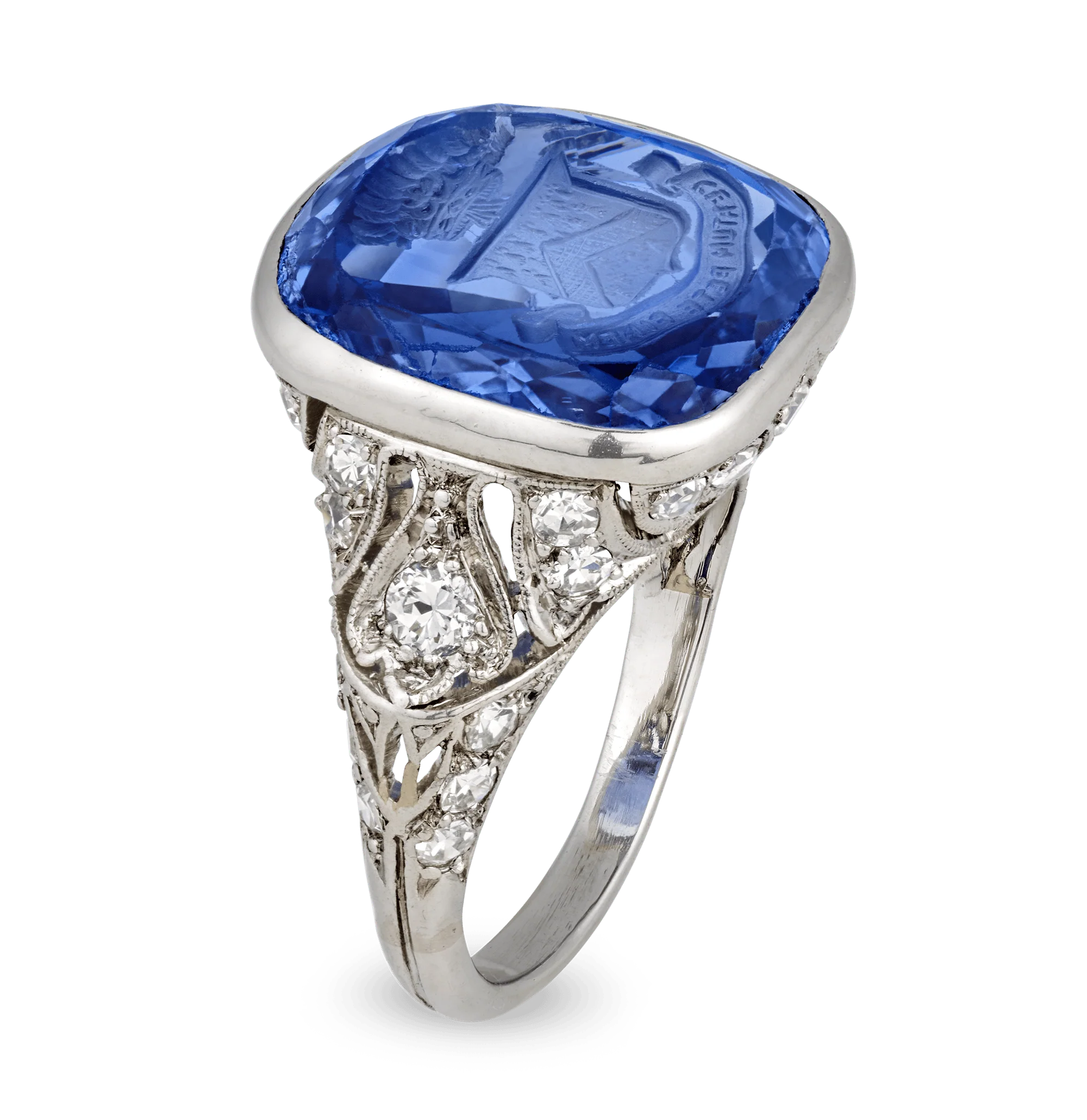
This rare Art Deco ring features a monumental engraved sapphire wax seal. Weighing 11.48 carats, the gem is accompanied by its GIA report verifying that it is free from heat treatment and that it originates in Ceylon. Celebrated for their vivid color, brilliance and historic prestige, sapphires from Ceylon—modern-day Sri Lanka—are among the most sought-after in the world, prized by collectors for their luminous blue hues and remarkable clarity. This unique cushion cut example displays the ideal royal blue color without treatment.
Gem carving, known as intaglio, is an ancient art form that traces its origins to the 14th century BCE. Practiced by early civilizations in Mesopotamia, Assyria and Phoenicia, it later flourished in Greece and Rome, though the intricate techniques of intaglio carving required years of dedicated practice. Intaglio gems continued to appear in fashionable jewelry into the 19th and 20th centuries. This particular example displays a high-standing family’s elegant coat of arms with the Latin phrase “certum pete finem” beneath it. Originating from a line in the Roman poet Horace's Epistles, the phrase translates to “aim for a sure end” and symbolizes determination and a sense of purpose. Carved in reverse, the phrase and its corresponding coat of arms are meant to appear correctly when impressed into wax.
White diamonds totaling 0.50 carat accent the main stone, incorporated into the ring’s intricate setting and band. Set in platinum.
Download the Report
Gem carving, known as intaglio, is an ancient art form that traces its origins to the 14th century BCE. Practiced by early civilizations in Mesopotamia, Assyria and Phoenicia, it later flourished in Greece and Rome, though the intricate techniques of intaglio carving required years of dedicated practice. Intaglio gems continued to appear in fashionable jewelry into the 19th and 20th centuries. This particular example displays a high-standing family’s elegant coat of arms with the Latin phrase “certum pete finem” beneath it. Originating from a line in the Roman poet Horace's Epistles, the phrase translates to “aim for a sure end” and symbolizes determination and a sense of purpose. Carved in reverse, the phrase and its corresponding coat of arms are meant to appear correctly when impressed into wax.
White diamonds totaling 0.50 carat accent the main stone, incorporated into the ring’s intricate setting and band. Set in platinum.
Download the Report
$47,250.00
Original: $135,000.00
-65%Art Deco Intaglio Untreated Ceylon Sapphire Ring, 11.48 Carats—
$135,000.00
$47,250.00More Images


Art Deco Intaglio Untreated Ceylon Sapphire Ring, 11.48 Carats
This rare Art Deco ring features a monumental engraved sapphire wax seal. Weighing 11.48 carats, the gem is accompanied by its GIA report verifying that it is free from heat treatment and that it originates in Ceylon. Celebrated for their vivid color, brilliance and historic prestige, sapphires from Ceylon—modern-day Sri Lanka—are among the most sought-after in the world, prized by collectors for their luminous blue hues and remarkable clarity. This unique cushion cut example displays the ideal royal blue color without treatment.
Gem carving, known as intaglio, is an ancient art form that traces its origins to the 14th century BCE. Practiced by early civilizations in Mesopotamia, Assyria and Phoenicia, it later flourished in Greece and Rome, though the intricate techniques of intaglio carving required years of dedicated practice. Intaglio gems continued to appear in fashionable jewelry into the 19th and 20th centuries. This particular example displays a high-standing family’s elegant coat of arms with the Latin phrase “certum pete finem” beneath it. Originating from a line in the Roman poet Horace's Epistles, the phrase translates to “aim for a sure end” and symbolizes determination and a sense of purpose. Carved in reverse, the phrase and its corresponding coat of arms are meant to appear correctly when impressed into wax.
White diamonds totaling 0.50 carat accent the main stone, incorporated into the ring’s intricate setting and band. Set in platinum.
Download the Report
Gem carving, known as intaglio, is an ancient art form that traces its origins to the 14th century BCE. Practiced by early civilizations in Mesopotamia, Assyria and Phoenicia, it later flourished in Greece and Rome, though the intricate techniques of intaglio carving required years of dedicated practice. Intaglio gems continued to appear in fashionable jewelry into the 19th and 20th centuries. This particular example displays a high-standing family’s elegant coat of arms with the Latin phrase “certum pete finem” beneath it. Originating from a line in the Roman poet Horace's Epistles, the phrase translates to “aim for a sure end” and symbolizes determination and a sense of purpose. Carved in reverse, the phrase and its corresponding coat of arms are meant to appear correctly when impressed into wax.
White diamonds totaling 0.50 carat accent the main stone, incorporated into the ring’s intricate setting and band. Set in platinum.
Download the Report
Product Information
Product Information
Shipping & Returns
Shipping & Returns
Description
This rare Art Deco ring features a monumental engraved sapphire wax seal. Weighing 11.48 carats, the gem is accompanied by its GIA report verifying that it is free from heat treatment and that it originates in Ceylon. Celebrated for their vivid color, brilliance and historic prestige, sapphires from Ceylon—modern-day Sri Lanka—are among the most sought-after in the world, prized by collectors for their luminous blue hues and remarkable clarity. This unique cushion cut example displays the ideal royal blue color without treatment.
Gem carving, known as intaglio, is an ancient art form that traces its origins to the 14th century BCE. Practiced by early civilizations in Mesopotamia, Assyria and Phoenicia, it later flourished in Greece and Rome, though the intricate techniques of intaglio carving required years of dedicated practice. Intaglio gems continued to appear in fashionable jewelry into the 19th and 20th centuries. This particular example displays a high-standing family’s elegant coat of arms with the Latin phrase “certum pete finem” beneath it. Originating from a line in the Roman poet Horace's Epistles, the phrase translates to “aim for a sure end” and symbolizes determination and a sense of purpose. Carved in reverse, the phrase and its corresponding coat of arms are meant to appear correctly when impressed into wax.
White diamonds totaling 0.50 carat accent the main stone, incorporated into the ring’s intricate setting and band. Set in platinum.
Download the Report
Gem carving, known as intaglio, is an ancient art form that traces its origins to the 14th century BCE. Practiced by early civilizations in Mesopotamia, Assyria and Phoenicia, it later flourished in Greece and Rome, though the intricate techniques of intaglio carving required years of dedicated practice. Intaglio gems continued to appear in fashionable jewelry into the 19th and 20th centuries. This particular example displays a high-standing family’s elegant coat of arms with the Latin phrase “certum pete finem” beneath it. Originating from a line in the Roman poet Horace's Epistles, the phrase translates to “aim for a sure end” and symbolizes determination and a sense of purpose. Carved in reverse, the phrase and its corresponding coat of arms are meant to appear correctly when impressed into wax.
White diamonds totaling 0.50 carat accent the main stone, incorporated into the ring’s intricate setting and band. Set in platinum.
Download the Report