✨ New Arrivals Just Dropped!Explore
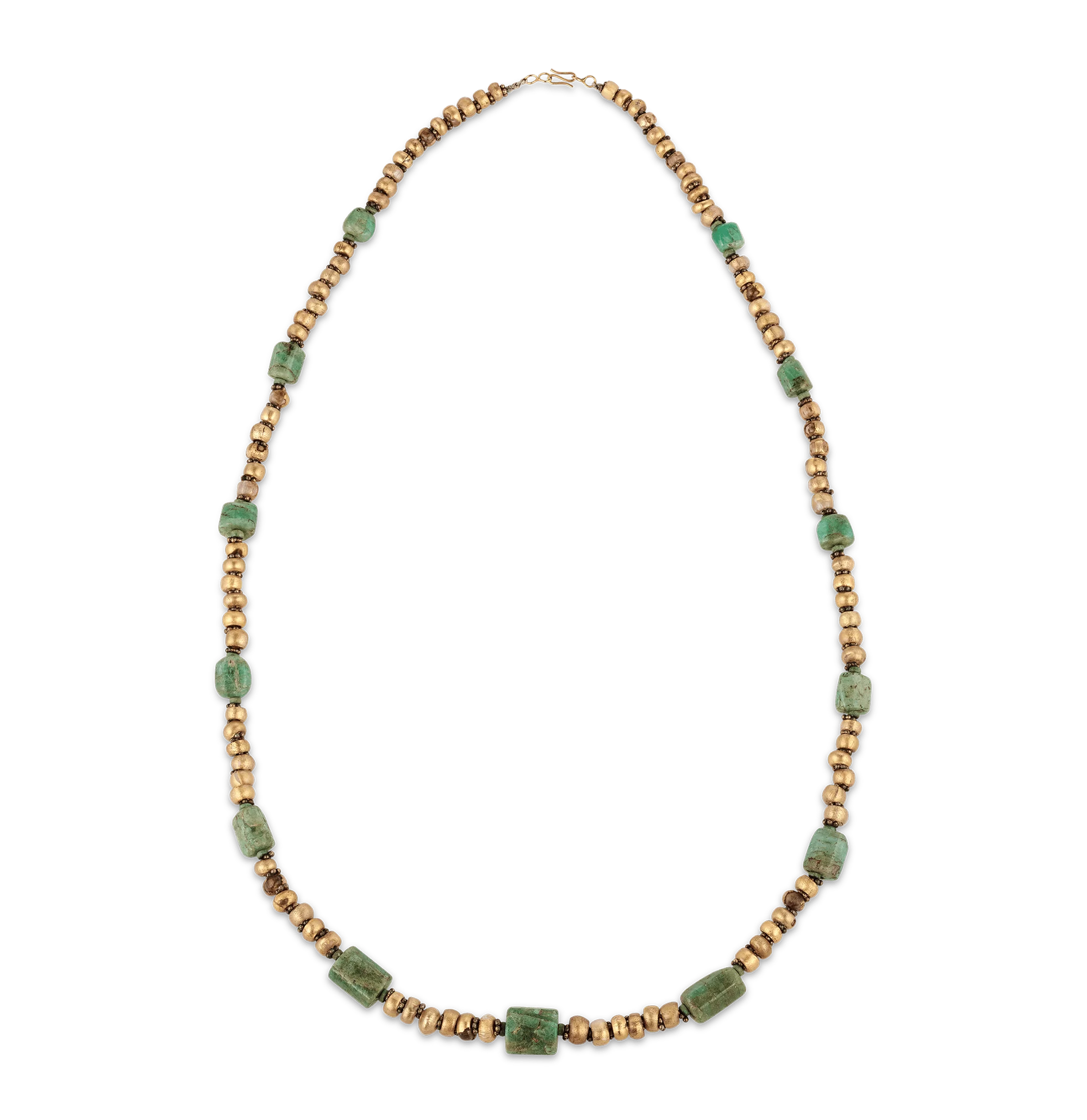
Ancient Egyptian Emerald and Gold Necklace
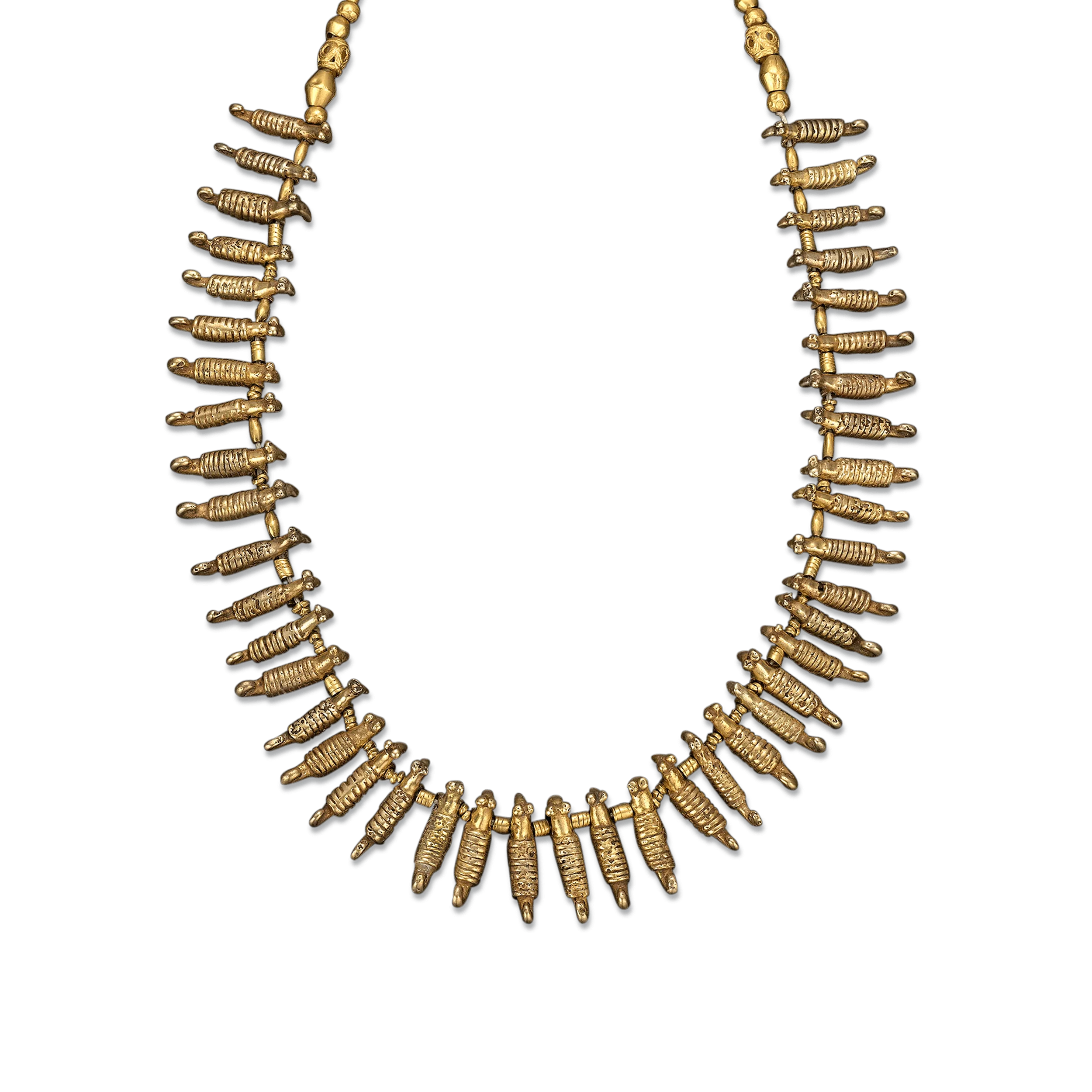
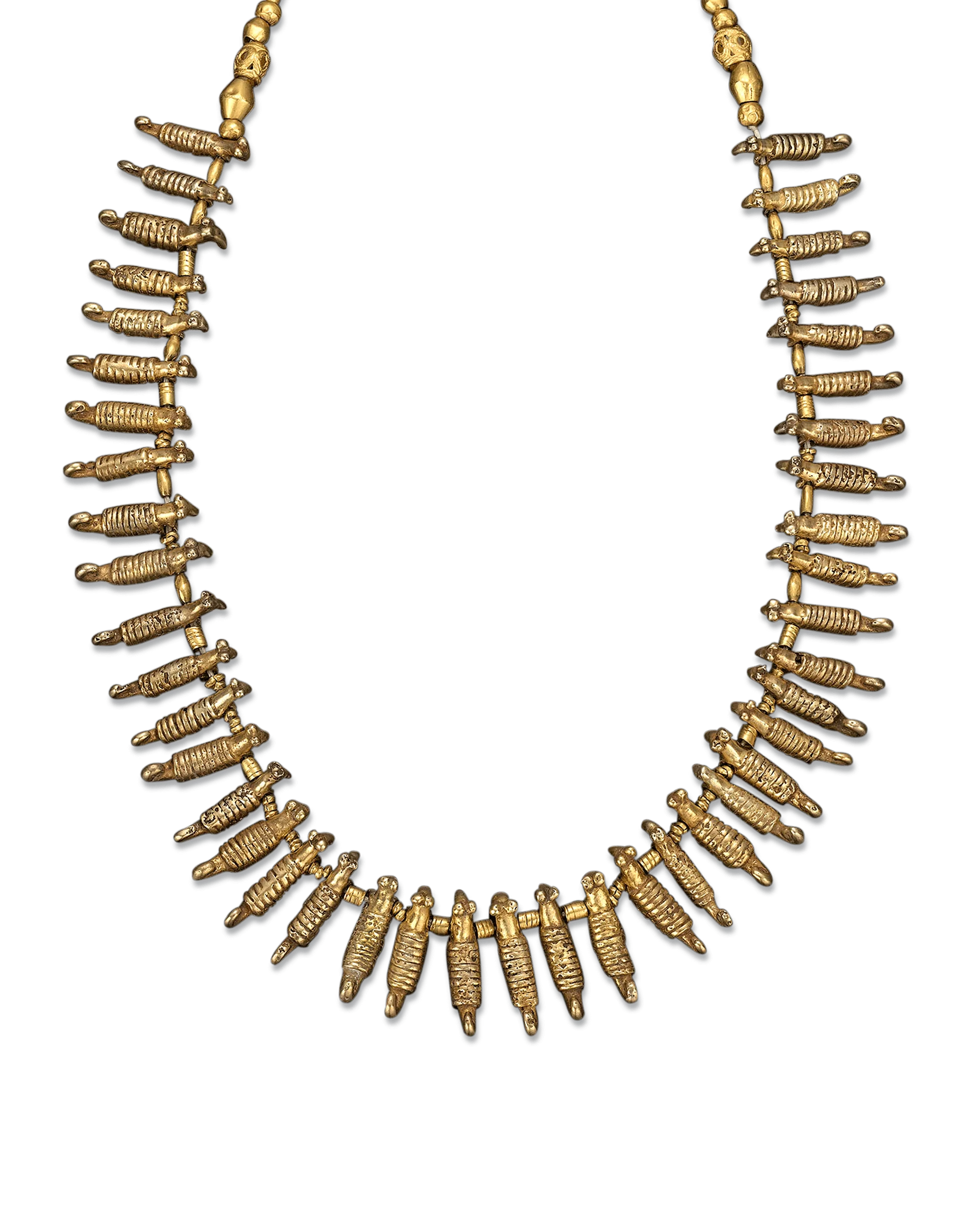
This beautiful necklace is more than just jewelry; it’s a piece of history. Crafted around 400 BCE, likely during Egypt's Late Period, this necklace consists of a delicate line of gold glass beads and ancient Egyptian emeralds. These well-matched gold beads are sometimes known as “lulu beads,“ a term that refers to rare, highly-prized beads typically produced by master glassmakers in the Near East and Mediterranean in the pre-Islamic period, particularly of Phoenician or ancient Egyptian origin. They are crafted by encasing thin layers of gold or silver between layers of transparent or translucent glass, allowing the intricate designs to present a luminous, glowing appearance. These glittering beads are interspersed with ancient rectangular emeralds, creating a continuous repetitive pattern across the neck.
The ancient Egyptians had a fascination with emeralds that culminated during the rule of Cleopatra from 51 to 30 BCE. The powerful pharaoh famously adorned her court with valuable gems and used them as gifts to solidify political alliances. Additionally, she owned one of the most famous emerald mines—known as Mons Smaragdus or the Sikait Mines—and held a monopoly over emerald production during the late Ptolemaic period.
Circa 400 BCE
The ancient Egyptians had a fascination with emeralds that culminated during the rule of Cleopatra from 51 to 30 BCE. The powerful pharaoh famously adorned her court with valuable gems and used them as gifts to solidify political alliances. Additionally, she owned one of the most famous emerald mines—known as Mons Smaragdus or the Sikait Mines—and held a monopoly over emerald production during the late Ptolemaic period.
Circa 400 BCE
$34,500.00
Ancient Egyptian Emerald and Gold Necklace—
$34,500.00
More Images

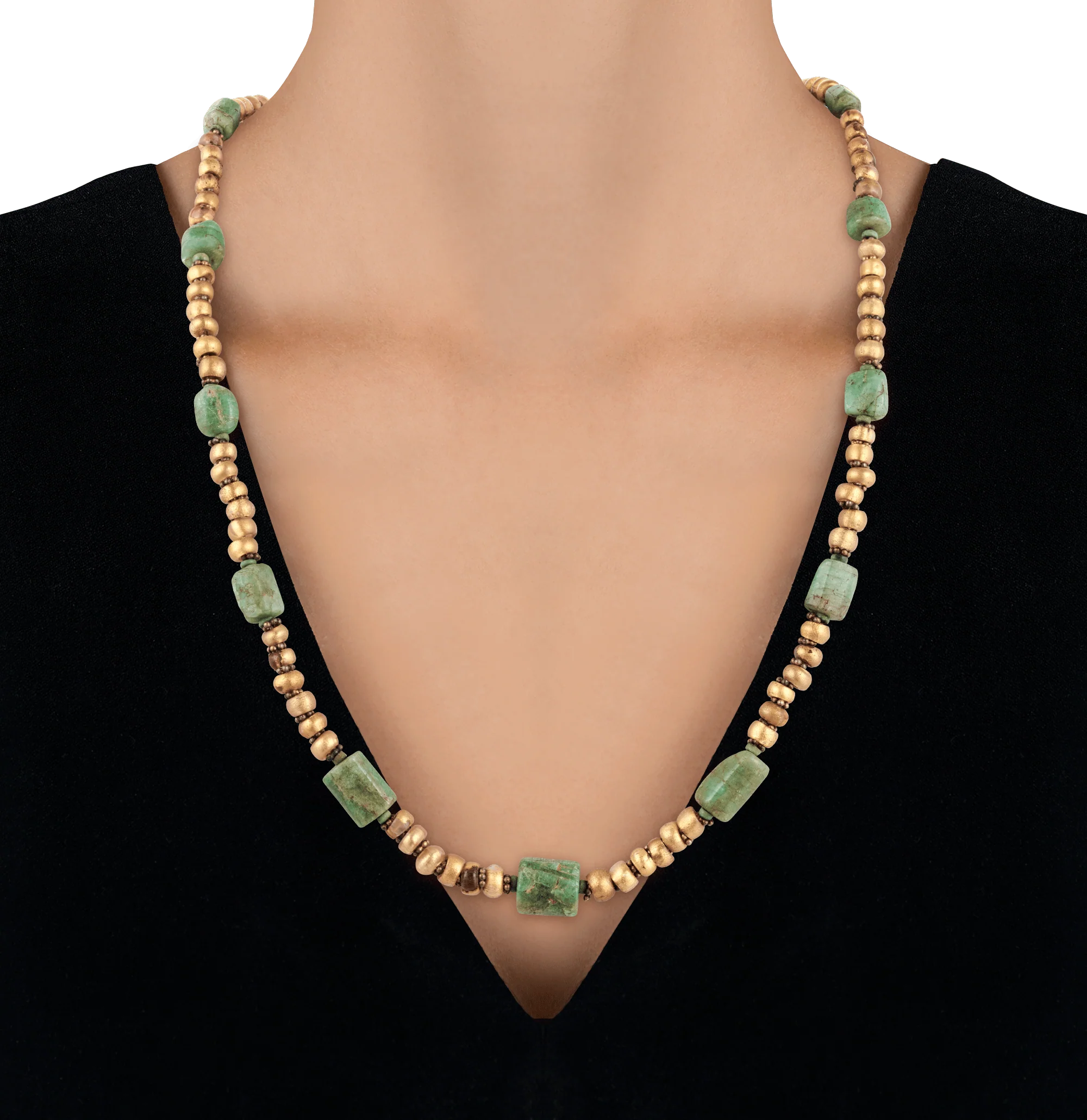
Ancient Egyptian Emerald and Gold Necklace
This beautiful necklace is more than just jewelry; it’s a piece of history. Crafted around 400 BCE, likely during Egypt's Late Period, this necklace consists of a delicate line of gold glass beads and ancient Egyptian emeralds. These well-matched gold beads are sometimes known as “lulu beads,“ a term that refers to rare, highly-prized beads typically produced by master glassmakers in the Near East and Mediterranean in the pre-Islamic period, particularly of Phoenician or ancient Egyptian origin. They are crafted by encasing thin layers of gold or silver between layers of transparent or translucent glass, allowing the intricate designs to present a luminous, glowing appearance. These glittering beads are interspersed with ancient rectangular emeralds, creating a continuous repetitive pattern across the neck.
The ancient Egyptians had a fascination with emeralds that culminated during the rule of Cleopatra from 51 to 30 BCE. The powerful pharaoh famously adorned her court with valuable gems and used them as gifts to solidify political alliances. Additionally, she owned one of the most famous emerald mines—known as Mons Smaragdus or the Sikait Mines—and held a monopoly over emerald production during the late Ptolemaic period.
Circa 400 BCE
The ancient Egyptians had a fascination with emeralds that culminated during the rule of Cleopatra from 51 to 30 BCE. The powerful pharaoh famously adorned her court with valuable gems and used them as gifts to solidify political alliances. Additionally, she owned one of the most famous emerald mines—known as Mons Smaragdus or the Sikait Mines—and held a monopoly over emerald production during the late Ptolemaic period.
Circa 400 BCE
Product Information
Product Information
Shipping & Returns
Shipping & Returns
Description
This beautiful necklace is more than just jewelry; it’s a piece of history. Crafted around 400 BCE, likely during Egypt's Late Period, this necklace consists of a delicate line of gold glass beads and ancient Egyptian emeralds. These well-matched gold beads are sometimes known as “lulu beads,“ a term that refers to rare, highly-prized beads typically produced by master glassmakers in the Near East and Mediterranean in the pre-Islamic period, particularly of Phoenician or ancient Egyptian origin. They are crafted by encasing thin layers of gold or silver between layers of transparent or translucent glass, allowing the intricate designs to present a luminous, glowing appearance. These glittering beads are interspersed with ancient rectangular emeralds, creating a continuous repetitive pattern across the neck.
The ancient Egyptians had a fascination with emeralds that culminated during the rule of Cleopatra from 51 to 30 BCE. The powerful pharaoh famously adorned her court with valuable gems and used them as gifts to solidify political alliances. Additionally, she owned one of the most famous emerald mines—known as Mons Smaragdus or the Sikait Mines—and held a monopoly over emerald production during the late Ptolemaic period.
Circa 400 BCE
The ancient Egyptians had a fascination with emeralds that culminated during the rule of Cleopatra from 51 to 30 BCE. The powerful pharaoh famously adorned her court with valuable gems and used them as gifts to solidify political alliances. Additionally, she owned one of the most famous emerald mines—known as Mons Smaragdus or the Sikait Mines—and held a monopoly over emerald production during the late Ptolemaic period.
Circa 400 BCE