✨ New Arrivals Just Dropped!Explore
American Oak Dining Suite by R.J. Horner
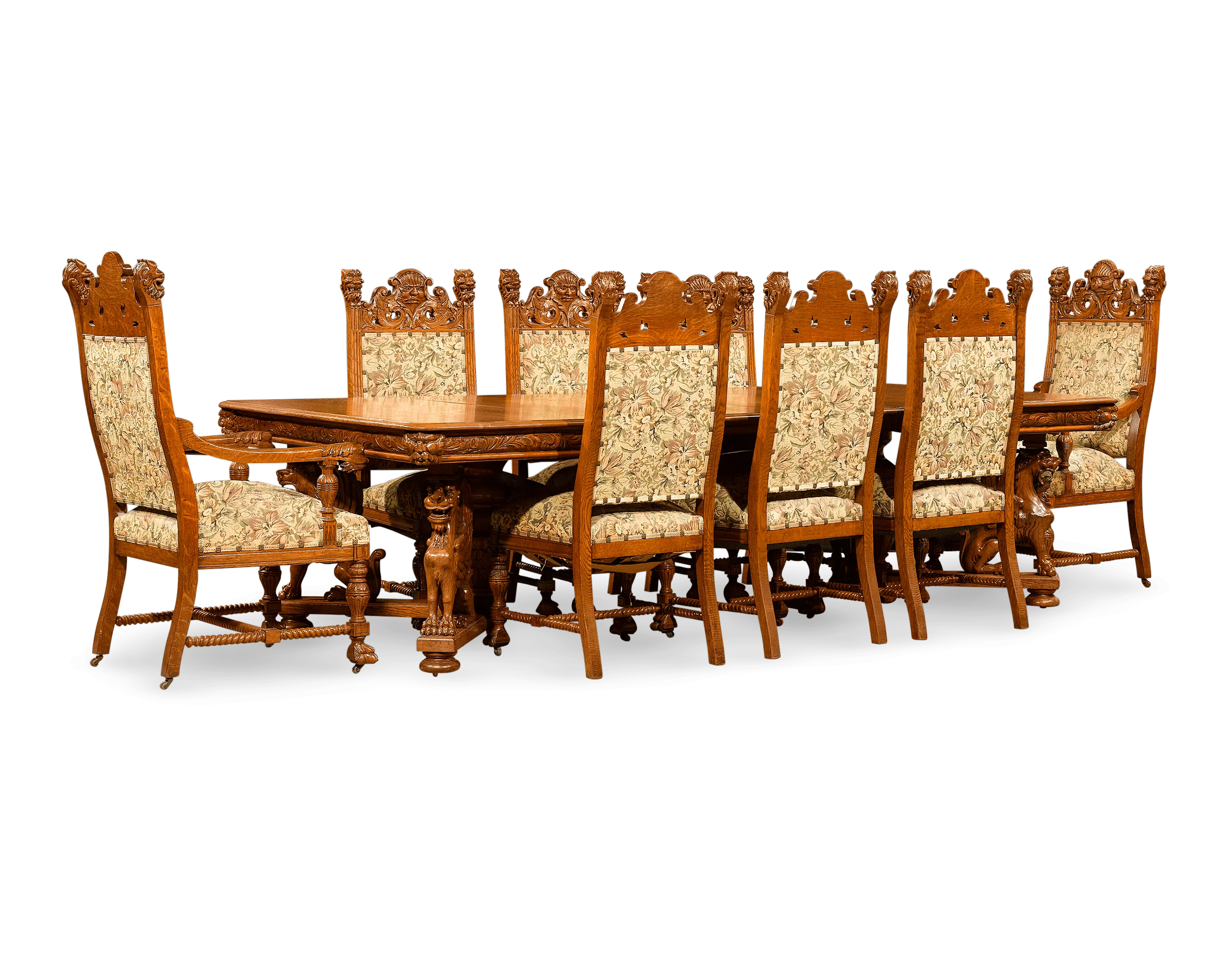
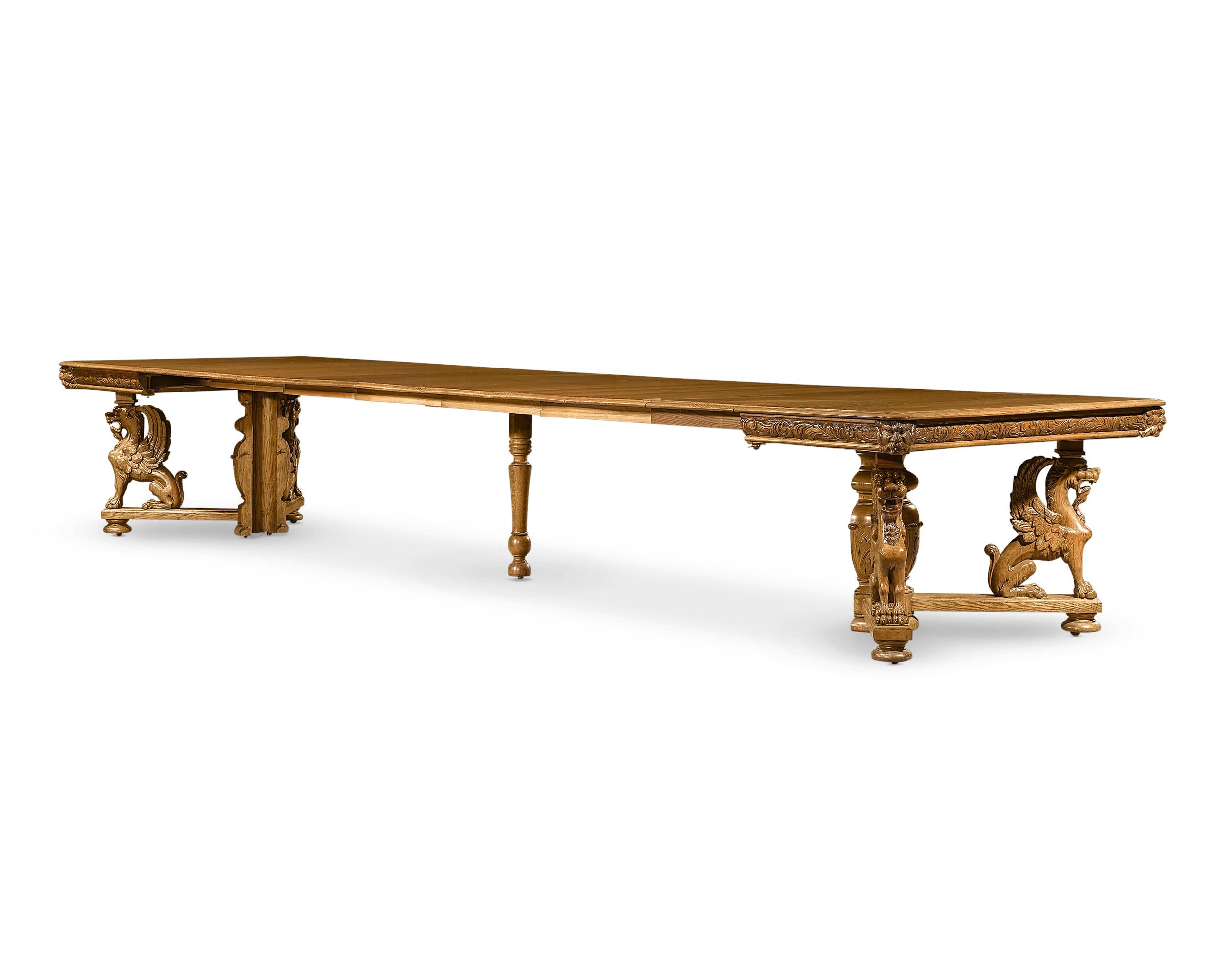
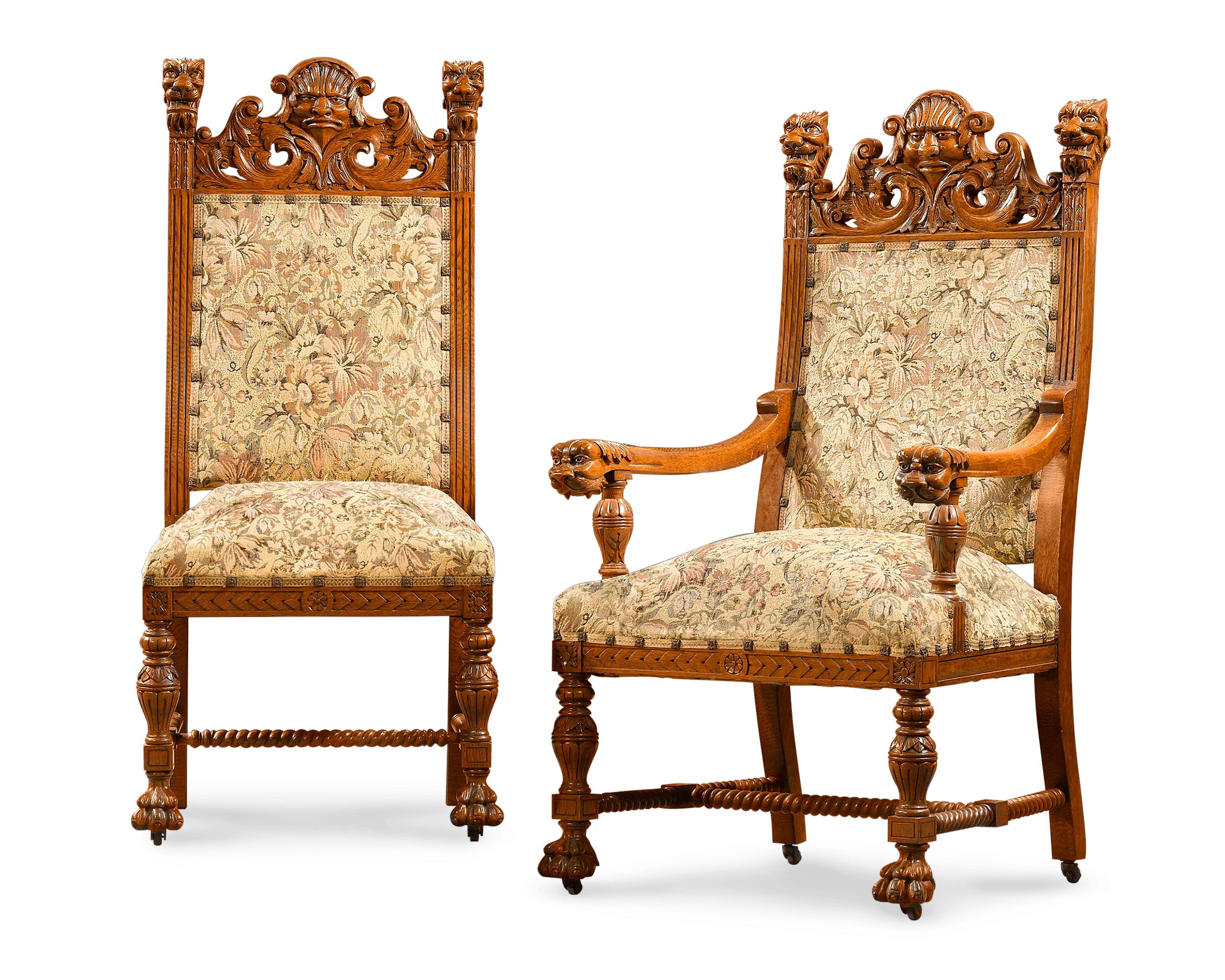
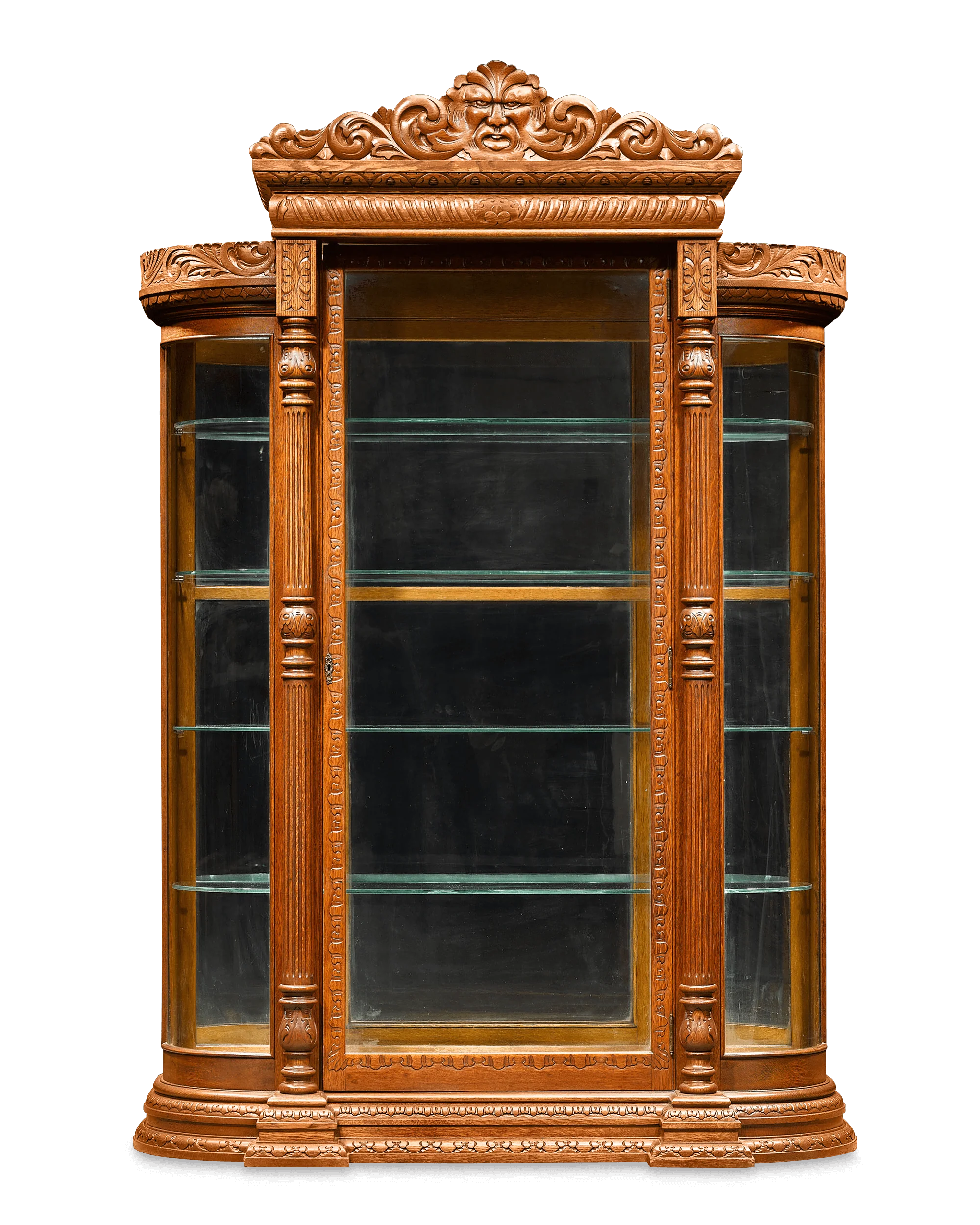
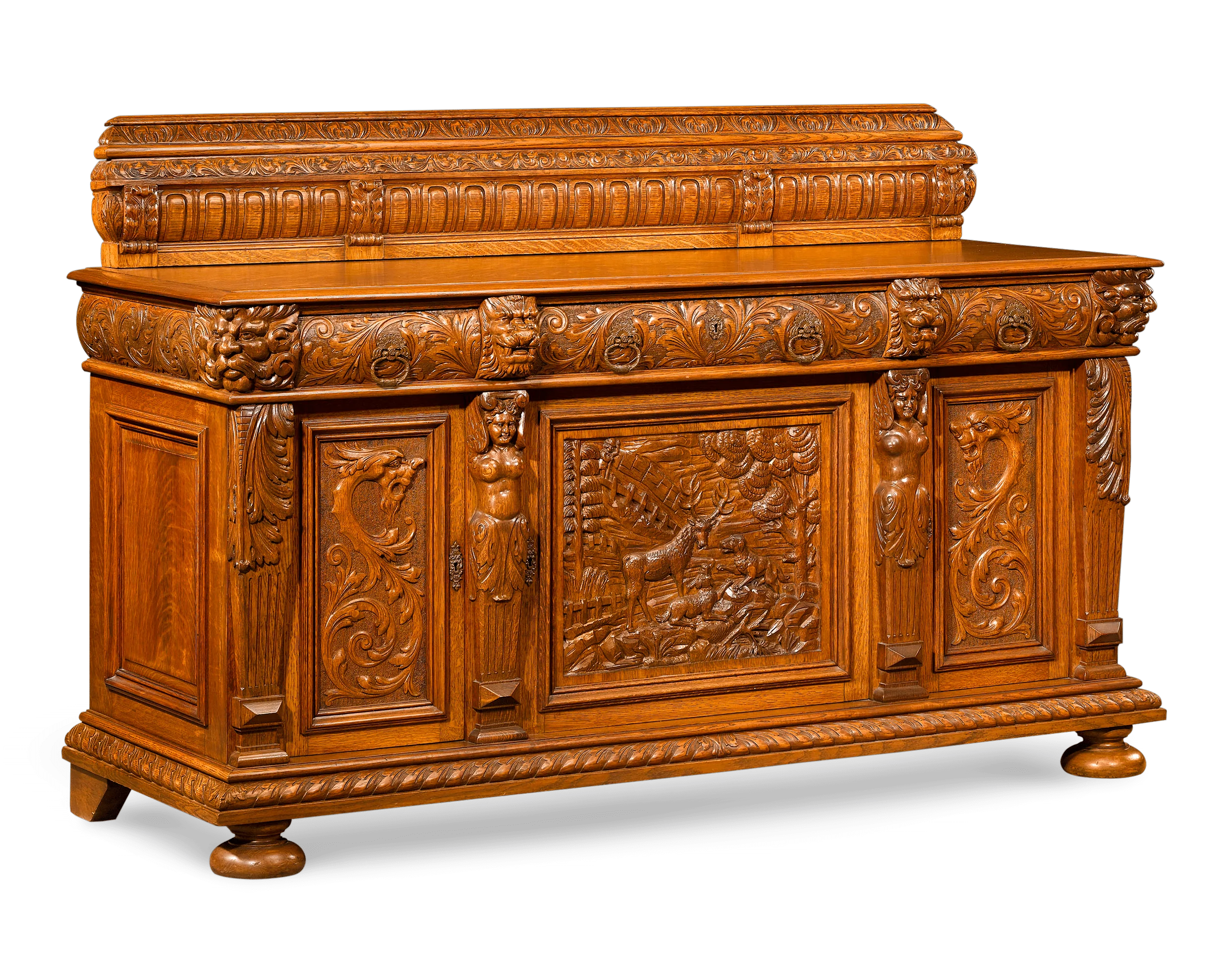
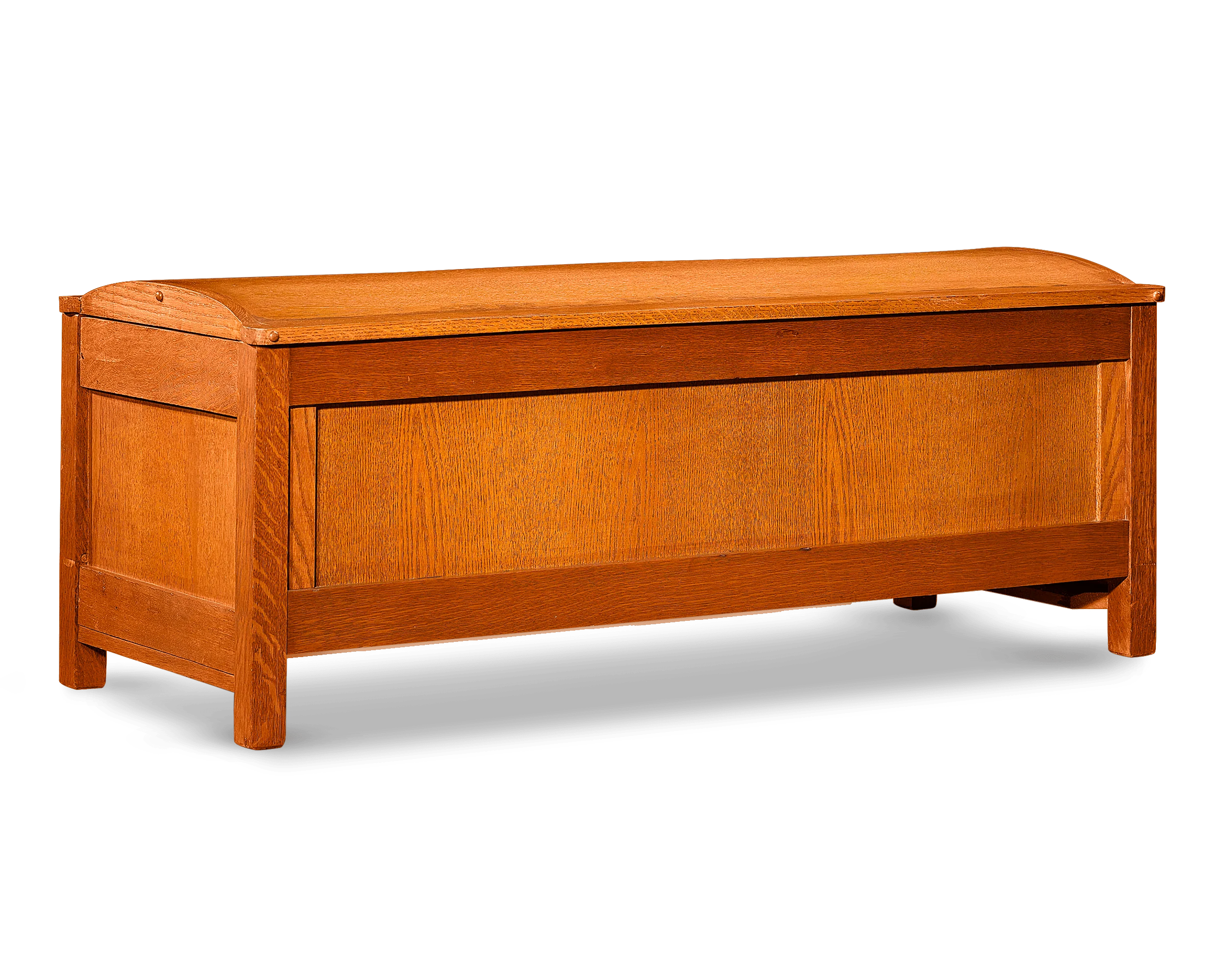
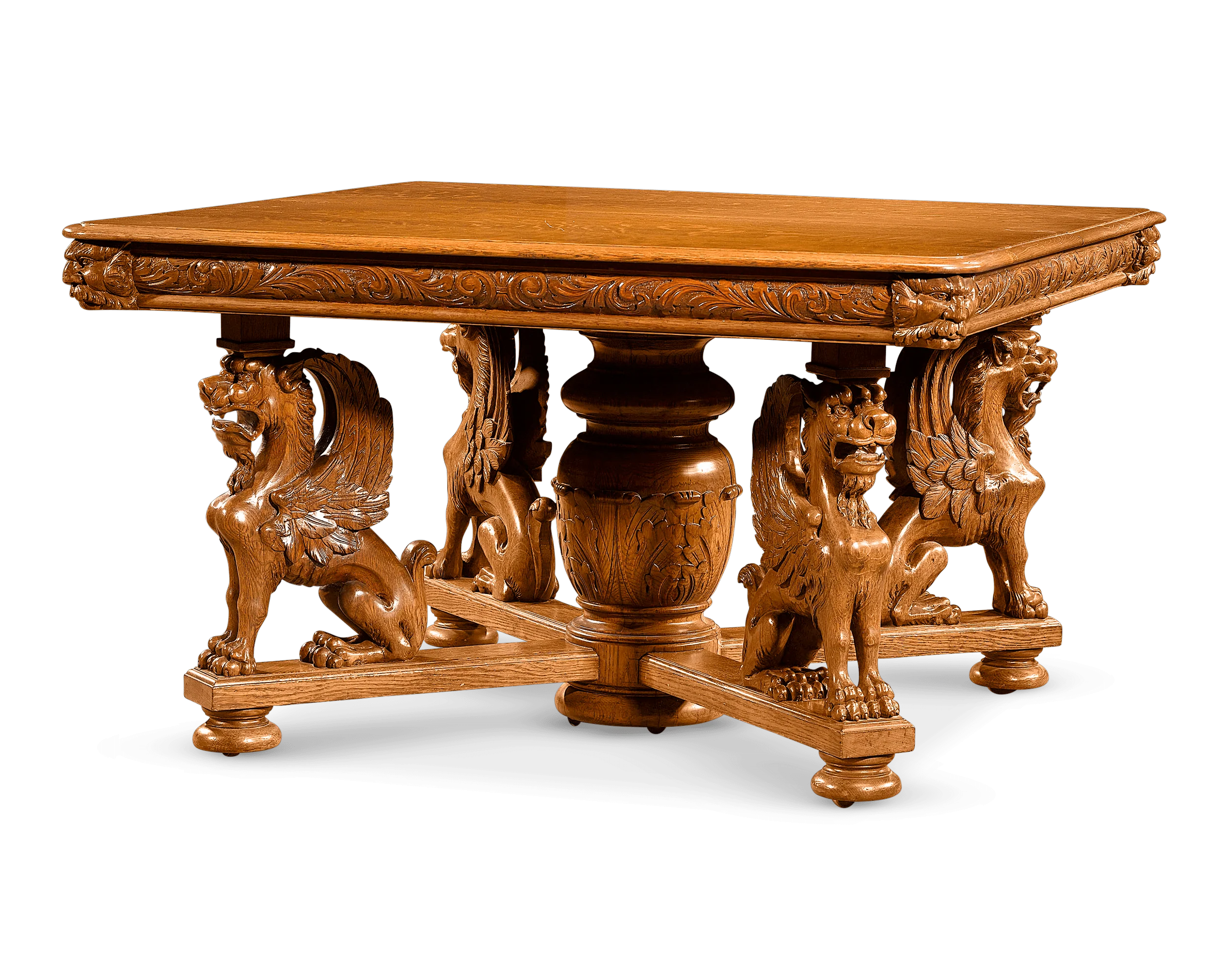
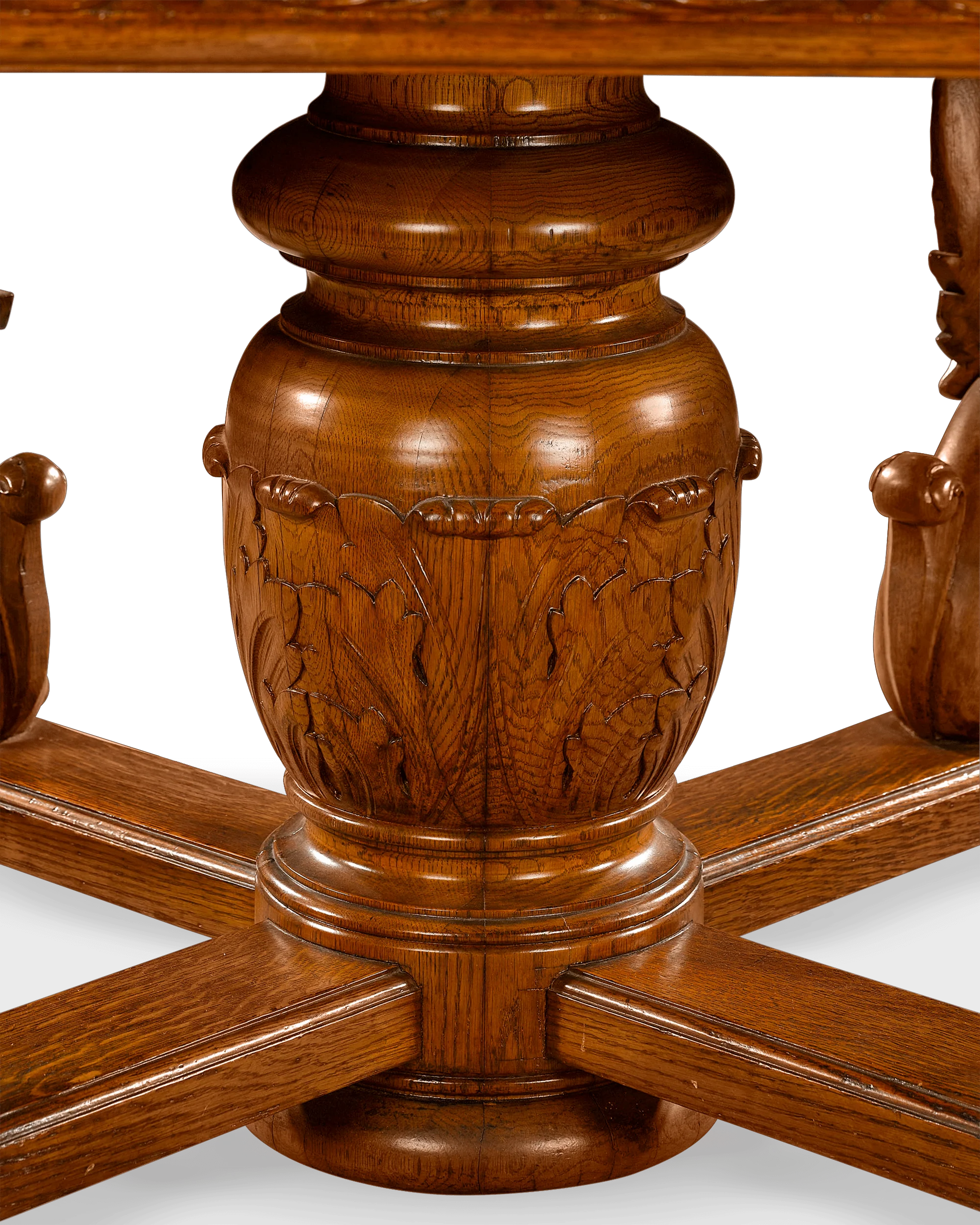
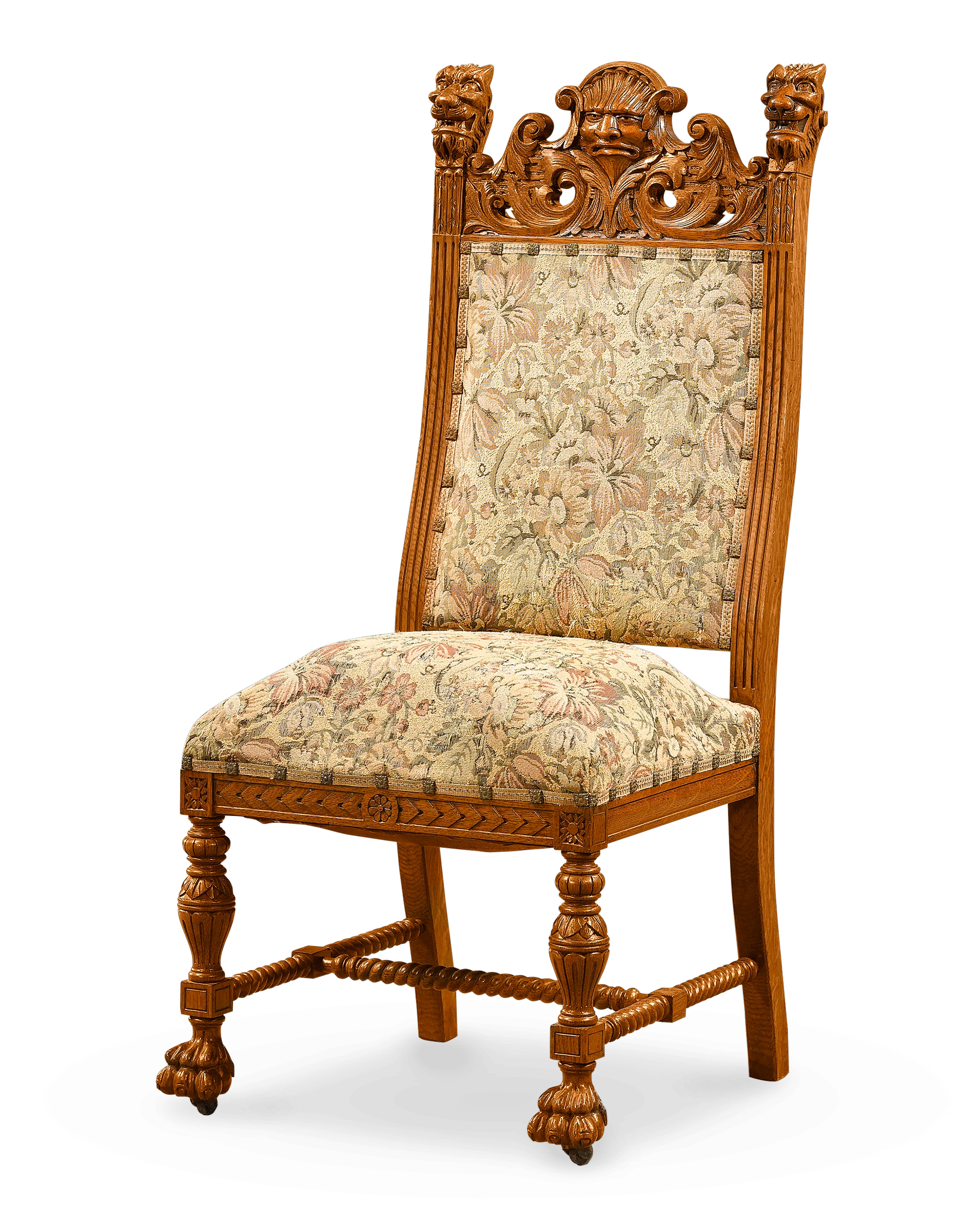
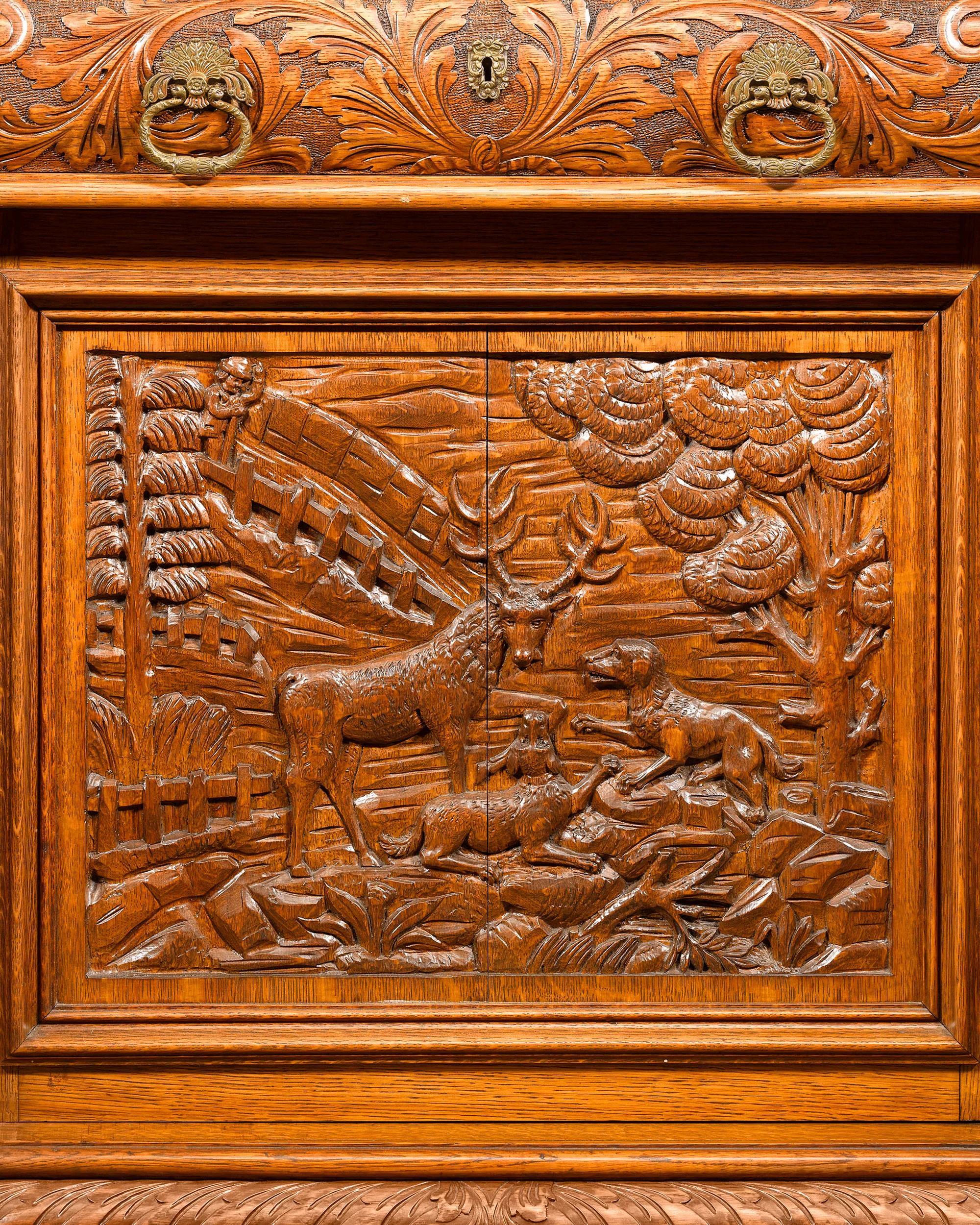
This outstanding 13-piece Victorian dining suite by R.J. Horner of New York boasts intricate hand carving rarely seen in furnishings of the era. Crafted of fine golden oak, the suite features eight dining chairs, a versatile dining table, a vitrine, a sideboard, a buffet and a chest that holds the leaves of the dining table. Each piece is detailed with a myriad of lavishly hand-carved figures, including winged lions, fanciful masks, dragons and maidens. The dining table was surely crafted with flexibility in mind, as inside the accompanying chest are nine leaves which allow the table to expand an additional seven feet in length from its original square dimensions. In terms of size and craftsmanship, this suite is a shining example of Victorian furniture.
The period between 1880 and 1920 is often regarded as the “golden age” of American furniture craftsmanship, not only for the quality of the pieces, but also for the characteristic golden lacquers applied to finished furnishings. Overall prosperity following the American Civil War gave rise to wealthier families, larger homes and, hence, a desire for larger, more ornate furnishings for those homes.
Oak became popular during this time, due to a shortage of available walnut. In particular, the New York firm of Robert J. Horner is known for creating some of the greatest, handcrafted oak furnishings of this period. Horner was a clerk at a curtain shop before opening his furnishing business in 1885. Although the firm lasted only 30 years, the pieces that were produced during that time displayed high-level carving and handmade craftsmanship that was seldom seen during the Victorian Age, which was largely marked by mechanized work and industrialism. Today, items crafted by Horner are highly desirable and sought by collectors of premium Victorian furniture.
Circa 1885
Chairs: 19 1/2” wide x 47 3/4” high
Table (without leaves): 53” wide x 53” length x 30 1/4” high
Table (with leaves): 140 1/2” length
Sideboard: 74 1/2” wide x 25 3/4” deep x 48” high
Buffet: 44” wide x 18” deep
Vitritne: 55 1/2" wide x 19 1/2" deep x 81 3/4" high
Leaf Chest: 54 1/2" wide x 21" deep x 21" deep
The period between 1880 and 1920 is often regarded as the “golden age” of American furniture craftsmanship, not only for the quality of the pieces, but also for the characteristic golden lacquers applied to finished furnishings. Overall prosperity following the American Civil War gave rise to wealthier families, larger homes and, hence, a desire for larger, more ornate furnishings for those homes.
Oak became popular during this time, due to a shortage of available walnut. In particular, the New York firm of Robert J. Horner is known for creating some of the greatest, handcrafted oak furnishings of this period. Horner was a clerk at a curtain shop before opening his furnishing business in 1885. Although the firm lasted only 30 years, the pieces that were produced during that time displayed high-level carving and handmade craftsmanship that was seldom seen during the Victorian Age, which was largely marked by mechanized work and industrialism. Today, items crafted by Horner are highly desirable and sought by collectors of premium Victorian furniture.
Circa 1885
Chairs: 19 1/2” wide x 47 3/4” high
Table (without leaves): 53” wide x 53” length x 30 1/4” high
Table (with leaves): 140 1/2” length
Sideboard: 74 1/2” wide x 25 3/4” deep x 48” high
Buffet: 44” wide x 18” deep
Vitritne: 55 1/2" wide x 19 1/2" deep x 81 3/4" high
Leaf Chest: 54 1/2" wide x 21" deep x 21" deep
$51,975.00
Original: $148,500.00
-65%American Oak Dining Suite by R.J. Horner—
$148,500.00
$51,975.00More Images









American Oak Dining Suite by R.J. Horner
This outstanding 13-piece Victorian dining suite by R.J. Horner of New York boasts intricate hand carving rarely seen in furnishings of the era. Crafted of fine golden oak, the suite features eight dining chairs, a versatile dining table, a vitrine, a sideboard, a buffet and a chest that holds the leaves of the dining table. Each piece is detailed with a myriad of lavishly hand-carved figures, including winged lions, fanciful masks, dragons and maidens. The dining table was surely crafted with flexibility in mind, as inside the accompanying chest are nine leaves which allow the table to expand an additional seven feet in length from its original square dimensions. In terms of size and craftsmanship, this suite is a shining example of Victorian furniture.
The period between 1880 and 1920 is often regarded as the “golden age” of American furniture craftsmanship, not only for the quality of the pieces, but also for the characteristic golden lacquers applied to finished furnishings. Overall prosperity following the American Civil War gave rise to wealthier families, larger homes and, hence, a desire for larger, more ornate furnishings for those homes.
Oak became popular during this time, due to a shortage of available walnut. In particular, the New York firm of Robert J. Horner is known for creating some of the greatest, handcrafted oak furnishings of this period. Horner was a clerk at a curtain shop before opening his furnishing business in 1885. Although the firm lasted only 30 years, the pieces that were produced during that time displayed high-level carving and handmade craftsmanship that was seldom seen during the Victorian Age, which was largely marked by mechanized work and industrialism. Today, items crafted by Horner are highly desirable and sought by collectors of premium Victorian furniture.
Circa 1885
Chairs: 19 1/2” wide x 47 3/4” high
Table (without leaves): 53” wide x 53” length x 30 1/4” high
Table (with leaves): 140 1/2” length
Sideboard: 74 1/2” wide x 25 3/4” deep x 48” high
Buffet: 44” wide x 18” deep
Vitritne: 55 1/2" wide x 19 1/2" deep x 81 3/4" high
Leaf Chest: 54 1/2" wide x 21" deep x 21" deep
The period between 1880 and 1920 is often regarded as the “golden age” of American furniture craftsmanship, not only for the quality of the pieces, but also for the characteristic golden lacquers applied to finished furnishings. Overall prosperity following the American Civil War gave rise to wealthier families, larger homes and, hence, a desire for larger, more ornate furnishings for those homes.
Oak became popular during this time, due to a shortage of available walnut. In particular, the New York firm of Robert J. Horner is known for creating some of the greatest, handcrafted oak furnishings of this period. Horner was a clerk at a curtain shop before opening his furnishing business in 1885. Although the firm lasted only 30 years, the pieces that were produced during that time displayed high-level carving and handmade craftsmanship that was seldom seen during the Victorian Age, which was largely marked by mechanized work and industrialism. Today, items crafted by Horner are highly desirable and sought by collectors of premium Victorian furniture.
Circa 1885
Chairs: 19 1/2” wide x 47 3/4” high
Table (without leaves): 53” wide x 53” length x 30 1/4” high
Table (with leaves): 140 1/2” length
Sideboard: 74 1/2” wide x 25 3/4” deep x 48” high
Buffet: 44” wide x 18” deep
Vitritne: 55 1/2" wide x 19 1/2" deep x 81 3/4" high
Leaf Chest: 54 1/2" wide x 21" deep x 21" deep
Product Information
Product Information
Shipping & Returns
Shipping & Returns
Description
This outstanding 13-piece Victorian dining suite by R.J. Horner of New York boasts intricate hand carving rarely seen in furnishings of the era. Crafted of fine golden oak, the suite features eight dining chairs, a versatile dining table, a vitrine, a sideboard, a buffet and a chest that holds the leaves of the dining table. Each piece is detailed with a myriad of lavishly hand-carved figures, including winged lions, fanciful masks, dragons and maidens. The dining table was surely crafted with flexibility in mind, as inside the accompanying chest are nine leaves which allow the table to expand an additional seven feet in length from its original square dimensions. In terms of size and craftsmanship, this suite is a shining example of Victorian furniture.
The period between 1880 and 1920 is often regarded as the “golden age” of American furniture craftsmanship, not only for the quality of the pieces, but also for the characteristic golden lacquers applied to finished furnishings. Overall prosperity following the American Civil War gave rise to wealthier families, larger homes and, hence, a desire for larger, more ornate furnishings for those homes.
Oak became popular during this time, due to a shortage of available walnut. In particular, the New York firm of Robert J. Horner is known for creating some of the greatest, handcrafted oak furnishings of this period. Horner was a clerk at a curtain shop before opening his furnishing business in 1885. Although the firm lasted only 30 years, the pieces that were produced during that time displayed high-level carving and handmade craftsmanship that was seldom seen during the Victorian Age, which was largely marked by mechanized work and industrialism. Today, items crafted by Horner are highly desirable and sought by collectors of premium Victorian furniture.
Circa 1885
Chairs: 19 1/2” wide x 47 3/4” high
Table (without leaves): 53” wide x 53” length x 30 1/4” high
Table (with leaves): 140 1/2” length
Sideboard: 74 1/2” wide x 25 3/4” deep x 48” high
Buffet: 44” wide x 18” deep
Vitritne: 55 1/2" wide x 19 1/2" deep x 81 3/4" high
Leaf Chest: 54 1/2" wide x 21" deep x 21" deep
The period between 1880 and 1920 is often regarded as the “golden age” of American furniture craftsmanship, not only for the quality of the pieces, but also for the characteristic golden lacquers applied to finished furnishings. Overall prosperity following the American Civil War gave rise to wealthier families, larger homes and, hence, a desire for larger, more ornate furnishings for those homes.
Oak became popular during this time, due to a shortage of available walnut. In particular, the New York firm of Robert J. Horner is known for creating some of the greatest, handcrafted oak furnishings of this period. Horner was a clerk at a curtain shop before opening his furnishing business in 1885. Although the firm lasted only 30 years, the pieces that were produced during that time displayed high-level carving and handmade craftsmanship that was seldom seen during the Victorian Age, which was largely marked by mechanized work and industrialism. Today, items crafted by Horner are highly desirable and sought by collectors of premium Victorian furniture.
Circa 1885
Chairs: 19 1/2” wide x 47 3/4” high
Table (without leaves): 53” wide x 53” length x 30 1/4” high
Table (with leaves): 140 1/2” length
Sideboard: 74 1/2” wide x 25 3/4” deep x 48” high
Buffet: 44” wide x 18” deep
Vitritne: 55 1/2" wide x 19 1/2" deep x 81 3/4" high
Leaf Chest: 54 1/2" wide x 21" deep x 21" deep