✨ New Arrivals Just Dropped!Explore
Allée d'arbres by Louis Valtat
Louis Valtat
1869-1952 | French
Allée d'arbres
(Avenue of Trees)
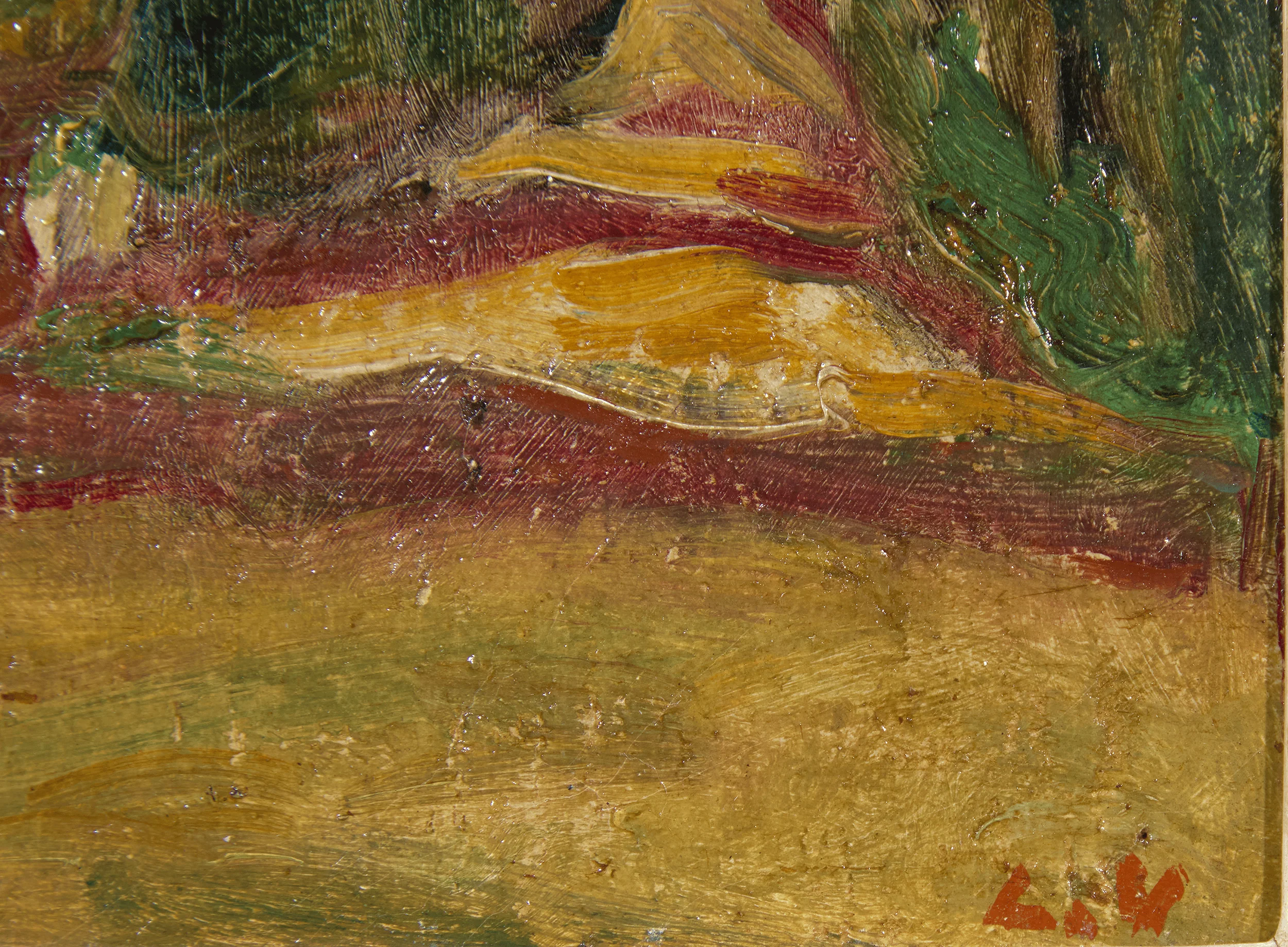
Signed "LV" (lower right)
Oil on canvas
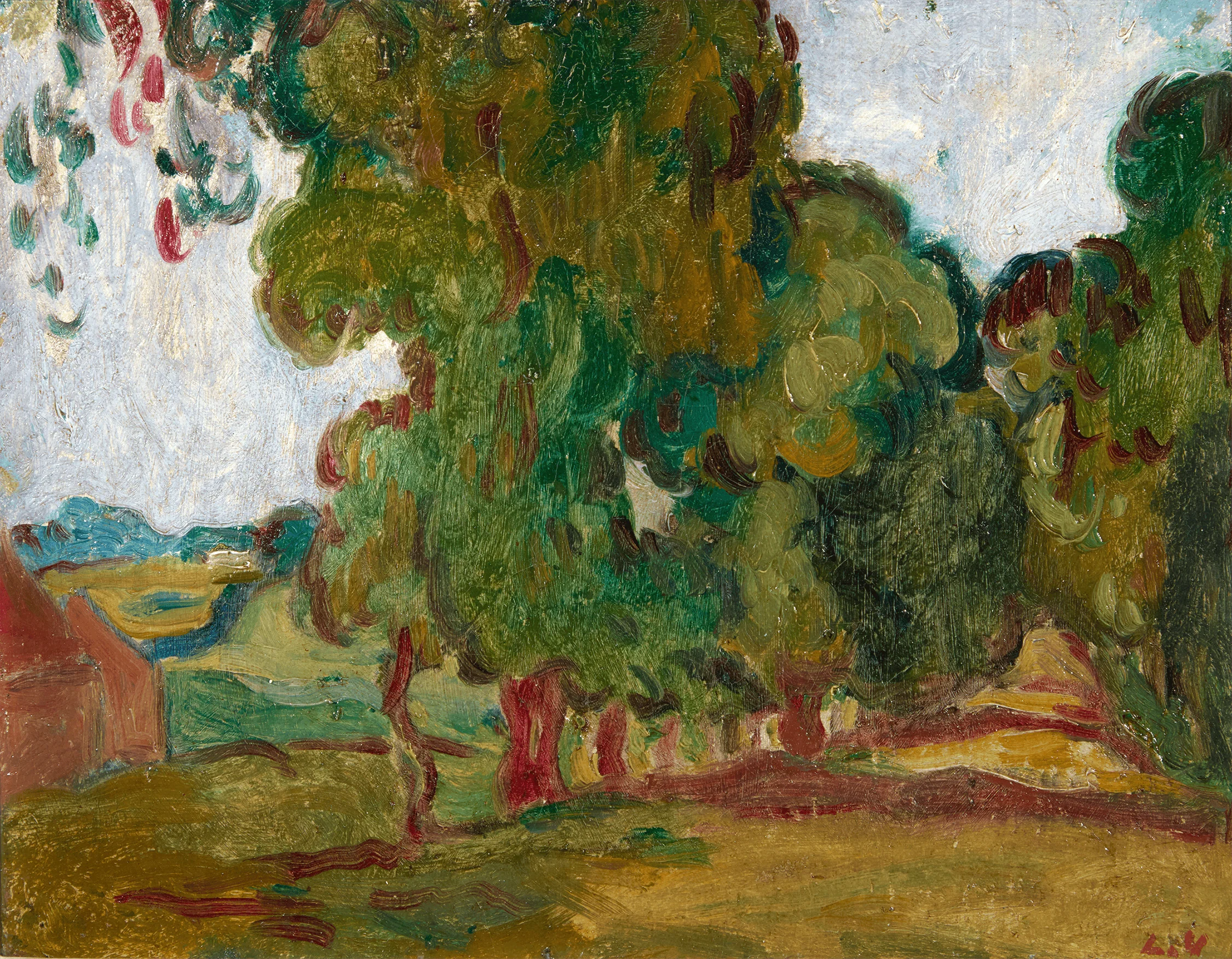
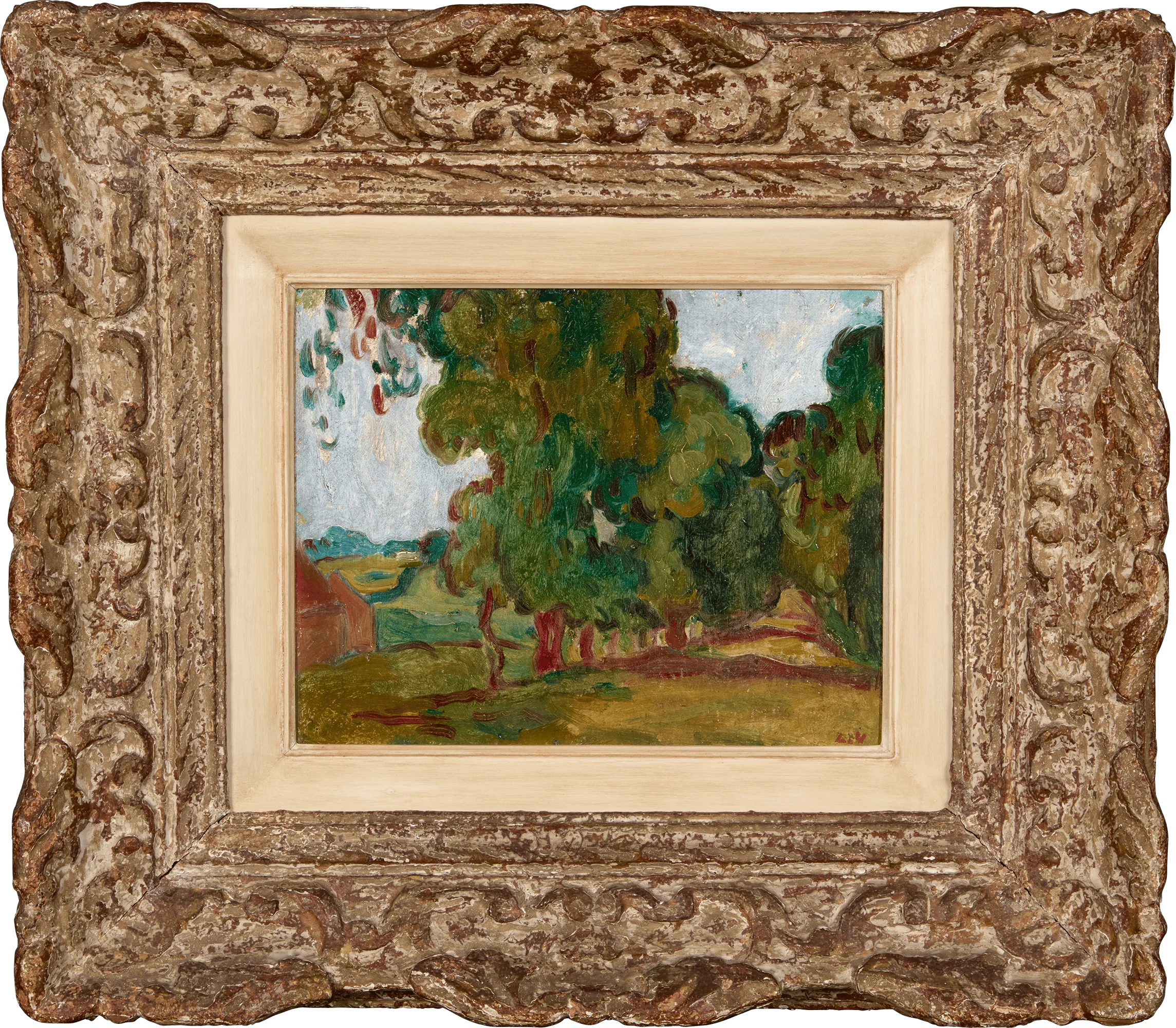
Louis Valtat’s Allée d'arbres captures the artist at the height of his Fauvist powers. With vibrant greens, ochres and crimson accents, Valtat transforms a quiet tree-lined landscape into a dynamic exploration of color, light and movement. The work reflects his essential role in the transition from Impressionist naturalism to the liberated color of early modernism.
Valtat builds the landscape through his saturated palette. The trees define the composition, their dense foliage rendered in loose, expressive strokes that animate the canvas. Against a luminous blue and white sky, the artist’s brushwork transforms a peaceful path into a vivid depiction of atmosphere and sensation.
By 1908, Fauvism had made its defining public impact, and Valtat was developing a highly personal interpretation of the movement. The composition retains a connection to direct observation while pushing color beyond naturalism, a hallmark of the artist’s best works. In Allée d'arbres, nature becomes a vehicle for pure painterly expression, revealing Valtat’s distinctive position between Post-Impressionist landscape painting and the radical chromatic freedom of the Fauves.
Born in Dieppe in 1869, Valtat trained in Paris at the École des Beaux-Arts and the Académie Julian. He moved within the artistic circles of the Nabis and early modernists, and by the early 20th century, he was closely associated with the bold color experiments that shaped Fauvism. In 1905, he exhibited at the Salon d’Automne alongside Henri Matisse, André Derain, Albert Marquet and other artists whose work helped define the movement. Today, Valtat is recognized as a vital figure in the development of modern French painting, admired for his expressive color, dynamic brushwork and ability to fuse observed nature with emotional intensity.
This work will be included in the forthcoming Catalogue de l'Oeuvre de Louis Valtat, currently in preparation by Les Amis de Louis Valtat.
Circa 1908
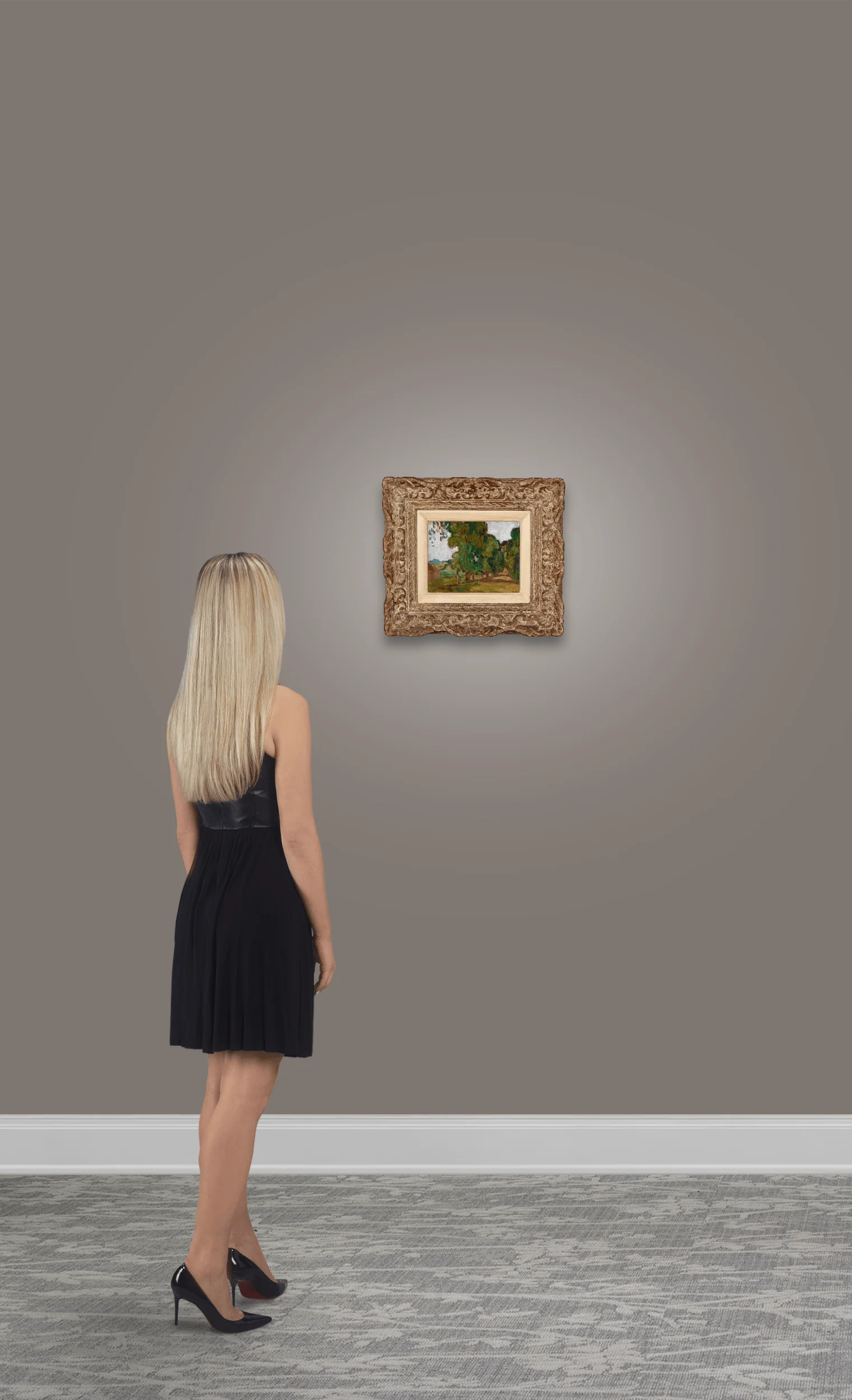
Canvas: 7" high x 9" wide (17.8 x 22.9 cm)
Frame: 14 1/4" high x 17 3/8" wide x 2" deep (38.7 x 44 x 5.1 cm)
Provenance:
Private Collection, Europe
M.S. Rau, New Orleans
1869-1952 | French
Allée d'arbres
(Avenue of Trees)
Signed "LV" (lower right)
Oil on canvas
Louis Valtat’s Allée d'arbres captures the artist at the height of his Fauvist powers. With vibrant greens, ochres and crimson accents, Valtat transforms a quiet tree-lined landscape into a dynamic exploration of color, light and movement. The work reflects his essential role in the transition from Impressionist naturalism to the liberated color of early modernism.
Valtat builds the landscape through his saturated palette. The trees define the composition, their dense foliage rendered in loose, expressive strokes that animate the canvas. Against a luminous blue and white sky, the artist’s brushwork transforms a peaceful path into a vivid depiction of atmosphere and sensation.
By 1908, Fauvism had made its defining public impact, and Valtat was developing a highly personal interpretation of the movement. The composition retains a connection to direct observation while pushing color beyond naturalism, a hallmark of the artist’s best works. In Allée d'arbres, nature becomes a vehicle for pure painterly expression, revealing Valtat’s distinctive position between Post-Impressionist landscape painting and the radical chromatic freedom of the Fauves.
Born in Dieppe in 1869, Valtat trained in Paris at the École des Beaux-Arts and the Académie Julian. He moved within the artistic circles of the Nabis and early modernists, and by the early 20th century, he was closely associated with the bold color experiments that shaped Fauvism. In 1905, he exhibited at the Salon d’Automne alongside Henri Matisse, André Derain, Albert Marquet and other artists whose work helped define the movement. Today, Valtat is recognized as a vital figure in the development of modern French painting, admired for his expressive color, dynamic brushwork and ability to fuse observed nature with emotional intensity.
This work will be included in the forthcoming Catalogue de l'Oeuvre de Louis Valtat, currently in preparation by Les Amis de Louis Valtat.
Circa 1908
Canvas: 7" high x 9" wide (17.8 x 22.9 cm)
Frame: 14 1/4" high x 17 3/8" wide x 2" deep (38.7 x 44 x 5.1 cm)
Provenance:
Private Collection, Europe
M.S. Rau, New Orleans
$34,850.00
Allée d'arbres by Louis Valtat—
$34,850.00
More Images
Allée d'arbres by Louis Valtat
Louis Valtat
1869-1952 | French
Allée d'arbres
(Avenue of Trees)
Signed "LV" (lower right)
Oil on canvas
Louis Valtat’s Allée d'arbres captures the artist at the height of his Fauvist powers. With vibrant greens, ochres and crimson accents, Valtat transforms a quiet tree-lined landscape into a dynamic exploration of color, light and movement. The work reflects his essential role in the transition from Impressionist naturalism to the liberated color of early modernism.
Valtat builds the landscape through his saturated palette. The trees define the composition, their dense foliage rendered in loose, expressive strokes that animate the canvas. Against a luminous blue and white sky, the artist’s brushwork transforms a peaceful path into a vivid depiction of atmosphere and sensation.
By 1908, Fauvism had made its defining public impact, and Valtat was developing a highly personal interpretation of the movement. The composition retains a connection to direct observation while pushing color beyond naturalism, a hallmark of the artist’s best works. In Allée d'arbres, nature becomes a vehicle for pure painterly expression, revealing Valtat’s distinctive position between Post-Impressionist landscape painting and the radical chromatic freedom of the Fauves.
Born in Dieppe in 1869, Valtat trained in Paris at the École des Beaux-Arts and the Académie Julian. He moved within the artistic circles of the Nabis and early modernists, and by the early 20th century, he was closely associated with the bold color experiments that shaped Fauvism. In 1905, he exhibited at the Salon d’Automne alongside Henri Matisse, André Derain, Albert Marquet and other artists whose work helped define the movement. Today, Valtat is recognized as a vital figure in the development of modern French painting, admired for his expressive color, dynamic brushwork and ability to fuse observed nature with emotional intensity.
This work will be included in the forthcoming Catalogue de l'Oeuvre de Louis Valtat, currently in preparation by Les Amis de Louis Valtat.
Circa 1908
Canvas: 7" high x 9" wide (17.8 x 22.9 cm)
Frame: 14 1/4" high x 17 3/8" wide x 2" deep (38.7 x 44 x 5.1 cm)
Provenance:
Private Collection, Europe
M.S. Rau, New Orleans
1869-1952 | French
Allée d'arbres
(Avenue of Trees)
Signed "LV" (lower right)
Oil on canvas
Louis Valtat’s Allée d'arbres captures the artist at the height of his Fauvist powers. With vibrant greens, ochres and crimson accents, Valtat transforms a quiet tree-lined landscape into a dynamic exploration of color, light and movement. The work reflects his essential role in the transition from Impressionist naturalism to the liberated color of early modernism.
Valtat builds the landscape through his saturated palette. The trees define the composition, their dense foliage rendered in loose, expressive strokes that animate the canvas. Against a luminous blue and white sky, the artist’s brushwork transforms a peaceful path into a vivid depiction of atmosphere and sensation.
By 1908, Fauvism had made its defining public impact, and Valtat was developing a highly personal interpretation of the movement. The composition retains a connection to direct observation while pushing color beyond naturalism, a hallmark of the artist’s best works. In Allée d'arbres, nature becomes a vehicle for pure painterly expression, revealing Valtat’s distinctive position between Post-Impressionist landscape painting and the radical chromatic freedom of the Fauves.
Born in Dieppe in 1869, Valtat trained in Paris at the École des Beaux-Arts and the Académie Julian. He moved within the artistic circles of the Nabis and early modernists, and by the early 20th century, he was closely associated with the bold color experiments that shaped Fauvism. In 1905, he exhibited at the Salon d’Automne alongside Henri Matisse, André Derain, Albert Marquet and other artists whose work helped define the movement. Today, Valtat is recognized as a vital figure in the development of modern French painting, admired for his expressive color, dynamic brushwork and ability to fuse observed nature with emotional intensity.
This work will be included in the forthcoming Catalogue de l'Oeuvre de Louis Valtat, currently in preparation by Les Amis de Louis Valtat.
Circa 1908
Canvas: 7" high x 9" wide (17.8 x 22.9 cm)
Frame: 14 1/4" high x 17 3/8" wide x 2" deep (38.7 x 44 x 5.1 cm)
Provenance:
Private Collection, Europe
M.S. Rau, New Orleans
Product Information
Product Information
Shipping & Returns
Shipping & Returns
Description
Louis Valtat
1869-1952 | French
Allée d'arbres
(Avenue of Trees)
Signed "LV" (lower right)
Oil on canvas
Louis Valtat’s Allée d'arbres captures the artist at the height of his Fauvist powers. With vibrant greens, ochres and crimson accents, Valtat transforms a quiet tree-lined landscape into a dynamic exploration of color, light and movement. The work reflects his essential role in the transition from Impressionist naturalism to the liberated color of early modernism.
Valtat builds the landscape through his saturated palette. The trees define the composition, their dense foliage rendered in loose, expressive strokes that animate the canvas. Against a luminous blue and white sky, the artist’s brushwork transforms a peaceful path into a vivid depiction of atmosphere and sensation.
By 1908, Fauvism had made its defining public impact, and Valtat was developing a highly personal interpretation of the movement. The composition retains a connection to direct observation while pushing color beyond naturalism, a hallmark of the artist’s best works. In Allée d'arbres, nature becomes a vehicle for pure painterly expression, revealing Valtat’s distinctive position between Post-Impressionist landscape painting and the radical chromatic freedom of the Fauves.
Born in Dieppe in 1869, Valtat trained in Paris at the École des Beaux-Arts and the Académie Julian. He moved within the artistic circles of the Nabis and early modernists, and by the early 20th century, he was closely associated with the bold color experiments that shaped Fauvism. In 1905, he exhibited at the Salon d’Automne alongside Henri Matisse, André Derain, Albert Marquet and other artists whose work helped define the movement. Today, Valtat is recognized as a vital figure in the development of modern French painting, admired for his expressive color, dynamic brushwork and ability to fuse observed nature with emotional intensity.
This work will be included in the forthcoming Catalogue de l'Oeuvre de Louis Valtat, currently in preparation by Les Amis de Louis Valtat.
Circa 1908
Canvas: 7" high x 9" wide (17.8 x 22.9 cm)
Frame: 14 1/4" high x 17 3/8" wide x 2" deep (38.7 x 44 x 5.1 cm)
Provenance:
Private Collection, Europe
M.S. Rau, New Orleans
1869-1952 | French
Allée d'arbres
(Avenue of Trees)
Signed "LV" (lower right)
Oil on canvas
Louis Valtat’s Allée d'arbres captures the artist at the height of his Fauvist powers. With vibrant greens, ochres and crimson accents, Valtat transforms a quiet tree-lined landscape into a dynamic exploration of color, light and movement. The work reflects his essential role in the transition from Impressionist naturalism to the liberated color of early modernism.
Valtat builds the landscape through his saturated palette. The trees define the composition, their dense foliage rendered in loose, expressive strokes that animate the canvas. Against a luminous blue and white sky, the artist’s brushwork transforms a peaceful path into a vivid depiction of atmosphere and sensation.
By 1908, Fauvism had made its defining public impact, and Valtat was developing a highly personal interpretation of the movement. The composition retains a connection to direct observation while pushing color beyond naturalism, a hallmark of the artist’s best works. In Allée d'arbres, nature becomes a vehicle for pure painterly expression, revealing Valtat’s distinctive position between Post-Impressionist landscape painting and the radical chromatic freedom of the Fauves.
Born in Dieppe in 1869, Valtat trained in Paris at the École des Beaux-Arts and the Académie Julian. He moved within the artistic circles of the Nabis and early modernists, and by the early 20th century, he was closely associated with the bold color experiments that shaped Fauvism. In 1905, he exhibited at the Salon d’Automne alongside Henri Matisse, André Derain, Albert Marquet and other artists whose work helped define the movement. Today, Valtat is recognized as a vital figure in the development of modern French painting, admired for his expressive color, dynamic brushwork and ability to fuse observed nature with emotional intensity.
This work will be included in the forthcoming Catalogue de l'Oeuvre de Louis Valtat, currently in preparation by Les Amis de Louis Valtat.
Circa 1908
Canvas: 7" high x 9" wide (17.8 x 22.9 cm)
Frame: 14 1/4" high x 17 3/8" wide x 2" deep (38.7 x 44 x 5.1 cm)
Provenance:
Private Collection, Europe
M.S. Rau, New Orleans